Showing posts with label MBBS. Show all posts

Thursday, April 16, 2026

Consider service period of regularised PG doctors for super-specialty admissions’: Madras HC


Consider service period of regularised PG doctors for super-specialty admissions’: Madras HC

Justice M Dhandapani issued the direction on a petition by Dr G Arulvel, who was appointed as assistant surgeon on a temporary basis in 2021.


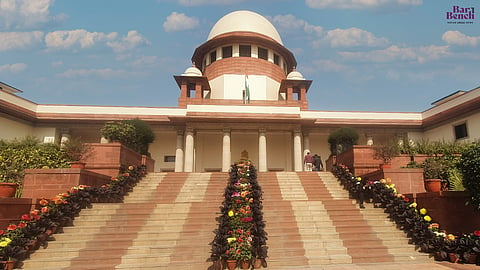
Madras High Court.


Updated on:
15 Apr 2026, 8:46 am


CHENNAI: The Madras High Court has directed the Selection Committee of the state health department to consider the applications of those post-graduate doctors, who were appointed in regular posts on temporary basis and subsequently regularised, for admission to super-specialty courses in medicine under the in-service quota by considering their entire service period as qualifying service.

Justice M Dhandapani issued the direction on a petition by Dr G Arulvel, who was appointed as assistant surgeon on a temporary basis in 2021 in the regular sanctioned post and was regularised on March 6, 2026, after clearing the special qualifying examination for regularisation.

The petitioner approached the court seeking the issuance of directions to consider his application for the super-specialty course for the 2025-26 academic year as in-service candidate in the Round-II counselling.

“There shall be a direction to the respondents to consider the application of the petitioner and the other similarly placed persons for admission to super-specialty courses for 2025-26 as in-service candidates by considering the period of service rendered by them in the temporary post, which is borne out of the cadre in the time scale of pay, as qualifying service for the purpose of fulfilment of the conditions laid down under clause 7 and 8 of the prospectus,” the judge in a recent order said.

The judge also directed the authorities to receive the applications from all the eligible temporary assistant surgeons who have been under temporary appointment on a post borne out of cadre, and process their application for selection to the super-specialty courses which are yet to be filled under the in-service quota and admit them on the basis of their inter se merit in the relevant courses for 2025-26.

Deemed univs to rake in Rs 2,000 cr thanks to lowering of 2025 NEET PG cut-offs


Deemed univs to rake in Rs 2,000 cr thanks to lowering of 2025 NEET PG cut-offs

Rema NagarajanTNN

Apr 14, 2026, 23:47 IST

Candidates who became eligible after the qualifying cutoff of NEET PG 2025 was lowered took seats worth almost Rs 2,000 crore in 48 medical colleges that are deemed universities. This is an indication of just how important lowering of cutoff was for these private colleges. 

The government slashed the cutoff just before the third round of counselling saying that this would help fill up 18,000 seats lying vacant after the first two rounds especially in pre-clinical and para-clinical specialties. The data for the results of centralised counselling is available only for all-India quota seats and for all postgraduate seats in deemed university private medical colleges. The all-India quota is made up of 50% PG seats in about 300 government colleges. The remaining 50% is filled through counselling that happens at the state level, for which consolidated data is not available. 

TOI analysed the data from allotment of seats in round 3 and the stray round of the centralised counselling, looking at only fresh allotments in the third round and all allotments in the stray round. Candidates are not allowed to change or upgrade their preference after allotment in round 3 and leaving an allotted seat would mean being barred from further participation in counselling and forfeiture of the security deposit (Rs 25,000 for all-India quota seat and Rs 2 lakh for a deemed university seat). Joining a seat and then resigning could attract a seat-leaving penalty also. The analysis showed that the annual tuition fees of the clinical seats filled in the third round by those with lowered cut off in deemed universities amounted to roughly Rs 550 crore. There are two category of seats in these colleges -- management seats and NRI seats. Since PG courses are for three years, that would amount to about Rs 1,650 crore revenue lost if the seat went empty. 

Tuition fees are highest for clinical specialties, especially for so-called high-demand ones like radiology, dermatology, obstetrics and gynaecology and general medicine. In these, the annual fees could be as high as Rs 70 lakh to Rs 1 crore or more. In the stray vacancy round, these colleges filled clinical specialty seats worth Rs 115 crore annually, or Rs 345 crore over the whole course. In the all-India quota, none of the candidates who became eligible due to lowered cutoff got admission to clinical specialties, except those who came through the disability quota. 

In comparison, 970 candidates who became eligible through lowering of the cutoff got clinical specialties in the deemed university colleges in the third and stray rounds. While the outrage over the reduction in cutoff was all about the reserved category getting its cutoff slashed to zero percentile, the allotment data from the two rounds shows that about 38% of over 1,200 all-India seats bagged by those with reduced cutoff were from the general category compared to 24% of OBCs, 25% SC and 14% ST. In the deemed university colleges, of the 1,770 seats bagged by those made eligible by lowering of the cut off, over two-thirds (1,224) were from the general category, while just 4.2% (75) and 0.2% (4) were from the SC and ST categories respectively. 

The skew is even sharper in clinical seats in deemed university colleges, which have the highest tuition fees. Of the 973 clinical seats allotted in the last two rounds that went to those made eligible by the lowered cutoff, 78% (759) were bagged by general category candidates, 19% by OBCs, 2.7% by SCs and 0.3% by STs. In comparison, of the 160 plus clinical seats from the all-India quota, 42% went to the general category, 40% to OBCs, 17% to SCs and 2% to STs. Clearly, more general category candidates benefitted from the lowered cutoff than those from the reserved categories.

Wednesday, April 15, 2026

Google launches AI powered NEET practice tests on Gemini

Google launches AI powered NEET practice tests on Gemini 

Written By : MD Bureau Published On 14 Apr 2026 4:30 PM  |  Updated On 14 Apr 2026 4:30 PM

New Delhi: In a move set to reshape exam preparation for medical aspirants,

 Google has introduced full-length NEET UG practice tests on its AI platform, Gemini.

The feature aims to simulate real exam conditions while offering personalised, AI-driven feedback to help students refine their preparation strategies.

The rollout marks a significant expansion of Google’s AI-led education tools in India, with the platform enabling users to take structured mock tests, receive instant performance insights, and generate customised study plans. Designed to bridge gaps in self-assessment and accessibility, the initiative targets lakhs of NEET aspirants seeking more adaptive and data-driven learning support.

According to recent IANS report, Tech giant Google has expanded its AI-powered learning tools by introducing full-length practice tests for NEET UG on its Gemini platform, aiming to support medical aspirants with exam-like preparation.

The new feature builds on the company’s earlier rollout of mock tests for competitive exams and is designed to provide students with a more structured and realistic preparation experience.

Also Read:AIIMS notifies 2779 vacancies for NORCET 10 The practice tests are based on rigorously vetted content from several education platforms.

Moreover, students or users can access the feature by prompting Gemini with a request to ‘Take a NEET mock test’.

The tests are currently available in English and are accessible to users with Google accounts as well as Workspace subscribers, the company noted.

The platform also offers instant feedback after test completion, highlighting strengths and areas that require improvement.

Students can further ask the AI assistant to explain answers and generate customised study plans based on their performance, helping them identify knowledge gaps and improve outcomes, the tech firm said, quotes IANS

The expansion into NEET preparation follows Google’s earlier announcement of AI-driven tools for students and educators in India.

These include full-length practice tests for engineering entrance exams like JEE Main, as well as AI-powered features that allow users to create study guides, quizzes and learning material through its search-based AI tools.

In addition to student-focussed features, the company had introduced AI capabilities for educators, enabling them to draft assignments, summarise student performance and provide personalised feedback.

Integrated audio, video and screen recording tools also allow teachers and students to interact more effectively within digital classrooms.

Google has also said that it is responsible for AI deployment, introducing tools to help users identify AI-generated content and ensure transparency in digital learning environments.

It further stated that these initiatives are aimed at enhancing personalised learning and improving accessibility for students preparing for competitive exams.

Parliamentary panel suggests 6 attempts to clear MBBS 1st professional exams, 10 years to complete course

Parliamentary panel suggests 6 attempts to clear MBBS 1st professional exams, 10 years to complete course 

Written By : Barsha Misra

Published On 9 Apr 2026 2:00 PM  |  Updated On 9 Apr 2026 6:57 PM

MBBS Examination

New Delhi: Pointing out that permitting students only four attempts to clear the MBBS first professional examination can be overly stringent for many students adjusting to the demanding nature of medical education, a Parliamentary Standing Committee on Health has suggested increasing the permissible limit to six attempts.

However, the panel has opined that the students must complete the entire MBBS course within a maximum period of ten years from the date of admission.

These recommendations were presented before the Parliament by the Department-related Parliamentary Committee on Health and Family Welfare in its 172nd report.

As per the existing rules prescribed by the National Medical Commission (NMC), MBBS students are given a total of four attempts to clear their first professional examination.

Also Read: Altogether 4 Attempts to Clear MBBS 1st prof Exams: NMC GMER 2023

Medical Dialogues had earlier reported that setting a limit regarding the number of attempts to clear the MBBS examination, NMC had clarified in GMER 2023, "Provided under no circumstances the student shall be allowed more than four (04) attempts for first year (First Professional MBBS) and no student shall be allowed to continue undergraduate medical course after nine (09) years from the date of admission into the course, mentioned the Regulations."

Back in 2023, the Apex Medical Commission granted one extra attempt to the MBBS batches of 2019 and 2020 to qualify for their first professional exam. NMC took this decision because these batches were affected by COVID.

Recommendations by Parliamentary Health Panel:

Recently, while addressing the rules regarding the permissible number of attempts to clear the first year professional MBBS exam, the Parliamentary Health Panel has suggested increasing the number of permissible attempts from four to six.

"The Committee has been apprised of that under the present regulations of the National Medical Commission, MBBS students are currently permitted a maximum of four attempts to clear the First Professional Examination. Considering the academic intensity of foundational subjects such as anatomy, physiology, and biochemistry, this restriction can be overly stringent for many students adjusting to the demanding nature of medical education. The Committee, therefore, suggested that the permissible limit be increased to six attempts, while ensuring that students complete the entire MBBS course within a maximum period of ten years from the date of admission," the Committee has recommended.

"This balanced approach will maintain academic standards while providing a more humane and student-friendly framework, preventing capable students from being forced to discontinue medical education due to early academic setbacks," it further mentioned in the report.

Earlier this year, the Rajasthan Chapter of the United Doctors Front (UDF) urged the State Medical Education Department to grant one additional Mercy attempt to the MBBS students from the 2021 batch to clear their First Professional Exam, considering the academic disruption caused by the COVID-19 pandemic.

The association highlighted that the students of Batch 2021 went through extraordinary and adverse circumstances, which were different from normal academic sessions. Due to the COVID-19 pandemic, the association stated regular classes were disrupted, there were technical difficulties in online teaching, and many families faced health-related crises during the year 2020–21. These circumstances directly affected the academic preparation and performance of students, as a result of which many students could not pass the First Professional Year.

MBBS intern stipend disparity row: Govt says issue falls under NMC, no further action


MBBS intern stipend disparity row: Govt says issue falls under NMC, no further action 

Written By : Adity SahaPublished On 

14 Apr 2026 2:30 PM | Updated On 14 Apr 2026 2:30 PM

New Delhi: Amid the long-standing demand to amend the Compulsory Rotating Medical Internship (CRMI) Regulations, 2021, to ensure a uniform stipend for MBBS interns across the country, the Ministry of Health and Family Welfare has now stated that it will not take any further action, saying the matter falls entirely within the domain of the National Medical Commission (NMC).

The information in this regard was shared in response to a Right to Information (RTI) application filed by Kerala-based ophthalmologist and RTI activist Dr KV Babu, who sought clarity on whether the NMC and its Under-Graduate Medical Education Board (UGMEB) plan to amend the CRMI Regulations to remove disparity in stipend paid to interns across institutions.

On February 22, 2026, Dr Babu submitted RTI applications to the UGMEB and the Medical Education Policy (MEP) section of the Ministry, seeking action on stipend parity.

While the Under-Graduate Medical Education Board reiterated its earlier position that any amendment to the CRMI Regulations, 2021 would require consideration through the statutory process and consultation with all concerned authorities, the Medical Education Policy (MEP) section of the Ministry of Health and Family Welfare, in its RTI reply, clearly outlined its stand on the issue.

In its response dated April 2, 2026, the Ministry stated, "The National Medical Commission (NMC) is the apex statutory body constituted under the National Medical Commission Act, 2019, for regulating medical education and profession in the country. All matters relating to framing, amendment, and implementation of medical education regulations fall within the domain of NMC. Therefore, in view of the above, no further action is required to be taken by the MEP Section in the matter, as the subject falls within the domain of the National Medical Commission (NMC)."

Stipend disparity:

The issue was first raised by Dr Babu in June 2022, when he wrote to the Ministry alleging that his suggestions on stipend parity were ignored while finalising the CRMI Regulations, 2021. Despite this, he continued to send multiple reminders.

Medical Dialogues had previously reported that the doctor requested that the centre withdraw the Gazette Notification dated November 18, 2021, which notified the Compulsory Rotating Medical Internship (CRMI) Regulations, 2021. He stated that his earlier comments submitted on July 24, 2021, regarding stipend parity were not incorporated before the regulations were finalised. He requested the Government to re-gazette the regulations.

In his representation, he specifically sought an amendment to Clause 6.3 relating to the stipend, which includes - "All the candidates pursuing compulsory rotating internship at the institution from which the MBBS course was completed, shall be paid stipend on par with the stipend being paid to the interns of the State Govt. Medical Institution / Central Government Medical Institution in the State / Union Territory where the institution is located."

While the government medical colleges pay interns between Rs 20,000 and Rs 30,000, private colleges either pay half of that or none at all. Data from NMC in 2025 showed that 60 of 555 medical colleges were not paying stipends, and many were paying nominal stipends of less than Rs 5,000 per month.

The Supreme Court in its order dated October 28, 2025, pulled up the NMC for delaying action on stipend-related issues. The Court observed that the Commission was “dragging its feet” and directed it to take appropriate steps, while also asking the Ministry to ensure compliance.

Following this, the doctor again approached the Ministry in November 2025. On this, the MEP section wrote to the NMC in November and December 2025, asking it to examine the issue of stipend provisions for undergraduate interns under CRMI Regulations, 2021, keeping in view similar provisions in PGMER Regulations, 2023.

However, in its reply dated February 18, 2026, the Under-Graduate Medical Education Board (UGMEB) under NMC noted that any amendment to the existing rule would require a statutory process.

It stated, "As per the CRMI Regulation 2021 it is stated that, the existing regulation already provides for the payment of stipend to interns. However, the actual implementation, including the rate of stipend, is undertaken by the respective States/UTs in accordance with their financial capacity and budgetary provisions. The regulation has been notifled after deliberations with concerned authoritles, experts and competent authorities assigned at the time of formulation of the regulation, The above regulation being statutory notifled after due approval and consultation with MoHFW and the same is laid in the parliament. In view of the above, any amendment to the CRMI Regulations, 2021 , if required would need consideration in accordance with the statritory process and after due consultation with all concerned concerned authorities."

The issue of 19 posts being vacant at NMC, out of the 54 sanctioned strength, was also highlighted in the Parliament.

In response, he again wrote to both the Ministry and NMC on February 22, 2026, requesting an amendment of the regulations. He later filed RTI applications with both authorities. While the UGMEB reportedly reiterated its earlier response, the Ministry declined to intervene, stating the matter is under NMC’s jurisdiction.

"The National Medical Commission (NMC) is the apex statutory body constituted under the National Medical Commission Act, 2019, for regulating medical education and profession in the country. All matters relating to framing, amendment, and implementation of medical education regulations fall within the domain of NMC. Therefore, in view of the above, no further action is required to be taken by the MEP Section in the matter, as the subject falls within the domain of the National Medical Commission (NMC)," mentioned the government's response to the RTI.

Dr Babu further alleged inconsistency in the Ministry’s approach, stating that while MEP section of the Ministry of Health and Family Welfare has been reluctant to direct the Under-Graduate Medical Education Board on amending the CRMI Regulations for stipend parity, it had promptly intervened in May 2022 on another matter. He pointed out that, based on a representation dated May 3, 2022, the Ministry had directed the National Medical Commission to convene a joint meeting under Section 50 of the NMC Act by May 31, 2022, regarding suggestions for the “Swasth Bharat” roadmap.

Commenting on the matter, Dr Babu told Medical Dialogues, "The issue of stipend parity has been pending with the NMC & GOI for almost five years. Though following the SC order of 28th October 2025, the Govt took a proactive decision to amend CRMI regulations in line with PGME regulations, the nominated, almost vacant, UGMEB is not inclined to amend the regulations for stipend parity even after harsh criticism from the SC & communications from the Govt."

He further said, "It should be noted that, though GOI have the authority to direct the NMC/UGMEB to amend the regulations for stipend parity, they are absolving the responsibility, though they had no hesitation in directing the NMC to act on issues which suits them earlier. It should be presumed that the GOI & the nominated vacant UGMEB are hand in glove in denying stipend parity to the interns."

Tuesday, April 14, 2026

Medical pay ‘mismatch’: College stipends much less than NMC claims, says outfit


Medical pay ‘mismatch’: College stipends much less than NMC claims, says outfit

The gap between the NMC’s reported stipends and actual payments, CAMP members and others say, reveals a disconnect between regulation and reality, raising concerns over data integrity, oversight and inaction

G.S. Mudur Published 14.04.26, 05:42 AM


Representational imageFile image

A body representing medical students and parents has challenged the accuracy of stipend data published by the National Medical Commission (NMC), saying the figures reported for some colleges do not match actual payments to interns and postgraduate residents.

The Combined Association of Medicos and Parents (CAMP) has sought an explanation from the NMC — India’s apex medical regulatory authority — citing examples from private medical colleges in Kerala whose actual stipends are much lower than those cited by the NMC.

The gap between the NMC’s reported stipends and actual payments, CAMP members and others say, reveals a disconnect between regulation and reality, raising concerns over data integrity, oversight and inaction.

The association has urged the NMC to investigate whether the discrepancies stem from clerical errors, incorrect data submitted by colleges or a possible deliberate attempt to mislead ongoing stipend-related cases before the Supreme Court.

“The inflated stipend amounts create an impression that all is well when it is actually not,” Rajesh Aravind, CAMP’s general secretary, told The Telegraph.

Some 150 medical students from Kerala and CAMP members have filed a petition in the Supreme Court seeking appropriate stipends.

The petitioners are among thousands of MBBS interns and postgraduate residents across the country who are not receiving stipulated stipends, according to CAMP members and a lawyer representing the petitioners.

The stipend issue comes against the backdrop of a sharp expansion in medical education, with MBBS seats rising from about 52,000 in 2014 to 128,000 and postgraduate seats from about 31,000 to 85,000, expanding the pool of interns and residents.

Interns and postgraduate residents from Andhra Pradesh, Delhi, Jharkhand, Madhya Pradesh, Gujarat and Rajasthan have filed similar petitions, their lawyer Tanvi Dubey said.

CAMP, in a letter sent to the NMC last week, cited three medical colleges whose stipend figures published by the NMC are higher than actual payments to students.

The stipend data published by the NMC show that one college pays ₹27,300, the amount stipulated by the Kerala government. CAMP says students at the college receive only ₹10,000.

The data show another college paying ₹25,000 while CAMP says students receive ₹7,000.

A third college pays ₹17,275, according to the data, but CAMP claims students get only ₹8,000.

The discrepancies persist despite the NMC initiating a nationwide survey in April 2023 to assess stipends paid to interns and residents amid concerns over underpayment.

The NMC notified rules in November 2021 mandating that all interns be paid stipends fixed by the relevant state or institutional authorities.

An email query sent twice by this newspaper to the NMC seeking a response to the concerns raised by CAMP has evoked no response.

The NMC, replying to an RTI query from ophthalmologist K.V. Babu in Kerala, had said that it issues guidelines and regulations but implementation rests “solely at the discretion” of state authorities.

But Babu said the NMC’s regulations empower it to penalise non-compliant institutions, including withholding or withdrawing accreditation for up to five years.

“We’re seeing inaction on the part of the NMC,” Babu told this newspaper.

 “The regulators are helping some private medical colleges save money by not acting against underpayment of stipends,” he said.

U-turn on same stipend for all medical undergrads


U-turn on same stipend for all medical undergrads

Earlier, the Union health ministry had twice written to the National Medical Commission (NMC) on “examining” the issue of pay parity. And NMC had accepted that there is no stipend parity.


Image used for representational purpose.File photo | Express


Updated on:
12 Apr 2026, 7:23 am

NEW DELHI: The centre appears to be backtracking from its earlier stand on bringing pay parity for all undergraduate medical interns, whether they are studying in government or private medical colleges.

Earlier, the Union Health Ministry had twice written to the National Medical Commission (NMC) on “examining” the issue of pay parity. The NMC, on its part, had also accepted that there is no stipend parity.

The next step was for the NMC to amend the key provision of the Compulsory Rotating Medical Internship Regulations, 2021 (CRMI Regulations 2021), which states that “all interns shall be paid stipend as fixed by the appropriate authority applicable to the institution/University or State.”

This provision contrasts with the Post-Graduate Medical Education Regulation-2023, which makes no distinction between interns working in government or private medical colleges.

However, within months, the ministry has taken a U-turn, even though the Supreme Court had slammed the medical regulatory body, saying that it is “dragging its feet without any serious concern” on non-payment of stipend to interns and had urged it to “wake up from its slumber and take appropriate steps” in its October 28 order.

After showing keenness over the issue, in its RTI reply, the Medical Education Policy Section (MEP) under the Union Health Ministry said, “The National Medical Commission (NMC) is the apex statutory body constituted under the National Medical Commission Act, 2019, for regulating medical education and profession in the country. All matters relating to framing, amendment, and implementation of medical education regulations fall within the domain of NMC.”

“Therefore, in view of the above, no further action is required to be taken by the MEP Section in the matter, as the subject falls within the domain of the National Medical Commission (NMC)," said the April 2 response to Kerala-based RTI activist, Dr KV Babu when he reminded the ministry on the action NMC has taken to its directions on pay parity.

Speaking with this paper, Dr Babu, who has been pursuing the twin issue of non-payment of stipends to interns and pay parity, said, “The issue of stipend parity has been pending with the NMC and government for almost five years.”

“Though following the SC order, the government took a proactive decision to amend CRMI regulations in line with PGME regulations, the nominated, almost vacant, UGMEB is not inclined to amend the regulations for stipend parity even after harsh criticism from the SC and the communications from the government.”

“It should be noted that though the government have the authority to direct the NMC/UGMEB to amend the regulations for stipend parity, they are absolving the responsibility, though they had no hesitation in directing the NMC to act on issues that suited them earlier,” he said.

“It should be presumed that the government and the nominated vacant UGMEB are hand in glove in denying stipend parity to the hapless interns," Dr Babu added.

Interestingly, the NMC’s Undergraduate Medical Education Board (UGMEB), which determines undergraduate medical education standards, is without a president. The issue of 19 posts being vacant at NMC, out of the 54 sanctioned strength, was also highlighted in the Parliament.

In its February 18 response to the ministry’s reminders, NMC had said that “any amendment to the CRMI Regulations, 2021, if required, would need consideration in accordance with the statutory process and after due consultation with all concerned authorities.”

However, the NMC continued to sit on the issue, and the ministry also took a U-turn on the matter, which has been agitating medical students and also taken up by various associations, such as FAIMA and FORDA

Monday, April 13, 2026

Headache that disappears on lying down? Don’t brush it off, say docs

Headache that disappears on lying down? Don’t brush it off, say docs

 Jahnavi@timesofindia.com 13.04.2026

Bengaluru : For nearly 10 years, a man in his late 30s from Chennai lived with relentless headaches, repeatedly misdiagnosed as migraines. The pain had a peculiar pattern — it disappeared when he lay down and worsened when he stood up — a classic red flag that went unnoticed for over a decade. 

It was only after he was hospitalised that doctors finally ordered detailed imaging. An MRI and dynamic myelogram revealed the real cause: a cerebrospinal fluid (CSF) leak. By then, the condition had become chronic, requiring surgery. Following treatment, his longstanding pain finally disappeared. Doctors say his story is far from unique. Such misdiagnoses are common among patients with CSF leaks, a rare but debilitating condition often mistaken for migraines or sinusitis. 


Dr Sharath Kumar GG, consultant in radiology and interventional neuroradiology at Manipal Hospital, Kanakapura Road, who treated the patient, explained: “The brain and spinal cord float in a fluid called cerebrospinal fluid (CSF), which provides support and buoyancy — similar to how a ball floats in water. This fluid is contained within a tough, protective covering called the dura. In some cases, the dura develops a hole, causing CSF to leak out. When the loss of fluid exceeds the body’s ability to produce it, the brain loses its cushioning and begins to sink.” Though considered rare — affecting 5 to 10 people per lakh population — experts say the condition is significantly underdiagnosed. 

“In a city like Bengaluru, we may see around 500 cases a year, but most go undiagnosed because of a lack of awareness,” Dr Kumar added. One of the biggest challenges is that the symptoms closely resemble more common conditions. Dr Rakshith Srinivasa, consultant in neurosurgery at Ramaiah Memorial Hospital, said, “Clinically, the presentation can be confusing. Many of these patients are treated for migraine for a long time. Patients may already have a pre-existing migraine. On top of that, they develop this condition. 

When the headache worsens, it can trigger a migraine, making it more difficult to differentiate and diagnose,” said . He stressed the importance of recognising a key symptom pattern: “A high level of suspicion is very important for diagnosis. If a patient presents with a headache that worsens on standing and improves on lying down, we should suspect spontaneous intracranial hypotension.” “To diagnose this condition, we need to ask specific questions about when the headache worsens or improves, as patients often only describe its positional nature when prompted. 

A history of postural headache is followed by an MRI scan, which typically shows characteristic findings such as brain sagging due to fluid loss. However, many cases are missed because imaging is incomplete or not done at the right time — often only the brain is scanned, even though the leak is usually in the spine,” Dr Kumar explained.

NMC declares unrecognised dept teaching invalid for medical professionals


NMC declares unrecognised dept teaching invalid for medical professionals


Rohtak, Updated At : 12:28 PM Apr 11, 2026 IST


Photo for representation. iStock

Now, any teaching experience certificate issued on the basis of service rendered in an unrecognised department/unit would be treated as “invalid” for determining eligibility, appointment, promotion, or academic recognition.

In a significant move aimed at maintaining standards in medical education, the National Medical Commission (NMC) has issued an advisory directing all health universities, state governments, and medical colleges not to count postgraduate teaching or training experience obtained from unrecognised departments.

The commission has also declared that teaching experience certificates issued on such a basis will be treated as invalid. A communiqué in this respect has been circulated to Vice-Chancellors of health universities, Directors General of Health Services of states and Union Territories, and heads of all medical colleges offering postgraduate courses, seeking strict compliance.

“The NMC has observed, in certain instances, that teaching experience certificates and postgraduate training experience are being claimed by the faculty or certified by universities/institutions on the basis of departments or units that are not recognised or permitted by the commission for conducting postgraduate medical education,” reads the communiqué.

The NMC clarified that such practices violate existing regulations governing postgraduate medical education. It has also placed the responsibility on universities and institutions to verify the recognition status of departments before issuing teaching experience certificates. Medical colleges and affiliating universities have been directed to ensure that no certificates are issued for experience gained in unapproved departments. The NMC reiterated that teaching experience for faculty appointments or recognition as postgraduate teachers must be obtained only from recognised medical colleges and duly approved departments.

These departments must have approved infrastructure, adequate faculty strength, and permitted postgraduate seats as per NMC records and regulations, including the Postgraduate Medical Education Regulations, 2023, and the Medical Institutions (Qualifications of Faculty) Regulations, 2025. The advisory further stated that postgraduate training or teaching experience obtained from unrecognised departments will not be counted for eligibility to appear in postgraduate examinations, recognition as a postgraduate teacher or guide, appointment or promotion to faculty posts, or determination of teaching experience for academic and administrative purposes.

Additionally, the commission made it clear that any teaching experience certificates issued on the basis of service rendered in unrecognised departments or units will be considered invalid for appointments, promotions, or academic recognition. “The move aims to curb irregularities in faculty appointments and ensure quality medical education across the country,” said an official at the University of Health Sciences, Rohtak.

Monday, April 6, 2026

NEET PG: Rajasthan HC relief to doctor denied admission over permanent registration certificate Written By : Barsha Misra

NEET PG: Rajasthan HC relief to doctor denied admission over permanent registration certificate Written By : Barsha Misra

Published On 4 Apr 2026 3:17 PM  |  Updated On 4 Apr 2026 3:17 PM

Rajasthan High Court  06.04.2026

Jodhpur: The Rajasthan High Court provided relief to a NEET PG 2025 candidate who was earlier denied postgraduate medical admission due to the lack of a Permanent Registration Certificate.

Referring to Rule 8(3) of the Post Graduate Medical Education Regulations, 2000, the HC bench comprising Dr. Justice Nupur Bhati clarified that as per these regulations, candidates are given a period of one month after admission for obtaining permanent registration and when the law provides a period of one month, the State Government cannot impose a more stringent condition through the information booklet.

The bench clarified that administrative instructions or information bulletins cannot weaken or repeal any statutory rule and directed the college to grant her admission.

As per the latest media report by Live Law, the concerned petitioner in this case obtained a temporary registration from the Chhattisgarh Medical Council after completing MBBS and was performing the necessary service for permanent registration. However, during this time, the petitioner appeared in the National Eligibility-Entrance Test Postgraduate (NEET-PG) 2025 examination and was allotted a medical college.

When the petitioner reported to the college, admission was denied on the grounds that the petitioner did not have a permanent registration certificate.

While considering the matter, the bench cited Rule 8(3) of the Post Graduate Medical Education Regulations, 2000 and observed, "This provision has been made with the objective that meritorious students who are in the registration process at that time should not face unnecessary hardship."

In this regard, the bench clarified that when the law itself provides a periof of one month, the State Government impose a more stringent condition through the information booklet.

Terming this move of the State as arbitrary and against the law, the bench said that it was wrong to deny admission only based on lack of certificate. Accordingly, the bench issued directions to the State Government to grant immediate admission to the petitioner.

Wednesday, April 1, 2026

NMC allows inclusion of seats for counselling without formal nods

 NMC allows inclusion of seats for counselling without formal nods 

TIMES NEWS NETWORK 01.04.2026


New Delhi : In a move that could ease anxiety for thousands of medical aspirants, National Medical Commission (NMC) has allowed newly approved super-specialty postgraduate seats to be included in counselling process without waiting for final approval letters. For students, this means faster counselling, fewer delays and greater clarity on available seats. The regulator has said that seats cleared by its First Appeal Committee will be treated as valid for the ongoing counselling process, removing a key procedural hurdle that often slows down admissions. 

The decision comes at a crucial stage of the admission cycle, when delays in approvals typically hold up seat allocation and leave candidates uncertain about their options. Under the latest directive, counselling authorities can now include these seats on the basis of the approved list, instead of waiting for formal Letters of Permission (LoPs) from institutions. The order follows appeals filed by medical colleges against earlier seat allocations, which were reviewed and cleared by First Appeal Committee under provisions of the NMC Act. 

The seats cover high-demand super-specialties such as cardiology, neurology, nephrology, urology and gastroenterology, across medical colleges in several states. NMC has directed all state authorities and counselling bodies, including Medical Counselling Committee, to update their seat matrix and proceed with admissions, ensuring that the counselling process continues without procedural hold-ups

Monday, March 30, 2026

MBBS limbo: BRD medical college 3 Students stuck for upto 20 years as NMC's 9-year cap clashes with MCI-era admissions

MEDICAL DIALOGUE

MBBS limbo: BRD medical college 3 Students stuck for upto 20 years as NMC's 9-year cap clashes with MCI-era admissions 

Written By : Adity SahaPublished On 27 Mar 2026 5:48 PM  |

 Updated On 27 Mar 2026 5:48 PM

Gorakhpur: While the National Medical Commission (NMC) rules now mandate that MBBS students must complete the course within 9 years from the date of admission, three students of BRD Medical College, Gorakhpur, admitted during the erstwhile Medical Council of India (MCI) era have remained stuck in the course for over 20 years after failing in certain subjects.

Recently, the college released the results of one student following a High Court order, while two others are still awaiting their results.

The three students belong to the 1998, 2009 and 2010 batches and had enrolled in the MBBS course at BRD Medical College. However, due to failure to clear certain subjects in examinations, long delays in pending examinations, result declaration and regulatory hurdles, their academic progress remained stalled for over two decades.

According to the National Medical Commission Regulations, a student who joins the MBBS course must complete and pass the entire degree within 9 years from the date of admission. Apart from this, the commission also specified that the students shall not be allowed more than four attempts for the first year.

However, the admission of these three students falls under the erstwhile Medical Council of India (MCI) time, which was replaced by NMC in 2020 and did not strictly limit or specify the duration of the course. Because of this regulatory transition, the students are in academic limbo.

Until recently, one of the students approached the High Court seeking the release of his pending result, as per India Today media report. Acting on the court’s direction, the college declared the result, but the student failed again in two subjects. He has now been allowed to appear in supplementary examinations.

Meanwhile, the results of the other two students are still pending. According to college authorities, discussions are ongoing with the university, and official communication is underway to resolve the matter and declare the results.

Officials indicated that once the results of the remaining two students are released, they will either be declared to pass or allowed to appear in supplementary examinations, which could finally determine whether they can complete the course after years of uncertainty.

Speaking to India Today, BRD Medical College Principal Ramkumar Jaiswal said the institution is bound by the new regulations of the National Medical Commission (NMC).

Medical Dialogues had also reported that the BRD Medical College, Gorakhpur, approached the National Medical Commission (NMC) seeking clear directions in an unusual case of an MBBS student who had remained in the first year for over 11 years after failing the exam in 2015.

NMC seeks anonymous feedback from MBBS students on teaching, training and campus support

 NMC seeks anonymous feedback from MBBS students on teaching, training and campus support

The NMC Secretary said an online “student feedback form” is being sought from Undergraduate Medical Students of Medical Colleges and Institutions under the purview of NMC.


Updated on:
29 Mar 2026, 5:00 pm


NEW DELHI: The National Medical Commission (NMC) has sought feedback from MBBS students on various aspects of their medical education, including the quality of their lectures, faculty availability, clinical training, patient exposure, anti-ragging measures, student safety, and mental health support on their campuses.

The NMC has promised that these responses will be anonymous and confidential, and that they are being sought for academic review and quality improvement purposes.

In an advisory, NMC Secretary, Dr Raghav Langer, said an online “student feedback form” is being sought from Undergraduate Medical Students of Medical Colleges and Institutions under the purview of NMC.

“This feedback aims to gather your valuable anonymous feedback on various aspects of your medical College and medical education experience,” the advisory, dated March 26, said.

The form covers aspects such as quality of teaching and lectures, faculty availability and adequacy, clinical training and patient exposure, labs, dissection halls and practical training, community medicine and rural training, ragging and student safety, campus culture/student welfare, anti-ragging measures and grievance redressal, mental health support, extracurricular activities, curriculum, college administration and governance, etc.

“Your response will be anonymous and confidential. The feedback is being collected solely for internal academic review and quality improvement purposes,” said the advisory, addressed to all states, deans of all medical colleges, the medical education department of the Union Health Ministry, among others.

The online form can be accessed through the NMC website.

The NMC requested the MBBS students to “wholeheartedly participate in filling the online student feedback form.”

Speaking with this paper, Kerala-based RTI activist, KV Babu, said, “Getting feedback from the students is a welcome move. But the track record of NMC regarding follow-up action based on feedback is not very convincing. Few years back, NMC had done a survey about stipend for interns and PGs without any follow-up action. They didn't even disclose the names of medical colleges which took back the stipend from PGs.”

Tuesday, March 24, 2026

52 NEET PG seats lying vacant after med counselling


52 NEET PG seats lying vacant after med counselling

Hemanta Pradhan

Mar 21, 2026, 22:38 IST. ODISHA

52 NEET PG seats lying vacant after med counselling Bhubaneswar: After medical counselling for NEET PG seats got over, 52 out of 615 PG seats are lying vacant in different medical colleges of the state because there are fewer candidates for non-clinical subjects compared to clinical subjects. Dr Jyotish Chandra Choudhury, head of the FMT department, SCB Medical College and Hospital, who looks after the counselling part of NEET PG seats in Odisha, said around 52 medical PG seats are lying vacant in both govt and private medical colleges."After the counselling is over, we have submitted the vacancy data to the Medical Counselling Committee (MCC)," he added. According to a Rajya Sabha reply from the ministry of health and family welfare on March 17, as many as 1,140 PG medical seats are lying vacant across medical colleges in the country after the counselling got over. The ministry said the qualifying percentile was reduced to ensure that valuable PG medical seats do not remain vacant. But the seats did not fill up this year too. Though the reply did not have a reason for this vacancy, experts said candidates mostly choose clinical subjects, including radiology, dermatology, general medicine, paediatrics, obstetrics and gynaecology, orthopaedics, and general surgery. 

Many of the candidates who receive good ranks in NEET PG do not prefer non-clinical subjects like anatomy, physiology, microbiology, and pathology. "Many candidates want clinical subjects so that they can contribute in a big way to the treatment of patients. They can also get the opportunity to earn a good amount of money in these clinical subjects," said a doctor from SCB Medical College and Hospital. MCC under the Directorate General of Health Services handles counselling for 50 % of All India Quota seats and 100% of seats in Central and Deemed Universities. State govts conduct counselling for state quota seats, while state counselling authorities also handle private medical college admissions.

Monday, March 23, 2026

NMC proposes mandatory corpus fund for medical colleges; incomplete applications to be rejected


NMC proposes mandatory corpus fund for medical colleges; incomplete applications to be rejected

Anuja JaiswalTNN

Feb 23, 2026, 8:08 IST

NEW DELHI: In a bid to tighten the noose on regulatory compliance in medical education, the National Medical Commission (NMC) has proposed making a dedicated corpus fund mandatory for new and recently operational medical colleges, while warning that incomplete applications will be rejected outright. Under draft amendments issued this week to the 2023 regulations governing establishment and expansion of medical institutions, any entity seeking to open a new medical college will have to submit an undertaking confirming that it will maintain a dedicated corpus fund exclusively for the functioning of the institution.

The amount will be determined later by the Medical Assessment and Rating Board (MARB) and may be revised from time to time. The provision also refers to already operational colleges. Dr MK Ramesh, president of the MARB told TOI that the earlier regulation had mentioned a corpus fund but did not specify any amount, making it difficult to enforce. Instead of deleting the clause, the Commission chose to retain it by seeking an undertaking from colleges, with the exact amount to be fixed after due deliberation. While the wording includes existing institutions, the intent is largely to ensure financial safeguards for new and recently opened colleges. 

Once decided, the corpus amount will be uniform. The draft also marks a clear shift toward stricter scrutiny of applications. It clarifies that under the NMC Act, a “scheme” is valid only when an application is complete with all mandatory documents. In the past, some applicants submitted incomplete proposals and later sought additional time — or court intervention — to furnish missing documents. The amendment aims to end that practice by stating that incomplete applications will be rejected at the outset, without further opportunity. 

Mandatory documents include a valid Essentiality Certificate from the concerned state or Union Territory government, a valid Consent of Affiliation from a recognised university, and a solvency certificate issued by a chartered accountant within 90 days prior to the application deadline. The regulator has also empowered itself to withhold processing or reject applications for new schemes or seat increases for specific academic years. In a strong compliance warning, the draft states that any attempt to pressurize MARB or the NMC through individuals or agencies could lead to immediate halt or rejection of the application. India has witnessed rapid expansion in medical colleges and seats over the past decade. 

While the growth has improved access to medical education, concerns about infrastructure gaps, faculty shortages and financial sustainability have persisted. By mandating a corpus fund and eliminating room for incomplete proposals, the NMC appears to be signalling that future expansion must be backed by financial preparedness and full regulatory compliance. 

The draft amendments have been opened for public consultation for 30 days, after which the Commission will decide on finalising the revised rules.

NMC tightens grip on PG medical courses with revised norms; check new requirements here


NMC tightens grip on PG medical courses with revised norms; check new requirements here 

The National Medical Commission has released updated Minimum Standards of Requirements for Post-Graduate Courses, 2023, effective immediately. These revised rules mandate enhanced infrastructure, digital integration, stricter faculty attendance, and improved patient load requirements for all medical colleges. The changes aim to elevate the quality of postgraduate medical education across India.

TOI Education

Mar 22, 2026, 12:01 IST

NMC tightens grip on PG medical courses with revised norms The National Medical Commission (NMC) has issued a fresh notice announcing changes to the Minimum Standards of Requirements for Post-Graduate Courses, 2023. The updated rules have come into effect immediately and all medical colleges must follow them. The notice was issued by the Post-Graduate Medical Education Board (PGMEB), which works under the NMC and is responsible for setting rules for postgraduate medical education in India. 

What is this notice about 

The notice updates the existing Post-Graduate Minimum Standards of Requirements (PGMSR), 2023. These standards define what medical colleges need to have in order to start and run postgraduate medical courses. This includes rules related to infrastructure, faculty, hospital facilities, equipment and patient load. The standards were earlier released in January 2024 and updated in August 2024 and January 2025. Now, another amendment has been issued in February 2026. 

Key message from NMC

All medical colleges and institutions offering postgraduate medical courses must follow the updated rules from now on. There is no transition period. The changes apply immediately. What has changed: Explained simply

Basic hospital and infrastructure requirements Medical colleges must have proper hospital buildings and facilities as per government rules. This includes outpatient departments, inpatient wards, operation theatres, Intensive Care Units (ICU), laboratories and emergency services. All required approvals from authorities must already be in place.

Equipment and learning facilities Departments must have modern equipment and proper training facilities. Colleges must also provide digital libraries, seminar halls and internet access. Teaching rooms with audio visual facilities are now mandatory for each department.

Patient load requirement Hospitals must have enough patients for proper training. At least 80 percent of hospital beds should be occupied throughout the year Departments must have enough ICU and High Dependency Unit (HDU) beds Patient records must be maintained digitally

Faculty rules All faculty members must work full time and cannot do private practice during working hours. They must have at least 75 percent attendance in a year.

New monitoring measures CCTV cameras must be installed in medical colleges Attendance of staff must be recorded digitally through Aadhaar Enabled Biometric Attendance System (AEBAS) Colleges must maintain proper patient data and hospital records

Mandatory college website details Every medical college must have a website and regularly update it. The website should include List of departments, PG courses and number of seats, Faculty details of last three years, Student admission details, Patient attendance and bed occupancy, Number of surgeries performed.

Bed and department requirements Standalone postgraduate institutes must have at least 220 beds and certain compulsory departments like: Biochemistry Pathology Microbiology Radio diagnosis Anaesthesiology

New digital health integration Colleges must link their systems with the Ayushman Bharat Health Account (ABHA) and generate ABHA IDs for patients.

Limit on PG seats In non government medical colleges, a maximum of four seats will be allowed per year when starting a new postgraduate course or increasing intake.

Workload requirements for training The notice also sets clear rules for clinical workload. For example minimum number of patients per day, minimum surgeries per week, required number of X-rays, CT scans and other tests, specific workload targets for departments like pathology, microbiology and radiology. These ensure students get enough practical exposure during training.

Faculty to student ratio The number of teachers required depends on the number of students. For example: Professor can guide 2 to 3 students Associate Professor can guide 2 students Assistant Professor can guide 1 student

Limits on units and beds 

Each department can have a maximum of six units and each unit can have up to 40 beds. Read the official notice here. The new rules focus on improving quality in postgraduate medical education by ensuring better infrastructure, enough patients for training, stricter monitoring and proper faculty availability. Medical colleges across India are now required to immediately follow these updated standards.

Monday, March 16, 2026

Ongole Medical College Fined Rs 1 Crore by NMC


Ongole Medical College Fined Rs 1 Crore by NMC 

DC Correspondent 15 March 2026 8:35 PM 

Penalty for failing to disclose stipend details of MBBS interns and PG residents

National Medical Commission acts against Ongole Medical College over stipend rule violations. 

Nellore: The National Medical Commission (NMC) has imposed a Rs 1 crore penalty on Government Medical College, Ongole, in Prakasam district for failing to comply with its directions on disclosure and payment of stipends to MBBS interns and postgraduate medical residents.

The action follows an NMC public notice issued on July 11, 2025, directing all medical colleges to publish details of stipends paid to interns and PG residents on their official websites to ensure transparency and uniformity.

According to the commission, the Ongole medical college was among seven institutions across the country that failed to furnish the required information despite repeated reminders, thereby violating provisions of the National Medical Commission Act, 2019, and related regulations.

The NMC stated that continued non-compliance with stipend payment and disclosure norms could invite further regulatory action, including restrictions on admissions, suspension of permissions, or other disciplinary measures.

( Source : Deccan Chronicle )

India is adding NEET PG seats fast: Why are thousands going vacant?


India is adding NEET PG seats fast: Why are thousands going vacant? 

India is creating more NEET PG seats than ever, but a stubborn question keeps returning: why do so many still go vacant? 

Rajya Sabha data shows a sharp rise in postgraduate seat addition alongside a persistent trail of empty seats. The result is a medical education system expanding rapidly, yet unable to make a significant slice of its specialist seats worth taking.

Saswati SarkarTOI Education

Mar 13, 2026, 18:55 IST

Thousands of NEET PG seats go empty. 

The Centre has recently released fresh figures showing a major expansion in medical education. The Union Minister of State for Health and Family Welfare Anupriya Patel said in a written reply to the Rajya Sabha on March 10 that 43 new medical colleges had been set up for the 2025–26 academic year and 11,682 MBBS seats and 8,967 postgraduate seats had been approved throughout the country.That’s 20,649 seats in total. 

The postgraduate number, the ministry said, covers seats in AIIMS and other Institutes of National Importance. The response also cited the government’s preferred blueprint for expansion: Link new medical colleges to existing district or referral hospitals and position the exercise as a solution to regional imbalance. A total of 157 medical colleges have been approved via the centrally sponsored scheme at a cost of ₹41,332.41 crore up to now. It has already delivered ₹23,246.10 crore of its share of ₹26,715.84 crore, the ministry noted. That stated priority is known and politically potent: Underserved areas, aspirational districts, spots where the map of medical education has long felt thin. But seat creation is an easy headline. The uncomfortable narrative begins when the glow of the press note wanes. Even as the system keeps adding capacity, it has been struggling to fill a substantial number of postgraduate medical seats. 

This is not a stray aberration. Rajya Sabha data shows vacant PG seats have persisted in the thousands across years. As a consequence, the NEET PG qualifying percentile had to be cut sharply to keep seats from lying empty. That is the paradox now staring at the system. India is generating the optics of mass expansion, but part of that expansion isn’t attracting takers without constantly lowering the entry threshold. So the real question is no longer how many seats have been created. It is why so many postgraduate medical seats still need to be rescued. India’s NEET PG seat curve takes a sharp upward turn Data presented in the Rajya Sabha in February 2026 by Patel shows that the story of postgraduate medical seat expansion over the last five years has not been one of calm, steady growth. It has moved in jolts. INDIA'S MEDICAL SEAT EXPANSION: A SNAPSHOT

Academic year

NEET UG seats added

NEET PG seats added

2021–22

8,790

4,705

2022–23

7,398

2,874

2023–24

9,652

4,713

2024–25

8,641

4,186

2025–26

11,682

8,416

Source: Data presented by the Minister of State for Health and Family Welfare in Rajya Sabha, February 2026

In 2021–22, the increase stood at 4,705 seats. A year later, it dropped sharply to 2,874. It climbed back to 4,713 in 2023–24, slipped again to 4,186 in 2024–25, and then suddenly shot up to 8,416 in 2025–26. That last number changes the texture of the trend. For four years, postgraduate expansion stayed trapped below the 5,000-seat mark, moving forward, then stumbling, then recovering, then losing pace again. Then came 2025–26, and the graph stopped behaving like a cautious line. With 8,416 PG seats added in a single year, the latest figure is not just the highest in the series, it is almost double the previous year’s addition. This is not incremental growth but a visible shift in scale. This is particularly important because the NEET PG story is the more serious end of medical education. 

While MBBS seats widen entry, PG medical seats strengthen the specialist pipeline. They decide how many trained doctors move into advanced disciplines, teaching roles and higher-end institutional care. So when PG seat expansion suddenly leaps like this, it suggests that the system is trying to push harder at the specialist end, where capacity has historically grown more unevenly. The undergraduate trend, by comparison, looks steadier. UG seat addition stood at 8,790 in 2021–22, fell to 7,398 in 2022–23, rose to 9,652 in 2023–24, dipped to 8,641 in 2024–25, and then climbed to 11,682 in 2025–26. So yes, MBBS expansion remains strong and politically visible. But it is the PG curve this year that really grabs attention. The undergraduate line rises. The postgraduate line lurches and in 2025–26, it lunges. NEET PG: The problem of increasing seats and rising vacancies A temporary problem is supposed to leave after making a mess. The issue of vacant seats in India’s postgraduate medical education seems to have unpacked its bags. 

VACANT MEDICAL SEATS IN INDIA: A FOUR-YEAR SNAPSHOT

Academic year

Vacant UG seats

Vacant PG seats

2021–22

141

3,744

2022–23

2,027

4,400

2023–24

490

3,028

2024–25

380

2,849

Source: Data presented by the Minister of State for Health and Family Welfare in Rajya Sabha, February 2026

For four consecutive academic years, NEET PG seats have remained vacant and the numbers are too large to be dismissed and too consistent to be treated as an exception. The count stood at 3,744 in 2021–22 and worsened to 4,400 in 2022–23. After that, it softened somewhat: 3,028 in 2023–24 and 2,849 in 2024–25. But this recovery is not reassuring in any sense. A system that still leaves nearly three thousand postgraduate seats empty is not battling a stray counselling hiccup. It is revealing a deeper discomfort. The state keeps producing seats but candidates keep refusing a significant chunk of them. The seat exists on paper, but not quite in aspiration. The undergraduate comparison only makes the contrast harsher. 

UG vacancies were a mere 141 in 2021–22. 

They spiked to 2,027 in 2022–23, but then fell sharply to 490 in 2023–24 and 380 in 2024–25. The UG curve looks bruised but capable of self-correction. The postgraduate curve, unfortunately, does not. The system here is not merely struggling to fill seats. It is struggling to make enough of them feel worth taking. Why young doctors are walking past NEET PG seats The story of vacant PG medical seats is not one of reluctant students. The vacancy trail, according to Dr Rohan Krishnan, Chief Patron of Federation of All India Medical Association (FAIMA), suggests something more serious. He puts it bluntly, “Vacant seats are a symptom of systemic dysfunction, not student apathy.” The dysfunction begins, he argues, with the way seats are being created. “Seats have been added rapidly without ensuring adequate faculty strength, patient load, clinical exposure and teaching infrastructure,” says Krishnan. These are major pain points for postgraduate doctors. The second problem is where many of these seats are located and what kind of institutional life they offer. “Many vacant seats are concentrated in remote or underserved regions and in institutions with erratic stipends, excessive workload, inadequate safety and weak academic culture,” Dr Krishnan observes. “Young doctors are not avoiding service, they are avoiding exploitative and unsafe training environments.” 

He also points to the deterrent effect of state bond policies. “Long compulsory service periods, financial penalties running into lakhs and unclear enforcement mechanisms deter candidates, especially those from modest backgrounds, from accepting seats that may trap them in prolonged or uncertain obligations,” Krishnan says. Add to these the problems of multiple rounds of counselling, last-minute rule changes, and poor inter-state coordination. “All these result in candidates losing eligibility, seats remaining blocked till late rounds and no practical window for relocation,” he adds. Bottom line In the end, the NEET PG vacancy story is not about a few leftover seats after counselling. 

The problem is not one of dwindling aspiration, but of value creation. Adding more seats to boost higher education in medicine is an achievement for sure, but only if those seats offer the kind of reliability that aspirants find good enough to go for. A seat existing in theory and government documents cannot make it worthwhile. Policymakers need to stop treating the empty PG seats as temporary embarrassment that can be covered up by the easiest shortcut: Percentile reduction. They need to acknowledge and address the hard truths behind this systemic failure to make medical specialization in India a worthy pursuit. Click here for the February 2026 Rajya Sabha data.

Poor academics no bar to jobs for high-rankers: HC

Poor academics no bar to jobs for high-rankers: HC  18.04.2026 Cuttack : The Orissa high court observed that high ranking candidates in a re...