Thursday, September 18, 2025

Kerala family forgets child at cinema after failing to get 'Lokah–Chapter 1' tickets, goes to another theatre


Kerala family forgets child at cinema after failing to get 'Lokah–Chapter 1' tickets, goes to another theatre

The staff at Devaki Cinemas in Guruvayur were shocked when a seven-year-old boy began crying amid the large crowd gathered to watch the film.


Kalyani Priyadarshan starrer Lokah–Chapter 1Photo | Express


Updated on:
17 Sep 2025, 7:17 

THRISSUR: As people continue to throng to watch the alyani Priyadarshan starrer Lokah–Chapter 1, a family, in their excitement to see the film, forgot their child at a cinema and went to another after being unable to secure tickets, on Sunday.

The staff at Devaki Cinemas in Guruvayur were shocked when a seven-year-old boy began crying amid the large crowd gathered to watch the film.

Upon enquiry, they discovered that the boy was lost and searching for his parents. His entire family and friends had travelled together in a van to watch the movie. However, as they couldn’t get tickets at Devaki Cinemas, they left for another cinema, forgetting the child behind.

“We couldn’t locate the child’s parents even after making announcements inside the screening hall and common areas. We then assumed they might have gone to a nearby cinema, especially since the child mentioned they had come in a van. So we contacted Appas Theatre, Guruvayur, and requested them to announce whether anyone had lost a child. Thankfully, the idea worked and the family returned to collect the child from the Guruvayur police station,” said a staff member at Devaki Cinemas.

UGC Can't Debar A University From Enrolling PhD Students Under UGC Act Or Regulations:


UGC Can't Debar A University From Enrolling PhD Students Under UGC Act Or Regulations: 

Delhi High Court 

Nupur Thapliyal 

17 Sept 2025 10:00 AM


The Delhi High Court has observed that the University Grants Commission (UGC) does not have the power to debar a University from enrolling PhD students under the UGC Act, 1956, or its Regulations.

“Clearly, there is no provision in the Act, which confers power on the UGC to debar the University from enrolling Ph.D. scholars for alleged non-adherence of its provisions,” Justice Vikas Mahajan said.

Also referring to the UGC Ph.D. Regulations, the Court said:

 “It appears that the said Regulations provide for the minimum standards, as well as, lays down the procedures for award of Ph.D. degree, but the said Regulations neither prescribe any consequence of non-compliance with any of the provisions of said Regulations nor confer any power upon the UGC to debar a University from enrolling Ph.D. students or take any action for alleged non-adherence.”

Justice Mahajan thus allowed the plea filed by Singhania University challenging an order passed by the UGC debarring the varsity from enrolling scholars under its Ph.D. Programme for the next five years i.e. from academic year 2025-26 to 2029-30.

 The plea also challenged a public notice whereby prospective students and their parents were advised not to take admission in Ph.D. programme offered by the University in question.

Setting aside the impugned order and the public notice, the Court said that the Preamble and Section 12(j) of the UGC Act envisage that regulatory authority of the UGC is limited to co-ordination and determination of standards in universities and performance of such functions by the UGC as may be deemed necessary for advancing the cause of higher education in India.

 It said that neither the Preamble nor the provision contemplates imposition of penalty in the event of non-compliance with the provisions of the Act or its Regulations.

“Except for limited power found under Section 12A of the UGC Act, which allows initiation of an inquiry only against a college, followed by passing of a prohibitory order with the approval of the central government, no power of debarment as exercised by UGC in the impugned order dated 16.01.2025, can be found under the UGC Act and the Regulations referred to in the SCN and the impugned order,” the Court said.

 “…there is no express penal provision specified either under the UGC Act or the Regulations invoked which authorises the UGC to impose the penalty debarring the University from offering Ph.D. programmes for the next five years,” it added.

The Court concluded that the penalty awarded to Sanghania University in the impugned order was neither traceable to the provisions of the UGC Act nor to the Regulations which were invoked in the impugned order.

“Awarding of penalty in the absence of express provisions in the UGC Act, cannot be justified by way of implication under the broader regulatory functions or powers of the UGC referred to in the preamble or Section 12(j) of the UGC Act,” the Court said.

“In that view of the matter, the impugned order dated 16.01.2025 being outside the purview of the statute2 and the statutory Regulations invoked, is a nullity and liable to be set aside,” it added.


Title: SINGHANIA UNIVERSITY v. UNIVERSITY GRANTS COMMISSION

Wednesday, September 17, 2025

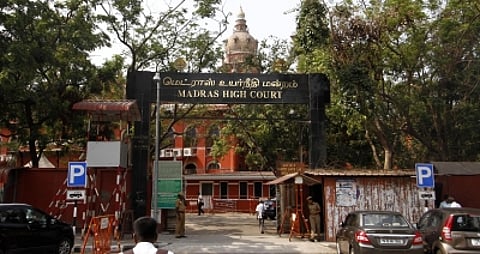
Doctors doing ‘conversion therapy’ liable to lose licence: TNMC tells Madras HC


Doctors doing ‘conversion therapy’ liable to lose licence: TNMC tells Madras HC

The submission was made before Justice N Anand Venkatesh when the petitions relating to LGBTQIA+ issues came up for hearing.


Such practices are considered unethical and may invite disciplinary action under TNMC regulations.


Updated on:

16 Sep 2025, 7:59 am

CHENNAI: The Tamil Nadu Medical Council (TNMC) on Monday informed the Madras High Court that circulars have been sent to all registered medical practitioners that performing conversion therapy and unethical treatment of trans persons would attract severe action including suspension of the registration of medical practitioners. It also said these issues would be brought into the framework of continuing medical education (CME) to sensitise the doctors.

The submission was made before Justice N Anand Venkatesh when the petitions relating to LGBTQIA+ issues came up for hearing.

The counsel appearing for the TNMC said the circulars were sent out on September 12, 2025, notifying that the TNMC is conferred with powers to take disciplinary action on any complaint received with regard to any attempt/interventions to change the sexual orientation and/or gender identity of a person, which is commonly referred to as ‘conversion therapy’, which will be construed as ‘professional misconduct’ on the part of the medical professionals and appropriate action shall be taken in accordance with the existing rules.

NEWS TODAY 17.09.2025


‘Birth control device inserted without consent of patient’

‘Birth control device inserted without consent of patient’

 Kushagra.Dixit@timesofindia.com 17.09.2025

New Delhi : A woman who delivered a baby at the municipal corporation’s Kasturba Hospital in old Delhi in July recently discovered that doctors had inserted a birth control device without informing her or her family and without her consent. 

“I delivered a healthy baby girl on July 28 through Caesarean section and was discharged in the first week of Aug,” said Sinky Rajouria, a first-time mother. “Things were okay until recently when I began feeling pain. I then found a thread hanging out of my body. I told my mother about it and we realised it was from a copper T device

We were shocked since I hadn’t asked for it nor was I informed about its insertion.” According to Pawan Singh Rajouria, Sinky’s husband, the thread created great discomfort, so they visited the hospital on Monday. “The OPD doctor told us that he didn’t have the tool to sever the thread and asked us to come back the following day. So we went back on Tuesday, only to be told the doctor was in the operation theatre. But after waiting for her for some time, the doctor came to tell us that we should get the condition treated in a private hospital,” said Pawan, a resident of Usmanpur

When the doctor asked if they intended to follow up the matter at Kasturba Hospital, Sinky said that she was scared of what had happened and was in favour of getting the device removed in another hospital. Pawan alleged, “I went to discuss the whole issue with the hospital’s medical superintendent, who heard me out briefly but soon dismissed me. Also, she didn’t ask me file an application or a complaint.” The medical superintendent of Kasturba Hospital did not offer any comments on the matter to TOI . MCD too did not respond to TOI’s queries. 

The patient’s family were unhappy about the illegal insertion of the birth-control device, the couple being mistreated in the hospital, being denied treatment for the condition that the hospital itself had created and being told to go to a private facility to resolve the problem. 


RML Outsources Testing of Blood Units

RML Outsources Testing of Blood Units 

Decision Follows Report Of Lapses At Hosp; Lady Hardinge To Handle Screening For Now 

Anuja.Jaiswal@timesofindia.com 

New Delhi : Ram Manohar Lohia Hospital has begun sending blood units collected at its blood bank to Lady Hardinge Medical College for nucleic acid testing (NAT) from Monday. This follows the TOI report of Aug 30 on RML supplying blood without this advanced screening. LHMC officials confirmed they started receiving blood on Sept 13 and have tested 203 units so far — 60 on Sept 13, 59 on Sept 15 and 84 on Sept 16. “It’s correct that RML is sending blood units to LHMC for testing till a NAT machine is pro cured by the hospital,” confirmed Dr Pulin Kumar Gupta who is in charge of RML’s media cell. “This step was taken for the betterment of patients. The procurement of the machine will be fast-tracked within a month.” NAT is considered an additional layer of protection in blood banking. It ensures that donated blood is screened for viruses even during the “window period” when traditional antibody-based tests may fail to pick up an infection. 

It is globally recognised as a superior method of ensuring transfusion safety. According to hospital sources, RML’s lapse began in Nov last year after its semi-automatic NAT machine became non-functional. Since then, only routine serology tests such as the 4th generation ELISA test have been used. While ELISA detects antibodies to HIV and hepatitis viruses, it does not match NAT’s early-detection capability. A senior doctor summed it up: “From a purely safety and technical point of view, ID-NAT (individual donornucleic acid testing) is clearly superior: it catches earlier infections, reduces residual risk, and picks up occult infections.” 


 The National Blood Transfusion Council recommends NAT as the most reliable standard for blood safety, though it is not mandatory across India because of cost considerations. Observers say large tertiary hospitals with high patient loads are nonetheless expected to maintain NAT facilities. International bodies such as the US FDA and the American Association of Blood Banks also recommend NAT for donor screening. Meanwhile, the Thalassemia Patients Advocacy Group has written to Union health minister JP Nadda, seeking immediate intervention in the matter. In the letter, the group’s member-secretary Anubha Taneja Mukherjee called the discontinuation of NAT-screened blood at RML “shocking” and warned that this put lives at risk. She pointed out that while hospitals such as LHMC and Deen Dayal Upadhyay were moving from ELISA IV to NAT, RML had gone backwards by ceasing NAT, according to patients’ accounts. Mukherjee stressed that for the more than five lakh thalassemia patients in India who depend on fortnightly transfusions for survival, the availability of NAT-tested blood is a necessity, not a luxury.

கார்த்திகையில் அணைந்த தீபம்!

கார்த்திகையில் அணைந்த தீபம்!  பிறருக்கு சிறு நஷ்டம்கூட ஏற்படக் கூடாது என்று மின் விளக்கை அணைக்கச் சொன்ன பெரியவரின் புதல்வர் சரவணன் என்கிற வி...