Wednesday, May 1, 2024

Cash Limit at Home: Income Tax Department can take action if you keep more cash at home than this

Cash Limit at Home: Income Tax Department can take action if you keep more cash at home than this


April 30, 2024

Cash Limit at Home: Income Tax Department can take action if you keep more cash at home than this

Cash Limit at Home: To control problems like tax evasion and black money, the government has made many rules regarding cash. You must know about these rules.

Cash Limit at Home: Digital transactions have increased rapidly since the Corona period. Now a large population prefers to do online transactions. But even after this, all types of transactions are still done through cash. At the same time, people who are not internet friendly also prefer to complete all their work through cash instead of online transactions.

Because of this, people still keep a lot of cash at home. But to control problems like tax evasion and black money, the government has made many rules regarding cash. In such a situation, there is a question which comes to mind many times, but we do not discuss it and that is how much cash can you keep at home? Know about it here-

What are the rules for keeping cash?

According to Income Tax rules, no special rule or limit has been made in the matter of keeping cash at home. If you are financially capable then you can keep any amount of cash at home. But you must have a source for that amount. If ever you are interrogated by the investigating agency, you will have to show the source. Besides, ITR declaration will also have to be shown. This means that if you have not earned money by wrong means, then no matter how much cash you keep at home, you do not need to worry.

Action can be taken in these situations

If you are not able to tell the investigating agency the source of the money, then it can be a big problem for you. In such a situation, the investigating agency is informed about this matter. Then the Income Tax Department checks how much tax you have paid. Meanwhile, if undisclosed cash is found in the calculations, then action can be taken against you by the Income Tax Department. In such a situation, tax up to 137% of the undisclosed amount can be charged from you.

What are the other rules regarding cash?

According to the Central Board of Direct Taxes, if you withdraw more than Rs 50 thousand cash at a time, you will have to show your PAN card. Under Section 194N of the Income Tax Act, if a person withdraws more than Rs 20 lakh in a financial year, he will have to pay TDS. However, this rule is only for those people who have not filed Income Tax Return (ITR) for 3 consecutive years.

– People who have filed ITR get some relief in this matter. Such people can withdraw cash up to Rs 1 crore in a financial year from bank, post office or co-operative bank account without paying TDS. In this situation, if you withdraw more than Rs 1 crore cash from the bank in a year, you will have to pay 2% TDS. If you have not filed ITR for the last three years, then you will have to pay 2% TDS on transactions of Rs 20 lakh and 5% on transactions of more than Rs 1 crore.

– Transactions above Rs 1 lakh at a time through credit-debit cards may be subject to scrutiny. Apart from this, you cannot pay more than Rs 2 lakh in cash to buy anything. If you want to do this, you will have to show PAN and Aadhaar here also.
Campus Talk: 4 days to go for NEET, but dress code panic grips candidates, parents


Campus Talk: 4 days to go for NEET, but dress code panic grips candidates, parents

Parents say the chaos at some exam centres is due to lack of training for the staff on-ground regarding the dress code and other dos and don’ts to be followed for the NEET-UG.

Written by Pallavi Smart

Mumbai | Updated: April 30, 2024 17:03 IST


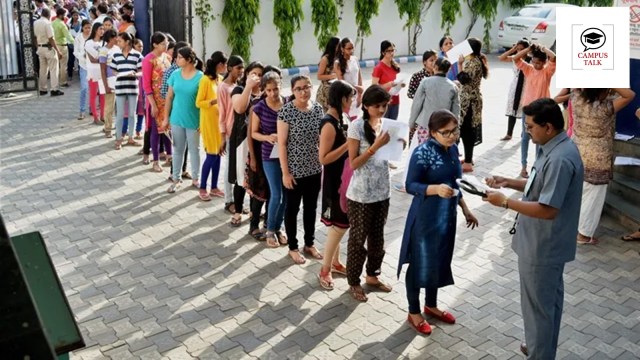
With only four days left for the single largest national level entrance test, panic levels among candidates and their parents are at their peak. (PTI/ File photo)

Candidates appearing for National Eligibility cum Entrance Test (NEET) – Under Graduate (UG) for admission to medical courses are not allowed to take anything inside the exam hall, except their admit card, according to guidelines. The NEET exam follows a strict dress-code and students are subject to extensive and compulsory frisking at the entrance.

The all-India pre-medical test for those who wish to pursue undergraduate medical or dental courses will be held on May 5, Sunday. With only four days left for the single largest national level entrance test, panic levels among candidates and their parents are at their peak.

But all the stress is not about studies alone. In fact, there are more worries about the dress code and other dos and don’ts to follow for the NEET-UG, thanks to multiple reports on chaos outside NEET exam centres in the past.

The National Testing Agency (NTA) information booklet on NEET has dedicated pages to these instructions. However, according to parents, reports of instances from outside NEET exam centres contribute to their stress, for example, last year, one exam centre in Tamil Nadu allegedly asked girls to remove bras for having metal as metallic objects are not allowed inside the exam.

“Now who would have thought metal on bras will be considered a metallic object,” said Sudha Shenoy, a parent and an expert in guiding medical aspirants on technical matters of NEET and is currently addressing multiple questions from candidates and parents on the same topic. “They are worried as any smallest mistake can lead to last minute panic.”

Shenoy shared how candidates and parents are asking questions like “Is it okay to have brand-name on footwear?” “Is it allowed to wear palazzo-pants?” among all.

Blaming the chaos on the lack of training for the staff on-ground, Shenoy said, “The information booklet on NEET does provide details on the instructions. But its implementation does not seem to be universal due to lack of proper training to the staff. This confusion causes chaos at some centres, which makes it to the news and thus result in general panic among candidates and parents, who are new every-year.”

Tamil Nadu: Court convicts Nirmala Devi in Madurai Kamaraj university sex racket case

Tamil Nadu: Court convicts Nirmala Devi in Madurai Kamaraj university sex racket case

After the case became linked to the office of then Governor Banwarilal Purohit, Raj Bhavan refuted allegations of his involvement.

Nirmala Devi, the prime accused in the Madurai Kamaraj University (MKU) sex racket case Photo| K K Sundar


Updated on:
30 Apr 2024, 7:23 am

VIRUDHUNAGAR: The Fast Track Mahila Court in Srivilliputhur on Monday convicted Nirmala Devi, the prime accused in the 2018 case involving a bid to lure female college students into giving sexual favours to Madurai Kamaraj university officials in exchange for marks and financial support.

The high-profile case came to light after an audio clip purportedly of the former Devanga Arts college assistant professor attempting to lure the female students was circulated online. After the case became linked to the office of then Governor Banwarilal Purohit, Raj Bhavan refuted allegations of his involvement.

While Nirmala Devi was convicted, the court acquitted the other two accused, former MKU assistant professor V Murugan and former MKU research scholar S Karuppasamy. Judge T Bagavathi Ammal said the quantum of punishment will be pronounced on Tuesday (April 30). According to sources, she was convicted under five sections, including sections of the Immoral Traffic (Prevention) Act.

Nirmala Devi, who was teaching at Devanga Arts college in Aruppukottai, was arrested by Aruppukottai Town police on April 16, 2018 under Sections 370 and 511 of the IPC and 67 of the IT Act following a complaint from the college’s secretary Ramasamy, stating that four female students had complained to him that Nirmala tried to engage them to provide sexual favors to MKU officials in return for marks and financial support.

The case was transferred to CB-CID within days and Sections of 9 of Immoral Traffic Act and 4 of Tamil Nadu Prohibition of Harassment of Women Act were also included. During the investigation, Murugan and Karuppasamy were also alleged to be involved in the crime and were arrested.

TN to appeal against acquittal of two accused

Governor Purohit, who addressed a press conference to refute the allegations against him, also set up a one-man committee led by retired IAS officer R Santhanam to probe the matter and file a report to him.

Trial in the Fast Track Mahila court began in 2018.

On Friday, the court adjourned the judgment to Monday as Nirmala wasn’t present due to health issues. After the judge pronounced the verdict on Monday, Nirmala was arrested and remanded in Madurai Central Prison. Addressing reporters, the special public prosecutor M Chandrasekaran said the state would appeal against the acquittal of Murugan and Karuppasamy. He added that witnesses from MKU had turned hostile.

One-man panel

Former governor Banwarilal Purohit also set up a one-man committee to probe the matter and file a report to him

Madurai Kamaraj varsity V-C to resign over ‘health issues’


Madurai Kamaraj varsity V-C to resign over ‘health issues’

According to sources, MKU has been facing a financial crisis for over four years. Every month, officials face challenges in obtaining funds from the higher education department.


Updated on:
30 Apr 2024, 8:08 am


MADURAI: Madurai Kamaraj University (MKU) Vice-chancellor J Kumar is set to resign, citing health issues. Kumar assumed office on April 1, 2022, and his tenure is for a period of three years. Even though he has 11 months before his tenure ends, Kumar reportedly wishes to retire before.

According to sources, MKU has been facing a financial crisis for over four years. Every month, officials face challenges in obtaining funds from the higher education department. Over 6,000 audit objections prevented the university from getting grants from the state government, accumulated over 15 years during the former VC’s tenure. The higher education department has also imposed conditions, including restructuring salaries, reassigning administrative designations in accordance with the ministerial staff and cancelling inappropriate appointments, among others.

Even though Kumar tried to implement the conditions, the administrative staff approached the Madurai Bench of the Madras High Court and got an interim stay. The court later ordered not to restructure the salaries or reassign the designations. Since the higher education department did not disburse funds to release the salaries as per the court orders, Kumar has decided to resign, sources said.

Speaking to TNIE, Kumar said that plans to submit a resignation letter within two weeks, citing his health condition. “There is no rule to submit my resignation. However, I have to discharge my responsibilities to the convener committee,” he said.

Tuesday, April 30, 2024

Employee Appointed Through Valid Process Can't Be Denied Regularization If Performing Permanent Role For Considerable Time: Supreme Court

Employee Appointed Through Valid Process Can't Be Denied Regularization If Performing Permanent Role For Considerable Time: Supreme Court


26 Apr 2024 9:17 PM


The Court distinguished the 'Umadevi' case dictum by noting that it has differentiated between "illegal" and "irregular" appointments.
Listen to this Article

The Supreme Court held that procedural formalities cannot be used to deny regularization of service to an employee whose appointment was termed "temporary" but has performed the same duties as performed by the regular employee over a considerable period in the capacity of the regular employee.

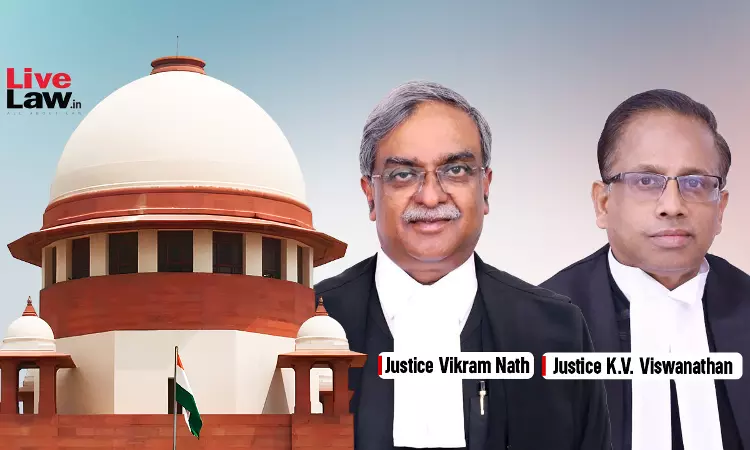
Setting aside the High Court's decision which had declined to regularize the employment of employees who were serving continuously in the capacities of regular employees, the Bench comprising Justices Vikram Nath and KV Viswanathan observed that since the employees were appointed through a valid selection process akin to the selection process of the regular employee and were serving continuously for about 25 years, therefore, "the failure to recognize the substantive nature of their roles and their continuous service akin to permanent employees runs counter to the principles of equity, fairness, and the intent behind employment regulations."

"The continuous service of the appellants in the capacities of regular employees, performing duties indistinguishable from those in permanent posts, and their selection through a process that mirrors that of regular recruitment, constitute a substantive departure from the temporary and scheme-specific nature of their initial engagement.", the order dictated by Justice Vikram Nath said.

Before the Supreme Court, in support of the High Court's decision to reject the regularization of the appellants/employees' service, the respondent upon placing reliance on the Judgment of Secretary, State of Karnataka vs. Umadevi contended that the appellant's employment under a temporary scheme could not confer upon them the rights akin to those held by permanent employees.

Umadevi's Distinguished By Supreme Court

The court held that the High Court had incorrectly applied the ratio of Umadevi in the present case. The court in Umadevi termed appointments through back door entry as irregular and invalid. Distinguishing Umadevi's case from the present case, after recording that the appellants have gone through the valid selection process by appearing in the written exams and viva voce, the court held that service conditions of the appellants warrant a reclassification from temporary to regular status.

It is worthwhile to mention that in Umadevi's case, the court had distinguished between “irregular” and “illegal” appointments underscoring the importance of considering certain appointments even if were not made strictly in accordance with the prescribed Rules and Procedure.

"The appointment cannot be said to have been made illegally if they had followed the procedures of regular appointments such as the conduct of written examinations or interviews as in the present case.", the court observed while referring to Umadevi.

Accordingly, the court allowed the appeal and directed the regularization of the appellant's services.

Case Title: VINOD KUMAR & ORS. ETC. VERSUS UNION OF INDIA & ORS.

Citation : 2024 LiveLaw (SC) 330

NEET-PG : Supreme Court Dismisses Plea Seeking Extension Of Internship Cut-Off Date For NEET PG 2024


NEET-PG : Supreme Court Dismisses Plea Seeking Extension Of Internship Cut-Off Date For NEET PG 2024


29 Apr 2024 2:55 PM


The Supreme Court today (April 26) refused to entertain a petition seeking an extension of internship cut-off for the upcoming NEET PG 2024 examinations.

The counsel appearing for the petitioners stressed that non-extension may lead to him losing out on the time and efforts which were put in as a candidate. He urged "My precious year will be at a lost ....eligibility till 15 August is already given."

Seemingly in disagreement to interfere, the CJI remarked, " We cannot extend that. ...I mean people are bound to fall on the side of a particular line when there is a cut-off. "

The bench of CJI Chandrachud and Justices JB Pardiwala and Manoj Misra dismissed the petition, considering it to be an issue falling strictly within the policy domain. The Court however allowed the petitioners to approach the competent authorities in pursuance of the previous representations which have already been made.

The bench directed the following: "The fixation of a cut-off for appearing in the NEET-PG Examination is a matter of policy. Any cut-off would affect students. It will be open to the Petitioners to pursue the representations within one week."

NEET PG 2024 is scheduled to take place on June 23, 2024. The present cut-off date for internship is August 15, 2024.

Earlier, a petition was filed in the Supreme Court seeking the extension of the internship cut off for the NEET-MDS. Responding to the petition, the Centre informed the Court in March that the cut-off for NEET MDS was extended from March 31 to June 30.

Case Details : RIDDHESH vs. UNION OF INDIA W.P.(C) No. 000263 - / 2024

Monday, April 29, 2024

Retrospective Re-Fixing Of Salary And Pension Benefits After Retirement Is Against Law: Madras High Court

Retrospective Re-Fixing Of Salary And Pension Benefits After Retirement Is Against Law: Madras High Court


29 Apr 2024 1:30 PM


The Madras High Court recently set aside an order of the Registrar of Madurai Kamaraj University reducing a former Lab Assistant's scale of pay and subsequently reducing the pension amount.

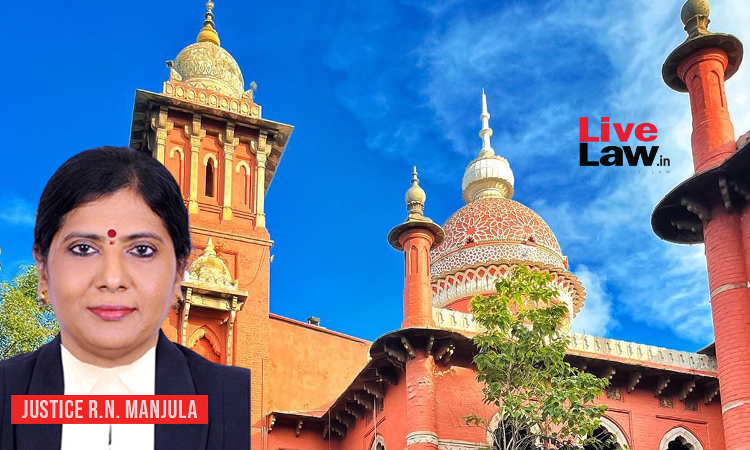
Justice RN Manjula that after retirement, the employer-employee relationship between the petitioner and the University had come to an end and the University held no authority to re-fix the salary and consequential benefits of the petitioner.

“The petitioner was retired from service by superannuation and hence, the employer - employee relationship between the petitioner and the second respondent University had come to an end and hence, the second respondent University holds no Authority to re-fix the salary and the consequential benefits of the petitioner,” the court observed.

The court also observed that as far as universities were concerned, only a Syndicate had the power to appoint the university and fix their emoluments. Thus, in the court's view, the retrospective re-fixation of salary and subsequent reduction of pension amount based on Local fund audit objection was against the law and liable to be set aside.

“As held in the above Judgment, only the Syndicate has the power to appoint the University staffs and fix their emoluments. The re-fixation of salary and consequential pensionary benefits post retirement retrospectively, in the opinion of this Court, is not in accordance with law and hence the impugned orders are liable to be set aside,” the court said.

The court made the orders on a plea by R Rajamani, who was working as a Lab Assistant at Madurai Kamaraj University. Rajamani had retired from service on November 11, 1988. He had challenged an order from the University Registrar reducing his scale of pay on the basis that it was wrongly fixed. The registrar stated that the Local Fund Audit Department had raised objections and observed that the pay fixation was wrongly made on a higher scale.

Rajamani informed the court that though the pension amount was reduced from December 2023, the impugned order was passed only in March 2024. He added that he was not issued with any prior notice before issuing the impugned order.

The court relied on an earlier order wherein it had observed that Government Order could not superseded by any statutory provisions that govern the service conditions of the employees. The court also relied on the Apex Court order in State of Jharkhand vs. Jitendra Kumar, wherein the Apex Court had held that the right to receive a pension was a right in property and executive instructions could not have a statutory character and could not be called as law.

The court thus set aside the order of the Registrar and directed the University to reimburse the recovered amount with interest within a period of 12 weeks.

Counsel for the Petitioner: Mr.T.C.S.Thillainayagam

Counsel for the Respondents: Mr.T.Amjadkhan Government Advocate, Mr.Ashaiq Ismail for Mr.T.Cibi Chakraborthy

Citation: 2024 LiveLaw (Mad) 175

Case Title: R Rajamani v The State of Tamil Nadu

Case No: W.P.(MD)No.9989 of 2024

கார்த்திகையில் அணைந்த தீபம்!

கார்த்திகையில் அணைந்த தீபம்!  பிறருக்கு சிறு நஷ்டம்கூட ஏற்படக் கூடாது என்று மின் விளக்கை அணைக்கச் சொன்ன பெரியவரின் புதல்வர் சரவணன் என்கிற வி...