Thursday, March 13, 2025

DA Hike Update: The lowest DA in 7 years? Union Cabinet To Decide toda


DA Hike Update: The lowest DA in 7 years? Union Cabinet To Decide today

Sweta Mitra March 12, 2025 - 05:33 PM
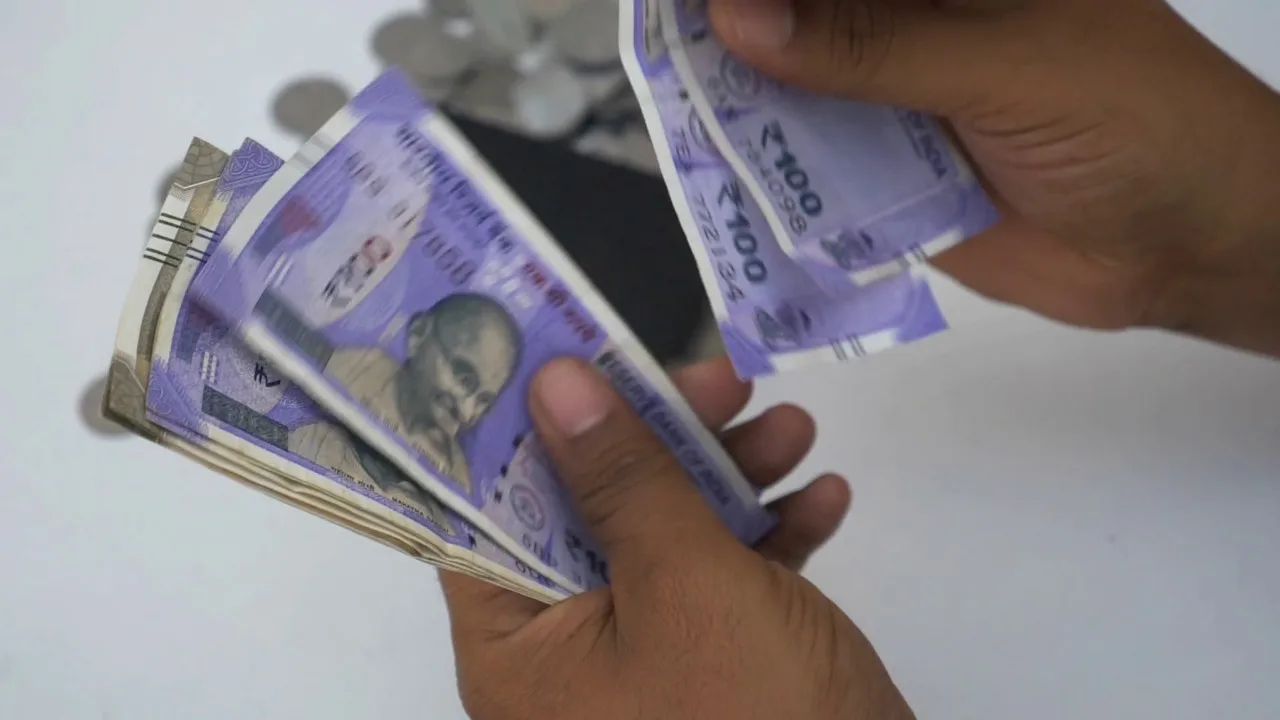


The wait is over. The announcement about the increase in Dearness Allowance (DA) and Dearness Relief (DR) for central government employees and pensioners is coming up soon. The new DA will kick in starting January 2025, meaning employees will receive two months’ worth of DA arrears along with their boosted salary in March.

The Union Cabinet, led by Prime Minister Narendra Modi, is set to talk about the DA increase in their meeting on Wednesday. Reports suggest that the government might approve a 2 percent DA hike during this session.

Typically, the DA hike is revealed around Holi each year

In recent years, the central government has been announcing DA increases around the Holi festival. However, this time, employees might feel let down by the percentage of the increase. Based on the All India Consumer Price Index (AICPI) data, it looks like there will only be a 2% increase in DA, which would be the smallest rise in the last seven years. Since July 2018, the government has usually raised the DA by at least 3% or 4%.

During the COVID-19 pandemic, the government paused DA hikes for 18 months, from January 2020 to June 2021, with no increases during that time. Traditionally, the government raises DA twice a year: once for the January-June period, announced in March, and again for the July-December period, announced in October or November.

The dearness allowance is set to rise to 55 percent

Currently, under the 7th Pay Commission, the dearness allowance stands at 53%. Back in October 2024, it was bumped up by 3%, moving from 50% to 53%. Now, there’s talk of a 2% increase for the January-June 2025 period, which could push the DA up to 55%.

So, how is the dearness allowance determined?

The Dearness Allowance (DA) is figured out using the All India Consumer Price Index (AICPI-IW), published by the Labour Bureau. The government looks at the AICPI-IW data from the last six months to decide on the DA increase for the upcoming six months.

Everyone’s waiting on the government’s decision

Right now, over a crore of central employees and pensioners are anxiously anticipating what the government will decide. All eyes are on the cabinet meeting, where the final call will be made.

Wednesday, March 12, 2025

What’s the most-seized check-in bag item at KIA? Power bank

What’s the most-seized check-in bag item at KIA?  Power bank

Nithya.Mandyam@timesofindia.com 12.03.2025

Bengaluru : With mobile phones becoming an extension of one’s self, the need to keep them working by overcoming their battery limitations, is most people’s headache. More so, air travellers prefer to be equipped with the power bank on the go. However, the flyers seem to be unaware of the fact that power banks in check-in bags is resented by airport security personnel who confiscate them. 

According to the security data from Kempegowda International Airport (KIA), 1,412 kg of power banks were seized from flyers’ check-in bags between Jan last year and Feb this year. The other two major goods confiscated were 556kg of lighters and 576kg e-cigarettes. Power banks are allowed in cabin baggages. The primary reason for power banks to be prohibited in check-in bags is their components— lithium ion batteries, which are dangerous and when overheated can cause fire and explosions. 

According to Dangerous Goods Regulations, one can carry portable electronic devices (PED) containing lithium metal or lithium ion cells or batteries in cabin baggage and each person can carry only 15 PEDs. In case of lithium ion batteries, portable devices can’t be of more than 100Whhour capacity. However, there are special power banks which are over 160 Wh and they can be carried on special permission from the airline.

 “Damaged and modified power banks will not pass security check because of their flammable nature. Ideal power banks that are damaged or have a swelling might burst in mid air, risking the lives of passengers,” said an official. The other restricted items intercepted by security personnel included flammable liquids, gases, and dried coconut (copra), all of which pose safety risks.

 “Once seized, restricted items are systematically categorised based on their clas sification and stored in a secure location for up to 15 days. This holding period allows passengers, in certain cases, to claim items that may be permitted in checked baggage. However, unclaimed or hazardous items are handed over to a BBMP-authorised vendor for environmentally responsible disposal, ensuring compliance with safety regulations,” said a BIAL spokesperson. 

Despite the high volume of confiscations, officials note that screening trends remained consistent over the past year. There was no significant increase in new or unusual items, indicating that passengers continue to carry commonly restricted goods rather than emerging threats. However, one notable regional pattern emerged regarding e-cigarettes. While many countries permit passengers to carry e-cigarettes in their carry-on luggage, India strictly prohibits them, leading to frequent confiscations—particularly from international passengers transiting to domestic flights.


 “In India, e-cigarettes and vapes are strictly prohibited in the country and these are the ones that are being seized in large numbers here. There are constant arguments between passengers and security personnel about vapes and e-cigarettes being allowed in other countries, but we have prohibitory orders,” said an airport official

‘Include UGC Chairman’s nominee in V-C search panel for sports university’


‘Include UGC Chairman’s nominee in V-C search panel for sports university’

R.N. Ravi

The Hindu Bureau

CHENNAI 12.03.2025

Governor R.N. Ravi has called upon the Tamil Nadu government to notify the search committee for the appointment of the Vice-Chancellor (V-C) of Tamil Nadu Physical Education and Sports University, “as constituted by the Chancellor”, which included the University Grants Commission (UGC) Chairman’s nominee, the Raj Bhavan said on Tuesday.

Though the Chancellor had, in October 2024, directed the State government to notify the constitution of the committee with four members, including the UGC Chairman’s nominee, the G.O. issued by the Youth Welfare and Sports Development Department on January 28, 2025 “purposefully excluded the UGC Chairman’s nominee, in violation of the judgments of Hon’ble Supreme Court of India”, the Raj Bhavan said.

The notifications issued by the State government was contrary to the existing UGC regulations and orders of the Supreme Court, it said.

The Chancellor had urged the Government of Tamil Nadu to recall the said notifications, the Raj Bhavan said.

It pointed out that the Supreme Court had held in Prof. (Dr.) Sreejith P.S. vs. Dr. Rajasree M.S. & others that any appointment as Vice-Chancellor made on the recommendation of the search committee, which was constituted contrary to the provisions of the UGC regulations, shall be void ab initio.

The search committee constituted by the Chancellor was as per the provisions of Tamil Nadu Physical Education and Sports University Act as well as UGC regulations, 2018, it pointed out.

“The inclusion of UGC Chairman’s nominee in the Search Committee of State Universities is held to be mandatory by the Supreme Court,” it said.

ChatGPT Warning: Things You Should Never Share with AI Chatbots


ChatGPT Warning: Things You Should Never Share with AI Chatbots

The AI Danger Zone: Questions You Should Never Ask ChatGPT and Other Chatbots


Published on:
10 Mar 2025, 1:00 pm

Digital confession’ is increasingly becoming popular where people compulsively share their most private fears with artificial intelligence. In seeking comfort from algorithms, they disclose personal issues, career frustrations, and existential worries.

AI serves as a silent, non-judgmental listener, and its role as an imaginary confidant raises questions about the nature of empathy and humanity's need for validation in an increasingly automated world.

Here are a few things you should NEVER ask or tell an AI, and why:

1. Personal Information:

Never give out your whole name, address, phone number, or any other information that could be used to identify you.

Financial information such as passwords, credit card numbers, and bank account numbers.

Why?

Despite their frequent security, AI systems are susceptible to hacking. Giving out personal information puts you at risk for harmful activity.

2. Sensitive Information:

Avoid sharing personal secrets, private conversations, and confidential business information.

Anything you wouldn’t want the public to know.

Why?

AI interactions are frequently observable, recordable, or archivable. Unauthorized access or data leakage is always a possibility. Furthermore, because the models are trained on large databases, they may be utilized for training models in the future.

3. Medical or Legal Advice:

Avoid having conversations about your health issues or your treatment plans. Never ask an AI for a diagnosis or even legal interpretations.

Why?

AI cannot take the place of trained experts like physicians or lawyers. Human judgment is necessary when giving legal or medical advice. Using AI in this way could have detrimental effects.

4. Illegal or harmful activities:

Never perform any illegal activities, and avoid asking an AI bot how to perform harmful acts.

Why?

AI systems are programmed to detect and flag such requests, which means the information shall be stored, and even in an artificial environment, it can cause serious legal actions.

5. Opinions on Situations:

Do not treat AI as your friend; relying on AI for critical decisions can often go wrong.

Why?

AI is not trained to give advice, human judgment, or critical thinking.

In conclusion, when artificial intelligence offers immense potential, it’s crucial to approach its use with caution and awareness. The rising trend of oversharing personal information with AI underscores the need for clear digital boundaries.

Protecting sensitive information, recognizing AI limitations, and maintaining critical thinking are essential for responsible AI interaction.

Tuesday, March 11, 2025

NEWS TODAY 11.3.2025


How Many PG Medical Seats Available This Year? Check Out NMC's Updated Seat Matrix

Below are the MD, MS seats details:

Speciality Total Seats

MD General Medicine 5349

MS General surgery 4905

MD Anaesthesiology 4786

MS Obstetrics & Gynaecology 4049

MD Paediatrics 3402

MS Orthopaedics 2934

MD Pathology 2870

MD Radio Diagnosis/Radiology 2663

MD/MS - Ophthalmology 2008

MD Social & PreventiveMedicine /Community Medicine 1787

MS Otorhinolaryngology (ENT) 1614

MD Microbiology 1560

MD Dermatology, Veneronology & Leprosy 1418

MD Pharmacology 1314

MD Psychiatry 1269

MD/MS - Anatomy 1223

MD Physiology 1187

MD Bio-Chermistry 1098

MD Tubercurosis & Respiratory Diseases/ Pulmonary Medicine 885

MD Forensic Medicine /Forensic Medicine & Toxicology 732

MD Emergency Medicine 470

MD Radiotherapy/ Radiation Oncology 424

MD Respiratory Medicine 221

MD Immuno Haematology & Blood Transfusion 164

MD physical Medicine & Rehabilitation 87

MD Geriatric 56

MD Hospital Administration 42

MD Nuclear Medicine 26

MD Palliative Medicine 25

MD Sports Medicine 21

MD Family MEDICINE 20

MD- Aviation Medicine/Aerospace Medicine 17

MD TRANSFUSION MEDICINE 12

MD Tropical Medicine 11

MS-TRAUMATOLOGY & SURGERY 8

MD Lab Medicine 5

MD Radiation Oncology 5

MD Bio Physics 1

Total Seats 48668

No Private Practice During Duty Hours! Karnataka Tightens Rules For Doctors


No Private Practice During Duty Hours! Karnataka Tightens Rules For Doctors

Written By Barsha MisraPublished On 11 Mar 2025 12:41 PM | Updated On 11 Mar 2025 12:41 PM

Karnataka Govt Bans Private Practice of Govt Doctors During Duty Hours

Bengaluru: Strict measures have been implemented in Karnataka to curb private practice by the government doctors in the state. With this, Government doctors in Karnataka are not permitted to take up private practice during working hours for any reason, Karnataka Medical Education Minister Sharan Prakash Patil informed the Legislative Council. Besides, Minister Patil stated that the timing of the doctors' working hours has been revised from 9 a.m. to 2 p.m. to 9 a.m. to 4 p.m. The State has also introduced a biometrics attendance system for the government hospital staff to mark their attendance four times a day.

As per the Minister, the salaries of the Government doctors will now be processed based on their attendance and the State would also take disciplinary action against those who violate the rules.

Minister Patil informed about these rules while responding to a question by Congress MLC Balkhees Banu in the Legislative Council. The Minister acknowledged complaints stating that some government doctors were working at other places during duty hours, PTI has reported.

Specifying the strict measures implemented by the Government to curb such practices adopted by government doctors, the Minister said, "There are complaints by patients that doctors are not available in government hospitals during working hours and are instead practicing in other places. I have issued strict instructions to the hospital heads to monitor such absenteeism and ensure doctors are available in the government facilities from 9 a.m. to 4 pm."

As per the latest media report by The Hindu, the Minister added, "Earlier, the working hours were from 9 a.m. to 2 p.m. But, now the timings have been extended and the doctors must be available in their workplaces from 9 a.m. till 4 p.m. There are complaints that some doctors come in an hour late and leave an hour early. To prevent this, we have introduced a biometrics attendance system, wherein the government staff in hospitals are supposed to mark their attendance four times a day - 9 a.m., 2 p.m., 3 p.m., and 4 p.m. Their salaries will be processed based on the attendance. Disciplinary action will be taken against those who violate these rules."

A notification has been issued to the heads of all government hospitals to follow the rules. Strict action will be taken against doctors who violate the rules.”

“From now, it is mandatory for doctors to mark their attendance four times a day through the biometric system. They have to do it at 9 am, 2 pm, 3 pm and 4 pm. Their salaries will be paid based on this. Providing timely and proper treatment is the government’s top priority," he said, quoted TNIE

Apart from this, the Minister also informed that every hospital has been mandated to provide outpatient services and instructions have been issued to ensure necessary OPD facilities for patients. He stated that the quality of healthcare services in government hospitals was improving and steps were being taken to ensure no shortages.

Medical Dialogues had earlier reported that back in 2023, noting that a large number of government doctors were involved in private practice after their duty hours, the Karnataka Administrative Reforms Commission -2 (KARC-2) had suggested the State to enforce a complete ban on private practice of government doctors of all departments.

Back then, the panel had opined that with the ban on private practice, the government hospitals may become able to start Out Patient Department (OPD) in the evening as well.

NEWS TODAY 18.12.2025