Friday, April 4, 2025

Google Keep may get updates soon: These are the two most interesting changes


Google Keep may get updates soon: 

These are the two most interesting changes

Google Keep may soon introduce a revamped toolbar and cleaner image previews, according to an APK teardown, aiming to modernize the app’s user interface.

AGENCIAS

April 3, 2025 Updated: April 3, 2025 at 4:25 PM

Google Keep, the simple yet powerful note-taking app, may be about to receive a fresh coat of paint in its upcoming versions. According to an APK teardown presented by Android Authority, two major changes stand out: a redesigned toolbar and a new way of displaying image attachments. While these updates aren’t available yet, they could arrive in a future release.

A cleaner, more dynamic toolbar is coming One of the main visual changes spotted is a revamped toolbar with larger, more prominent icons for key actions like attaching files, formatting text, and changing the background color. The icons appear with rounded backgrounds that adapt to the device’s theme, bringing a more modern and consistent look. Subheading formats such as H1 and H2 will also become slightly smaller, likely to improve overall readability.

Image attachments may finally look better In its current version, when a user adds an image to a note, it spans the entire width of the screen, often feeling visually intrusive. The previewed design changes that by introducing margins on both sides of the image, giving it rounded corners and a cleaner, more elegant appearance. This subtle tweak could significantly improve the app’s visual balance, especially for users who frequently include photos in their notes.

These updates follow Google Keep’s recent enhancements like floating action buttons and a shortcut for audio notes. While the redesign isn’t live yet, all signs suggest Google is preparing a more refined and user-friendly experience for its loyal note-takers.

SC: State can't decide on rural stints for doctors from outside


SC: State can't decide on rural stints for doctors from outside 

The Supreme Court criticized the Uttarakhand government's 2009 policy requiring non-state students in MBBS courses to serve in remote areas or pay Rs 30 lakh. The court emphasized that this policy should be a uniform decision by the Union government, citing challenges faced by students from other states in serving in inaccessible regions.

Dhananjay.MahapatraTNN

Apr 3, 2025, 5:25 IST

Supreme Court NEW DELHI: Supreme Court on Wednesday faulted Uttarakhand govt's 2009 policy mandating non-state students admitted to MBBS courses in its medical colleges under the 15% all-India quota (AIQ) to either serve in remote areas for five years or pay Rs 30 lakh in addition to steep annual fees. "What is the use of asking a student from Tamil Nadu, who gets admission into an MBBS course in a govt medical college in Uttarakhand based on his all-India rank and primarily taught medicine in English, to serve in inaccessible areas of the state?" asked a bench of Justices Surya Kant and N Kotiswar Singh. "Will he be able to interact with patients in remote villages and inaccessible areas and treat them? It is a laudable concept for inter-state exchange of civil servants and other subject experts.

However, a state cannot decide rural service for non-state all-India quota students, doing MBBS from the govt college within its territory. It requires a uniform policy decision, for which the Union govt is the competent authority," the bench said. As per the 2009 policy decision of the Uttarakhand govt, an AIQ student was required to sign a bond for Rs 30 lakh promising to serve in rural areas for five years on completing an MBBS course from its medical college. It also stipulated that if an AIQ student opted out of mandatory rural service in the state, then he would have to pay an annual fee of Rs 2.2 lakh instead of Rs 15,000.

"Justice Hurried Is Justice Buried": Madras High Court Upholds Order Quashing Disciplinary Proceeding Conducted Within Two Weeks


"Justice Hurried Is Justice Buried": Madras High Court Upholds Order Quashing Disciplinary Proceeding Conducted Within Two Weeks


2 Apr 2025 6:43 PM


The Madras High Court has dismissed an appeal filed by the General Manager & Reviewing Authority of the Canara Bank against an order of the single judge quashing the disciplinary proceedings against an employee.

The bench of Justice GR Swaminathan and Justice P Vadamalai noted that while disciplinary proceedings usually take a few months to conclude, the disciplinary proceedings in the present case were concluded within two weeks. The court thus said that the committee had shown undue hate for bringing the enquiry to a closure.


“We take judicial notice of the fact that disciplinary proceedings of this nature would normally take at least a few months to conclude. 'Justice hurried is justice buried' is a well known adage. It is inconceivable that the entire proceedings could have been concluded in a fair manner within a period of two weeks,” the court said.

The court remarked that disciplinary proceedings are not like a bullet train journey and should be conducted in a manner with a possibility of “two roads diverging in the yellow woods”. While the court noted that the proceedings need not be slow, it had to be carried on with a reasonable speed. The court added that the proceedings should be permeated with fairness and the end result should not be premeditated.


“A disciplinary proceeding should not resemble a point to point bullet train journey. A charge memo need not necessarily culminate in punishment. The delinquent employee stands the chance of being exonerated also. The proceeding should therefore be conducted in a manner that is pregnant with the possibility of “two roads diverging in the yellow woods”. There must be halting stations. And the halts should be meaningful and not for the sake of it. The process need not be necessarily slow. It can very well be carried on with reasonable speed and despatch. The Judge carrying out the task of judicial review must get the feeling that the entire process was permeated with fairness and that the end result was not predetermined,” the court said.


The court was hearing the appeal filed by the management against the order of the single judge setting aside the order passed by the disciplinary authority against the authority. The allegation against the employee was that while working as the Branch Manager of Canara Bank from 2007 to 2009, he had sanctioned a large number of loans in favour of self-help groups. He was later transferred in 2009. A charge memo was issued in 2012 containing seven articles of charge.


The court noted that though the employee was called on to offer his explanation within 15 days, the enquiry commenced without waiting for his reply and was completed within 2 days. The enquiry officer also submitted that report within a few days and the employee's representation was also obtained on the same day. The disciplinary authority passed an order after 4 days agreeing with the finding of the enquiry officer and imposing a punishment of dismissal from service.

The management argued that the in-house investigation reports clearly revealed that the employee, as a sanctioning authority, did not adhere to the procedure laid down in the bank norms and due to the improper, irregular, and fraudulent loan disbursement, the bank suffered huge financial loss. Thus, it was argued that the bank was justified in imposing the punishment. Challenging the order of the single judge, the bank management argued that the writ court could not assume the function of a fact finder or decide the quantum of punishment to be awarded.

The court noted that though procedure was followed, there was undue haste. The court noted that the employee was given only 15 days to offer his explanation and the enquiry commenced even without waiting for his reply. The court also noted that the enquiry officer had marked 96 documents and examined 17 witnesses within 2 days. Further, the court also noted that the enquiry report was furnished to the delinquent even before submitting it to the disciplinary authority. Thus, the court deemed the entire exercise to be “whirlwind proceedings”.

From the entire sequence of events, the court also suggested that the employee seemed to have been given an assurance that he would be let off lightly if he cooperated, as no employee would otherwise willingly participate in the proceedings without submitting his defence statement. The court held that the employee was led like a lamb to be mercilessly slaughtered. The court concluded that the process was not fair and an interference was justified.
“When it comes to adherence to principles of procedural fairness, we would expect the employer to be an exemplar. They cannot take advantage of the acquiescence on the part of the employee. By no stretch of imagination can the process that had taken place in this case held to be fair. On this sole ground, interference is justified,” the court said.

The court also noted that the order of the disciplinary authority and the appellate authority did not detail the defences taken by the employee. The court thus agreed with the single judge that the orders were non-speaking ones. Considering all the facts, the court found no reason to interfere with the order of the single judge and dismissed the appeal.

Counsel for Petitioner: Mr. N. Dilip Kumar

Counsel for Respondents: Mr. M.E.Ilango

Case Title: The General Manager and Others v. SV. Mothilal

Citation: 2025 LiveLaw (Mad) 126

Case No: WA(MD)No.932 of 2021

One-Year LLM Program Approved By UGC, Valid For Getting Appointment In Public Departments Or Universities: Madras High Court

One-Year LLM Program Approved By UGC, Valid For Getting Appointment In Public Departments Or Universities: Madras High Court


3 Apr 2025 7:15 PM


The Madras High Court recently observed that that the one-year LLM programme was approved by the UGC and could not be held to be invalid for getting appointed into public departments or Universities. The court thus asked the Teachers Recruitment Board to include the name of a woman whose name was withheld merely because she had done a one-year LLM course.

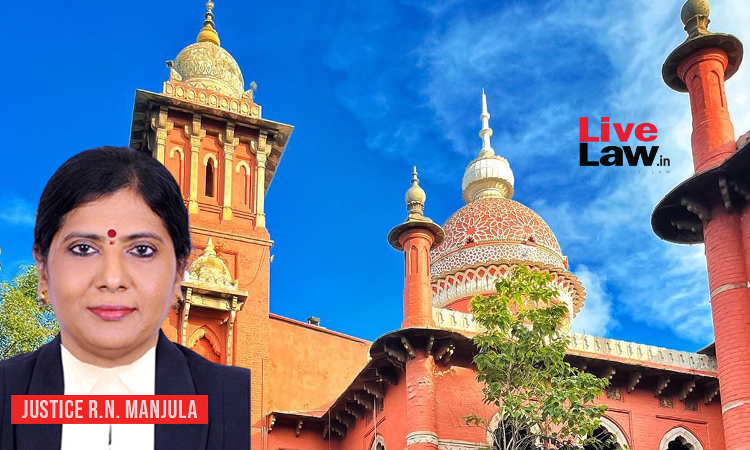
Justice RN Manjula observed that the notification for appointment did not prescribe that one of the requirements for the appointment was only a two-year LLM degree. The court observed that while the employer could demand the educational requirement for a post, the qualification contemplated could not be arbitrary and bring in discrimination between similar courses.


“Even though the employer is a rightful person who should demand the educational requirement for a post to be filled up in this regard, the qualification contemplated by the employer shall not make any arbitrary discrimination between equivalent and similar course without any valid basis,” the court said.

The court was hearing a petition was filed by Sangeetha Sriraam challenging the provisional selection list of candidates published by the Teachers Recruitment Board and to direct the Board to appoint her to the post of Assistant Professor against the vacancy in Human Rights Department.


The petitioner informed the court that she had applied to the post of “Assistant Professor” (Human Rights) when the notification was issued by the Board. She submitted that she had attended the written examination and topped it by obtaining 133 marks out of 175 and got a call letter from the Board for attending the interview. Following this she attended the interview. However, when the provisional selection of candidates was published, her name was not on the list and the candidates who had obtained lesser marks than the petitioner found place in the selection list.


The petitioner argued that even if the other candidates had obtained full marks, she could not have been excluded from the selection list. She also submitted that if her interview marks were clubbed with her written examination mark, she would be ahead of the selected candidates.

Opposing the plea, the State argued that the petitioner's candidature could not be considered as she had qualified in LLM degree by doing one year LLM Programme while the degree required for appointment was two year LLM Programme.


The court, however, noted that the above requirement was informed to the petitioner only through the counter and not anytime before. The court also noted that as per the rules in the notification, the requirement regarding Master's Degree was 55% of mark or an equivalent grade in the point scale wherever the grade system is followed in a concerned/relevant/allied subject from an Indian University or an equivalent degree from an accredited foreign University. The court thus noted that the notification did not specify the two-year LLM requirements.

The court noted that through an earlier order, the court had held that one one-year LLM programme recognised by the UGC was accepted for the purpose of admission to PHD. The court added that when the same was allowed, there was no reason to reject the one-year LLM degree for the purpose of appointment.

“As stated already one year LLM Programme has been approved by UGC and that has been accepted as qualification to get enrolled in Ph.D. programme in Tamil Nadu Dr.Ambedkar Law University itself. It is needless to state that the University in which the petitioner had done her one year LLM course is one of the most reputed Law School in the country and it is needless to state that one year LLM course would have also included the research aspect as well. Under such circumstances, no invalidation can be attached to one year LLM degree for the purpose of getting appointment in the public departments or Universities,” the court said.

Thus, noting that the petitioner had proved her eligibility by securing first rank in written examination and that the authorities ought to have considered her candidature, the court directed the Board to include her name in the selection list and to release her appointment order.

Counsel for Petitioner: Mr. M. Nirmalkumar

Counsel for Respondents: Mr. R. Neelakandan Additional Advocate General Assisted by Mr. R. Siddharath Standing Counsel for TRB, Mr. V. Umakanth, Mr. P. R. Gopinathan

Case Title: Dr. Sangeetha Sriraam v. The Teachers Recruitment Board and Others

Citation: 2025 LiveLaw (Mad) 128

Case No: W.P.No.15473 of 2019

Government increases NEET UG and PG seats to meet rising demand for medical professionals

Government increases NEET UG and PG seats to meet rising demand for medical professionals 

The Indian government has announced a significant increase in medical seats, with MBBS seats reaching 1,18,190 and PG seats at 74,306. This move aims to address the gap between medical aspirants and available seats, supporting healthcare needs across the country. 

Plans include expanding medical colleges and upgrading existing ones, alongside the establishment of new medical institutions attached to district hospitals. The government's initiative seeks to enhance healthcare delivery and provide more opportunities for aspiring doctors.

TOI Education

Apr 3, 2025, 18:10 IST

Government increases medical seats to address rising demand for healthcare professionals in India. (AI Image) NEET UG and PG seats 2025: In a bid to tackle the growing demand for medical professionals in India, the government has announced a significant increase in the number of medical seats available across the country. This includes both undergraduate (UG) and postgraduate (PG) medical courses, as part of ongoing efforts to enhance the capacity of India’s healthcare system. Union Minister of State for Health and Family Welfare, Anupriya Patel, revealed that the total number of MBBS seats in India has now reached an impressive 1,18,190, while PG seats have increased to 74,306. 

This marks a major achievement, as the number of medical seats has grown substantially in recent years. The government’s efforts are in line with the promises made in the 2025 budget, which highlighted the addition of 75,000 new medical seats over the next five years. The government has already made significant strides in this area, adding 13,436 new medical seats in the academic year 2024-25 alone.

The Minister emphasized that increasing the number of medical seats is part of a broader strategy to strengthen the healthcare system in India, addressing the rising need for doctors and specialists in both urban and rural areas. Patel further noted that the number of medical colleges has risen sharply, with the total number of medical institutions now standing at 780, up from just 387 in 2014. This represents a remarkable 101.5% increase in the last decade. Moreover, the number of MBBS seats has grown by 130%, from 51,348 in 2014 to over 1.18 lakh today, while PG seats have increased by 138%. These efforts have been supported through various government schemes, including the Centrally Sponsored Scheme (CSS) for establishing new medical colleges, particularly in underserved and aspirational districts. Under this scheme, new medical colleges have been attached to existing district and referral hospitals to ensure the availability of healthcare education in remote areas. So far, the government has approved the establishment of 157 such medical colleges, with 131 already functioning. Additionally, the government has worked on upgrading existing medical colleges to increase the capacity for both MBBS and PG seats. This includes an ongoing initiative that provides financial assistance for civil works, devices, and furniture to enhance the infrastructure of government medical colleges.

As part of this initiative, 4,977 new MBBS seats have been added in 83 colleges, and PG seats have been increased by 8,058 across various phases in 137 colleges. The rise in the number of medical seats aims to bridge the significant gap between the number of students aspiring to pursue medical education and the seats available.

According to the National Testing Agency, more than 24 lakh students registered for the NEET UG exam in 2024, while 2.28 lakh students applied for the NEET PG exam. The increase in seats is expected to provide opportunities to many more aspiring medical professionals. 

A key focus of the government’s plan is to address the needs of underserved regions, where access to healthcare and medical education has been historically limited. With this initiative, the government hopes to improve healthcare delivery and meet the growing demands of India's vast and diverse population. In related developments, Ram Manohar Lohia Hospital in Delhi will see an expansion of its medical facilities, including the increase of MBBS seats from 100 to 250. This will not only provide more opportunities for students but also add 666 new beds, increasing the hospital’s capacity from 1,532 to 2,198 beds, in a bid to provide better healthcare services to the public. 

The government’s ongoing focus on improving medical education and healthcare infrastructure reflects a commitment to building a robust healthcare system to meet the challenges of the future. As the country prepares for the NEET UG exam on May 4, 2025, students will have more opportunities to pursue their dreams of becoming doctors, with a greater number of seats available in both undergraduate and postgraduate medical courses. This significant expansion of medical seats is a crucial step toward addressing the medical workforce shortage in India, ensuring a healthier future for the nation.
Neither parent can tweak kid’s birth record to satisfy ego: HC

 Neither parent can tweak kid’s birth record to satisfy ego: HC

Mother Wanted Child’s Birth Cert With Only Her Name As Parent

Swati.Deshpande@timesofindia.com 

Mumbai : Dismissing a woman’s plea to record only her name as a single parent in her child’s birth certificate, Bombay high court said her petition “demonstrates to what extent the parents embroiled in a matrimonial dispute can go to satisfy their ego”. “Neither parent can exercise any right in respect of the child’s birth record,” the Aurangabad bench of Bombay high court said in a recent order. “It is quite evident that the petitioner, to satisfy her ego, is not bothered about the interest of the child. The child has not even been made a party... In all such matters, the welfare of the child is of paramount consideration,” observed justices Mangesh Patil and Y G Khobragade on Mar 28. 

The woman did not dispute that her husband was the father, but she sought directions from the high court to the municipal corporation of Chhatrapati Sambhajinagar to issue their child’s birth certificate with only her name as the parent. “One wonders as to how a mother, for whatever reason, could wish to mask its [child’s] paternity,” the order asked.

Her reason, her lawyer argued, was that her husband never saw the child and was “addicted to vices”. His behaviour, she claimed, entitled her to be named as a single parent in the birth record. “The issue, in our considered view, is quite serious,” the high court said. The woman, “in spite of being the biological mother, cannot insist” on only her name as the parent, said the high court.

“The relief being claimed clearly demonstrates that she can go to the extent of treating her child as if it were a property in respect of which she can claim some rights, ignoring the interest and welfare of the child... The very request of the petitioner to record her name as a single parent in the birth record undermines the child’s interest,” the high court said. 

Distinguishing the cases cited to argue her plea, the high court said in them the woman before the Supreme Court was an unwed mother. There, the Supreme Court had to ensure the child’s right to know the identity of his father was not undermined, compromised, or jeopardised, and had impressed on the woman to disclose the name of the father in a sealed envelope to be read only after specific directions of the top court. The high court said the apex court’s order thus clearly underscores the right of a child, how he wishes to be known by society.


 The woman’s petition is “a sheer abuse” of the legal process and a “precious waste” of court time, the high court said, dismissing it with ₹5,000 costs to be deposited in court in two weeks

New train between Rameswaram, Tambaram

New train between Rameswaram, Tambaram 

04.04.2025

Board, on Wednesday, approved Southern Railway’s proposal for the introduction of a daily train between Tambaram and Rameswaram. The train, which will travel through the mainline connecting delta districts, is likely to be flagged off by Prime Minister Narendra Modi on Sunday. In a letter, Railway Board said Train No. 16103 Tambaram – Rameswaram Express will leave Tambaram at 6.05pm every day and reach Rameswaram at 5.45 am the next day. Train No. 16104 Rameswaram – Tambaram Express will leave Rameswaram at 5.35pm every day and reach Tambaram at 3.10am the next day. 

The train will have stoppages at Chengalpet, Villupuram, Tirupadiripuliyur, Chidambaram, Mayiladuthurai, Thiruvarur, Tiruturaipoondi, Pattukottai, Arantangi, Karaikudi, Sivaganga, Manamadurai, Paramakudi, and Ramanathapuram. It will have LHB (LinkeHoffman Busch) coaches with one 2-tier AC coach, five 3-tier AC coaches, six sleeper coaches, four general coaches, one luggage-cum-generator coach, and one guard and differently abled (divyaang) coach. 


These trains will run on electric traction from Tambaram to Tiruvarur and diesel traction from Tiruvarur to Rameswaram and vice versa. TNN

NEWS TODAY 06.12.2025