Sunday, October 19, 2025

Top scientists flag corruption in NIRF rankings, urge overhaul of research metrics


Top scientists flag corruption in NIRF rankings, urge overhaul of research metrics

 Leading scientists warn that flawed NIRF methodology fuels low-quality publications, fake citations, and academic manipulation, threatening India's research credibility 

G.S. Mudur Published 13.10.25, 06:07 AM

University Grants Commission 

Leading Indian scientists have cautioned that government inaction on multiple appeals to reform an annual ranking exercise for higher education institutions introduced in 2016 threatens the quality and integrity of research in the country.

Scientists who wrote to the government four months ago, warning that the pursuit of high ranks in the National Institutional Ranking Framework (NIRF) has fostered “corruption and unethical practices”, said on Sunday they have yet to see any response.


Their concerns are centred on the NIRF methodology, which includes certain quantitative metrics such as the number of research papers and citations those papers receive. Citations are intended to measure academic influence and credit prior research.

The current methodology grants scores even to students, faculty and institutions engaging in manipulative practices, such as publishing “casual” papers that don’t contribute meaningfully to knowledge, 11 leading scientists wrote in a letter to multiple government departments on June 8.

Advertisement Examples include surveys on eating habits or awareness among students about food. While such papers do little to advance knowledge or train students in research methods, they receive as much credit as serious research, the scientists said.

They also expressed concern that some institutions appear to have instructed students or faculty to cite the work of their own colleagues — whether the citation is relevant or not — adding to the institutions’ citation counts.

A paper on fruit and vegetable consumption published by students and faculty from one university, for instance, had cited a study on diesel engines by others in the same university.

“Such practices have made scientific research a number game… detrimental to the overall ecosystem and reputation of Indian science,” the signatories wrote in their letter sent to the University Grants Commission, the principal scientific adviser to the central government, and the secretary in the higher education department.

The signatories included Partha Majumder, past president of the Indian Academy of Sciences, H.A. Ranganath, former vice-chancellor of Bangalore University, and L.S. Shashidhara, director of the National Centre for Biological Sciences, Bangalore, among others. The letter follows similar concerns some scientists have articulated on other platforms.

“Aspiration for high NIRF rankings has bred abject misuse and an unimaginable system of corruption and unethical practices,” the scientists wrote, cautioning that the manipulative and gaming practices overlooked by the NIRF will undermine academic integrity and quality.

They have sought revisions in the methodology to provide greater weight to qualitative aspects of research output than to existing quantitative measures.

One option would be to rank all institutions through the existing quantitative measures, then evaluate them on qualitative measures through an additional screening process.

“Despite having drawn the attention of the relevant government authorities, no action against such practices has been rapidly implemented,” said Majumder, a population geneticist and the founder director of the National Institute of Biomedical Genomics, Kalyani.

Queries sent by this newspaper to the University Grants Commission and the department of higher education seeking their perspectives on these concerns have evoked no response.

The National Board of Accreditation, the agency that runs the NIRF, announced earlier this year that the NIRF exercise would introduce negative scores for retracted papers or for citations of tainted papers.

But many believe these steps aren’t sufficient to curb the unethical practices.

“Negative marks for retracted papers is a welcome move, but not enough to address the large numbers of casual papers being produced only to increase scores and that do not get retracted,” said a physicist in a government institution who requested anonymity.

In their letter, the scientists said the ranking system had turned into a business model with no relevance to academic quality or integrity, driven by manipulative practices and papers published in so-called “predatory” or “paper-mill” journals that publish anything for a fee.

Under this model, some institutions push students and faculty to publish in bulk, flooding predatory journals with low-quality papers that inflate scores and attract more students — a cycle scientists say must be broken.

The scientists said the practice of publishing papers in predatory or paper-mill journals is “so rampant” that India should formally treat publication in such journals as an unethical practice, leading to negative consequences on the career of researchers or profile of institutions.
Universities call for complete revamp in Education Ministry’s NIRF rankings


Universities call for complete revamp in Education Ministry’s NIRF rankings 

There was a controversy over the National Rankings 2025 due to the ups and downs of some universities.

S. Lalitha Updated on: 18 Oct 2025, 10:14 am 2 min read

NEW DELHI: A collective call was given by multiple universities across the country on the need to bring in dynamic reforms in the Education Ministry’s National Institutional Ranking Framework (NIRF) that is released annually. The criteria used for ranking remains the same since its inception a decade ago and hence the demand for changes in it, said multiple people who took part.

A meet was held at the IISc Habitat in Delhi on Friday evening in connection with the reforms required in these National Rankings. They are decided by the National Board of Accreditation, constituted by the Ministry.

Education Secretary Vineet Joshi chaired the meet in which Chairman of the Executive Council of the National Assessement and Acrcediation Council Anil Sahasrabudhi and representatives of the IITs of Roorkee, Mumbai, Madras, Delhi and Bhubaneshwar took part along with those from many National Institute of Technologies and universities from across the country including from Kerala, Tamil Nadu and Jammu & Kashmir.

There was a controversy over the National Rankings 2025 due to the ups and downs of some universities. This forced NBA to go in for a third party vetting for the first time by the firm Ernst and Young before they were made public after much delay in September 2025.

A senior educationist told this reporter, on the condition of anonymity, that a key recommendation was the emphasis given to the `Perception’ factor. “Perception is a relative term. By giving ten marks out of 100 in the rankings to this aspect, it was not a fair assessment was the opinion expressed by multiple heads of institutions. Though the ranking committee said they spoke to peers, professors and the general public before assessing the perception factor, representatives of universities expressed their unhappiness over it and recommended that this criterion be dropped,” he said.

Another recommendation was that the 20 marks given to the Graduation Outcome (GO) takes into account the number of graduates who get employed after passing out. “There are hundreds of students who take over their family business or run their own start-ups. This is not given any weightage. Hence, there should be value attached to these aspects too and not just for those who go into traditional forms of employment,” he added.

Many educationists also pointed out that institutes not recognised by the National Medical Commision, the Dental Council of India, the Bar Council of India or the All India Council of Technical Education find place in the rankings. “Such educational institutions need to be dropped,” they felt.

The Head of an institute also pointed out that technical universities in the country, numbering around 20 are left out of the rankings. “They need to be included. Such a competiton will help them improve their professional standings and make them competitive,” he said.

8.8 Lakh Execution Petitions Pending Across Country :


8.8 Lakh Execution Petitions Pending Across Country : 

Supreme Court Expresses Alarm, Asks High Courts To Ensure Speedy Disposals 

LIVELAW NEWS NETWORK 18 Oct 2025 10:26 AM

The Supreme Court has expressed serious concern over the alarming pendency of execution petitions across the country, revealing that 8,82,578 execution petitions remain pending before district courts nationwide, despite earlier directions to High Courts to ensure their disposal within six months.

A Bench of Justice J.B. Pardiwala and Justice Pankaj Mithal was monitoring compliance with its March 6, 2025 order in Periyammal (Dead) Through LRs & Ors. v. V. Rajamani & Anr., which set a 6 month limit to dispose of execution petitions.

The Court described the statistics received from the High Courts as “highly disappointing" and "alarming."

The data compiled from all High Courts shows that Bombay (3.41 lakh), Madras (86,148), Kerala (82,997), and Andhra Pradesh (68,137) are among the jurisdictions with the highest pendency. The Court noted that while 3,38,685 execution petitions were disposed of in the last six months, the backlog remains massive.

The statistics which we have received are highly disappointing. The figures of the pendency of the execution petitions across the country are alarming.

The Bench recorded its displeasure that the Karnataka High Court had failed to furnish the required data, despite explicit directions. The Court directed the Registrar General of the Karnataka High Court to submit an explanation within two weeks and to immediately provide the updated figures on pendency and disposal.

Reiterating its earlier directions, the Supreme Court asked High Courts to ensure effective follow-up with their district judiciary for the disposal of pending execution petitions.

"As observed in our main Judgment, after the decree is passed, if it is going to take years and years to execute the decree, then it makes no sense and would be nothing short of travesty of justice,"the Bench remarked.

Calling upon the High Courts to evolve effective procedures and monitoring mechanisms, the Court fixed April 10, 2026 for the next review of compliance, directing that complete figures on the status of execution petitions ,including those pending on the original side, be furnished before the next hearing.

"We once again request all the High Courts to evolve some procedure and guide their respective District judiciary for effective and expeditious disposal of the execution petitions which are pending as on date."

The Supreme Court Registry has been directed to forward a copy of this order to all High Courts for immediate action.

Case : Periyammal (Dead) Through LRs & Ors. v. V. Rajamani & Anr. | Miscellaneous Application Nos.1889-1891/2025 in C.A. Nos.3640- 3642/2025

Central employees hit the jackpot, the government made new rule

 Central employees hit the jackpot, the government made new rule

vipin kumar October 18, 2025 - 09:05 AM

New Delhi: If you have a government employee or pensioner in your family, this news will prove to be a great relief. The Modi government at the central government has taken a major decision for employees. Employees and pensioners will no longer face delays in receiving their post-retirement benefits. To this end, the government has issued comprehensive new guidelines.

The government aims to ensure that no employee has to wait months for their pension or pension payment order. This means that there will be no long wait for a pension payment order after retirement, which is sure to be good news.

Know the details The central government has also released some good news by issuing new guidelines. The Department of Pension and Pensioners’ Welfare has issued the new guidelines. All ministries and government departments have been instructed to ensure that PPOs are issued before retirement.

The government has also directed all departments to digitise employee service books. In addition, every employee’s record will now be online through the e-HRMS system. This will make the pension process much easier and more transparent.

Pension Mitra will be created in all departments. According to the new guidelines of the Central Government, a Pension Mitra will be created in every department. A Welfare Officer will also be appointed. The deployed officer will be able to assist retiring employees in filling out forms, preparing documents, and applying for pensions.

In the event of an employee’s death, these officers will also be able to assist the family in receiving a family pension. Lack of vigilance clearance will no longer be a hindrance to disbursing pensions. Even if an employee is under investigation for some reason, interim bail will be granted. Gratuity can only be withheld until the final order.

How long before a PPO is required? The government has established some important rules to know. Under the CCS Rules 2021, it has now been decided to issue employees their PPO or e-PPO at least two months before retirement.

According to the government, the purpose of these new provisions is not only to expedite the process but also to provide a respectable and stress-free retirement experience for all employees. It is now expected that no government employee will have to wait for their rights. This government order is being widely appreciated.

பரிசோதனையும், விழிப்புணா்வும்...

DINAMANI

பரிசோதனையும், விழிப்புணா்வும்...

33 ஆண்டுகளில் புற்றுநோய் பாதிப்பு விகிதம் 26% அதிகரித்துள்ளதாக தற்போதைய ஆய்வுகள் கூறுகின்றன.

 ஐவி.நாகராஜன் Updated on: 18 அக்டோபர் 2025, 6:15 am

நம் நாட்டில் ஏற்படும் மரணங்களுக்கான முதல் 5 காரணங்களில் புற்றுநோயும் ஒன்றாக இருக்கிறது. நம் நாட்டில் 1990-ஆம் ஆண்டுகளுக்குப் பிறகு புற்றுநோய் பாதிப்புகள் அதிகரித்துள்ளதாக ஆய்வுகள் கூறுகின்றன. 1990-க்குப் பிறகு 33 ஆண்டுகளில் புற்றுநோய் பாதிப்பு விகிதம் 26% அதிகரித்துள்ளதாக தற்போதைய ஆய்வுகள் கூறுகின்றன. 1990-இல் ஒரு லட்சம் பேரில் 85 பேருக்கு புற்றுநோய் பாதிப்பு இருந்தது. அது 2023-இல் 107-ஆக அதிகரித்துள்ளது. புற்றுநோய் பாதிப்பில் ஆசியாவில் நாம் 2-ஆவது இடத்தில் இருக்கிறோம் என்று ஆய்வுகள் தெரிவிக்கின்றன.

நம் நாட்டில் புற்றுநோயால் பாதிப்போா் எண்ணிக்கையும், அதேபோல், புற்றுநோயால் இறப்பவரின் எண்ணிக்கையும் நாளுக்கு நாள் அதிகரித்துக் கொண்டே செல்கிறது. புற்றுநோயால் பாதிக்கப்படுவோரில் ஐந்தில் மூன்று போ் உயிா்வாழ்வதில்லை. புற்றுநோயால் இறக்கும் ஆண்களுக்கு வாய்ப் புற்றுநோயும், பெண்களுக்கு மாா்பக புற்றுநோய், கா்ப்பப்பை வாய் புற்றுநோயும் பிரதான காரணிகளாக இருக்கின்றன என்று புள்ளிவிவரங்கள் கூறுகின்றன.

சீனாவிலும், அமெரிக்காவிலும் கடந்த 33 ஆண்டுகளில் புற்றுநோய் பாதிப்பானது கணிசமாகக் குறைந்திருக்கிறது என்றும் ஆய்வுகள் தெரிவிக்கின்றன. இதற்கு, இவ்விரு நாடுகளிலும் வலுவான புகையிலை கட்டுப்பாடு, எல்லோருக்கும் தடுப்பூசி மற்றும் ஒழுங்கமைக்கப்பட்ட பரிசோதனை ஆகியவைதான் காரணமாக கூறப்படுகின்றன.

நம் நாட்டில் புற்றுநோய் பரவலுக்கு, அதிக புகையிலை பயன்பாடு, உடல் பருமன், வாழ்க்கைமுறை மாற்றம், நோய்த்தொற்று ஆகியவை காரணங்களாக இருக்கின்றன. உலகில் பிற நாடுகளைக் காட்டிலும் நம் நாட்டில் புகையிலை பயன்பாடு என்பது அளவுக்கு அதிகமாக இருக்கிறது. வாயில் மென்று திண்ணும் அல்லது உதடு இடுக்குகளில் அடக்கிவைக்கும் புகையிலையால் ஏற்படும் வாய் புற்றுநோயில் உலகின் தலைமையிடம் என்று சொல்லும் அளவுக்கு நம் நாட்டில் புகையிலை பயன்பாடு இருக்கிறது.

நம் நாட்டில் புற்றுநோயால் இறப்பவா் எண்ணிக்கை அதிகரிக்க, புற்றுநோய் குறித்த விழிப்புணா்வு குறைவாக இருப்பதும், நோயை ஆரம்ப நிலையிலேயே கண்டறிவது மிக மிகக் குறைவாக உள்ளது.

புற்றுநோய் பரிசோதனையையும், தடுப்பூசி செலுத்துவதையும் செயல்படுத்துவது என்பது பெரிய சவால் அல்ல. அதற்குத் தேவை, சரியான திட்டமிடலும், செயல்திட்டமும்தான். புற்றுநோய் பரிசோதனை என்பது சுயவிருப்பம் சாா்ந்ததாக மட்டுமே உள்ளதை மாற்றி, 30 வயதுக்கும் மேற்பட்ட எல்லோருக்கும் மூன்று ஆண்டுகளுக்கு ஒரு முறை புற்றுநோய் பரிசோதனை கட்டாயம் என்பதை நடைமுறைப்படுத்த வேண்டும்.

புற்றுநோய் பரிசோதனை என்பது, புற்றுநோய் அறிகுறிகள் தோன்றுவதற்கு முன்பே ஆரம்ப கட்டத்தில் அதைக் கண்டறிய உதவும் ஒரு முறையாகும். இதில் இமேஜிங் சோதனைகள் (மாா்பக எக்ஸ்ரே, சிடி மற்றும் எம்.ஆா்.ஐ. ஸ்கேன்), ரத்தப் பரிசோதனைகள், உடல் பரிசோதனைகள் (மாா்பகப் பரிசோதனை, எண்ம மலக்குடல் பரிசோதனை), பயாப்ஸி மற்றும் மரபணு பரிசோதனைகள் போன்ற பல முறைகள் உள்ளன என்று மருத்துவா்கள் தெரிவிக்கின்றனா். இவை மாா்பகம், கா்ப்பப்பை வாய், பெருங்குடல் மற்றும் புரோஸ்டேட் போன்ற குறிப்பிட்ட புற்றுநோய்களைக் கண்டறிய உதவுகின்றன என்பது குறிப்பிடத்தக்கது.

ஆரம்பத்திலேயே புற்றுநோயைக் கண்டறிவது சிகிச்சையை எளிதாக்கும். அறிகுறிகள் தோன்றுவதற்கு முன்பே நோயைக் கண்டறிந்து, சிகிச்சையைத் தொடங்குவதற்கு உதவுகிறது. புற்றுநோயின் குடும்ப வரலாறு உள்ளவா்கள், சில வகையான புற்றுநோய்க்கு, மருத்துவா்கள் குறிப்பிட்ட வயதில் பரிசோதனை செய்யுமாறு அறிவுறுத்தலாம்.

மனித பாப்பிலோமா வைரஸ் சோதனைகள் மற்றும் பேப் சோதனைகள் கா்ப்பப்பை வாய்ப் புற்றுநோயைக் கண்டறிய பரிந்துரைக்கப்படுகின்றன. இவை தனியாகவோ அல்லது சோ்ந்தோ பயன்படுத்தப்படலாம். இந்த சோதனைகள் நோயைத் தடுக்கின்றன. ஏனெனில், அவை புற்றுநோயாக மாறுவதற்கு முன்பு அசாதாரண செல்களைக் கண்டறிந்து சிகிச்சையளிக்க அனுமதிக்கின்றன.

குறிப்பாக, குறிப்பிட்ட புற்றுநோய்களின் ஆபத்து உள்ளவா்களுக்கு, பயனுள்ளதாக நிரூபிக்கப்படாத ஸ்கிரீனிங் சோதனைகள் இன்னும் வழங்கப்படலாம். எடுத்துக்காட்டுகள் பின்வருமாறு: ஆல்பா-ஃபெட்டோ புரோட்டீன் ரத்த பரிசோதனை கல்லீரல் புற்றுநோயின் அதிக ஆபத்தில் உள்ளவா்களுக்கு, கல்லீரல் புற்றுநோயை ஆரம்பத்திலேயே கண்டறிய, கல்லீரலின் அல்ட்ரா சவுண்டுடன் சோ்ந்து ஆல்பா-ஃபெட்டோ புரோட்டீன் ரத்தப் பரிசோதனை சில நேரங்களில் பயன்படுத்தப்படுகிறது.

மருத்துவ மாா்பக பரிசோதனைகள் மற்றும் வழக்கமான மாா்பக சுய பரிசோதனைகள் மாா்பகங்களை சுகாதாரப் பராமரிப்பு வழங்குநா்கள் (மருத்துவ மாா்பகப் பரிசோதனை) அல்லது பெண்கள் தாங்களாகவே (மாா்பக சுய பரிசோதனை) வழக்கமாகப் பரிசோதிப்பது மாா்பகப் புற்றுநோயால் ஏற்படும் இறப்புகளைக் குறைப்பதாகக் காட்டப்படவில்லை. இருப்பினும், ஒரு பெண் அல்லது அவரது சுகாதாரப் பராமரிப்பு வழங்குநா் மாா்பகத்தில் கட்டி அல்லது பிற அசாதாரண மாற்றத்தைக் கவனித்தால், அதைப் பரிசோதித்துக் கொள்வது முக்கியம்.

புற்றுநோயை ஆரம்ப நிலையிலேயே கண்டறிந்து சிகிச்சையைத் தொடங்கிவிட்டால் இறப்புகளைத் தவிா்க்கலாம் என்கிறாா்கள் புற்றுநோய்க்கான சிறப்பு மருத்துவா்கள். எனவே, நாடு முழுவதும் குறைந்தபட்சம் 30 வயதுக்கும் மேற்பட்ட எல்லோருக்கும் புற்றுநோய் பரிசோதனையை செய்து முடிப்பதும், புற்றுநோய் தடுப்பூசியை எல்லா தரப்பினருக்கும் கொண்டுபோய் சோ்ப்பதிலும் அரசு தீவிர கவனம் செலுத்த வேண்டும்.

Saturday, October 18, 2025

Bill passed to let TNPSC handle university staff hiring


Bill passed to let TNPSC handle university staff hiring

The Bill stated that the move would establish a more uniform, efficient, professional and transparent system for recruiting non-teaching staff at the universities.


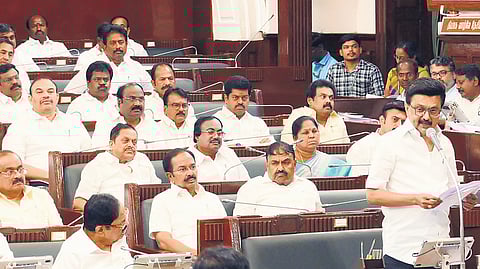
Chief Minister M K Stalin speaking during the state Assembly session on Thursday.


Updated on:
17 Oct 2025, 8:51 am
3 min read

CHENNAI: The state Assembly on Thursday passed a Bill allowing the Tamil Nadu Public Service Commission (TNPSC) to manage the recruitment of non-teaching staff for 22 state universities. The Bill amends the TN Public Service Commission (Additional Functions) Act, 2022, which empowers the TNPSC to conduct recruitment for various government departments and undertakings. Until now, the recruitment for non-teaching positions in these state-run universities was managed by the respective university administrations.

The Bill stated that the move would establish a more uniform, efficient, professional and transparent system for recruiting non-teaching staff at the universities. It would also make it easier for job seekers from rural areas to apply for such positions, while relieving universities of the cumbersome task of conducting their own recruitment drives

Bill passed to extend tenure of SOs in rural local bodies

The Assembly also passed a Bill to amend the TN Panchayats Act, 1994, to extend the term of office of special officers (SOs) appointed to administer village panchayats, panchayat union councils and district panchayats till January 5, 2026, or until the first meeting of the local bodies after the general elections. While the rural development department had issued an order in this regard in July, the Bill was now passed in the Assembly.

According to the Bill, the government is finalising proposals to expand municipal corporations, municipal councils and town panchayats by including certain adjoining village panchayats in 28 districts. Only after the delimitation and reservation processes are completed after this amalgamation, elections for these rural local bodies can be notified. A total of 9,581 village panchayats, 314 panchayat union councils and 28 district panchayats are being run by the SOs.

The tenure of elected representatives of panchayats in these 28 districts expired on January 5 this year. As elections could not be conducted before that date, the government amended the TN Panchayats Act, 1994, to appoint SOs to administer these bodies until July 5. The Act was now amended to extend the tenure of SOs till January 2026 or until the elections are held.

Tender exemption clause of 1998 Act scrapped

The state government has moved to tighten its tendering system by scrapping the exemption clause in the TN Transparency in Tenders Act, 1998, that allowed select procurements to bypass the standard open tender process. An amendment passed on Thursday removes Section 16 of the law, which previously permitted direct procurement in limited circumstances such as emergencies, ensuring compatibility, or sourcing from state-owned or non-commercial entities. The provision also allowed purchases through the Government e-Marketplace (GeM) platform without adhering to sections 9 and 10 governing open tendering procedures.

According to the Statement of Objects and Reasons, Section 16 explicitly exempted procurements made through the GeM special purpose vehicle from the application of sections 9 and 10 of the Act. This exemption covered purchases through mechanisms such as rate contracts, online bidding, online reverse auctions and any other method notified by the government. The government said the exemption had become redundant as TN already operates its own e-procurement portal (tntenders.gov.in).

This apart, the Assembly on Thursday also introduced a Bill to amend the TN Dr Ambedkar Law University Act, 1996, which sought to amend relevant rules that disqualified the deaf-mute from holding authority positions in the university. The proposed changes also seek to update a penal reference in the Act to align with the new Bharatiya Nyaya Sanhita, 2023.

Diwali rush: Airfares witness fourfold surge despite govt’s warning

Diwali rush: Airfares witness fourfold surge despite govt’s warning 

NO CAP ON PRICES 

Venkadesan.S@timesofindia.com 18.10.2025

Chennai : Flight fares to different parts of the country and within the state skyrocketed on Friday, as the airlines decided to cash in on the surge in demand for tickets ahead of Diwali. The flight fares to major metro cities, including New Delhi, Mumbai, Kolkata, and Hyderabad, saw a fourfold increase. 

Tickets were sold for as much as ₹30,000 to Delhi, against the regular fare of ₹7,000. Flight fares to Mumbai soared to ₹20,000, while the regular fare would be around ₹4,000. The tickets to Kolkata cost ₹22,000, while destinations such as Guwahati also saw a surge in ticket fares up to ₹21,000. 

Union civil aviation minister Ram Mohan Naidu had instructed airlines not to hike ticket fares to unreasonably high amounts during festivals. He directed the tariff monitoring unit of the directorate general of civil aviation (DGCA) to maintain a strict watch on airfares and requested passengers to register complaints on high airfares on AirSewa, the ministry’s passenger grievance redress portal. 


Apart from metros, fares have been hiked manifold to intra-state destinations such as Trichy, Coimbatore, Madurai, and Salem. The Indian Air Passengers’Association has denounced the practice as unfair and unjust. “There should be a cap on airfares during festival seasons to keep flight journeys accessible to all people,” said the association president Sankar.

NEWS TODAY 30.04.2026