Thursday, April 15, 2021

Court exam cheating: 2 govt employees held

Court exam cheating: 2 govt employees held

TIMES NEWS NETWORK

New Delhi:15.04.2021 

Delhi Police has arrested ten people, including two government employees, and claimed to have busted a gang that was allegedly involved in helping candidates cheat during an exam for a job opening at Tis Hazari court.

On February 28, the police had received information from one of the examination centres that some candidates were using Bluetooth devices for cheating. Later, the candidates, identified as Rajesh Kumar, Rahul Jatain and Kunal Sharma, were caught and the devices were recovered from them.

During questioning, the trio told police about the whereabouts of the main accused, currently posted as a peon in the irrigation department at Bhiwani, Haryana. He was then arrested from north Delhi’s Sant Nagar. “On the directions of the main accused, the trio had hid these micro devices under their face mask and clothes. They were all provided with answer keys over a WhatsApp call,” said deputy commissioner of police (outer north) Rajiv Ranjan Singh. Later, police nabbed more people involved, including another government official.

Order to curb meetings that can be avoided


Order to curb meetings that can be avoided

TIMES NEWS NETWORK

New Delhi:  15.04.2021 

Amid rising Covid cases, Delhi Disaster Management Authority (DDMA) has ordered restrictions in unnecessary interactions among officers and directed all the departments to avoid unnecessary meetings. Over a dozen people, including interns, who worked in different floors of Delhi Secretariat have recently tested positive.

“As the Covid cases are consistently increasing, hence, for effective management, it is necessary that, besides reductions in attendance in the officers of Delhi government, unnecessary interaction among officers/officials are restricted,” the DDMA order stated.

“The competent authority has directed that no meetings in person shall take place, except meetings related to Covid-19 management, court matters and matters of urgent nature,” the DDMA order added.

Why chances of getting a false Covid report have increased


Why chances of getting a false Covid report have increased

Multiple mutations in the coronavirus over the past 15 months are making parts of it unrecognisable to RT-PCR test kits

Abhilash.Gaur@timesgroup.com

15.04.2021

It starts with a cough. Then comes fever and you feel short of breath. An alarm goes off in your mind. Is it Covid? You are so relieved when the test comes out negative, but four days later you are no better. A second test confirms Covid.

Many patients have experienced this in the second wave. As TOI reported on Tuesday, about 1 in 5 patients may get a false negative report.

Sometimes, second and third tests also fail to spot the virus.

It’s worrying because the coronavirus is now fooling RT-PCR tests — the most reliable type. A false negative report is bad for the patient as they might delay consulting a doctor. It’s also bad for others, as the patient might not isolate, and spread the virus around.

Why are tests failing? It’s because the virus they were designed to detect has changed its look and behaviour considerably since last year. It’s like you lost a puppy a year ago and are still trying to trace it with old photographs.

Tests based on old virus

A research paper by University of Illinois and Michigan State University scientists had raised this concern last September: “PCR diagnostic test reagents were designed based on early clinical specimens containing a full spectrum of SARS-CoV-2, particularly the reference genome collected on January 5, 2020, in Wuhan.”

The rise of fast-spreading coronavirus variants in the UK, South Africa and Brazil was still months away when the scientists warned that mutations “will cause a large number of false positive and false negative tests if currently used diagnostic reagents are undermined.”

Tests detect the virus by identifying a few specific parts of it — like a fingerprint scan or an iris scan can identify you. These parts are called ‘diagnostic targets’. By September, the virus had already changed enough for the scientists to say: “essentially all of the current Covid-19 diagnostic targets have undergone mutations.”

Fears coming true

Other countries have also faced the problem of false negative results this year. In February, reports from Finland said mutations in the viral nucleoprotein of a local variant “may make this latest variant more difficult to detect with some PCR tests.”

In March, French authorities identified a new variant in the Brittany region. In one hospital, PCR tests failed to detect all 8 carriers of this variant.

Later, tests based on blood samples and tissue taken from the respiratory system confirmed they had Covid.

“What’s remarkable about this particular mutation is that the novel coronavirus may have already evolved in such a way as to bypass detection by conventional PCR tests,” a report in Forbes said.

Arvind Kothandaraman, general manager at diagnostics company PerkinElmer, told Technology Networks in February that mutations in the spike protein of the UK variant could make tests less reliable. The UK variant has been detected in many samples from Punjab.

“The 69–70 deletion in S gene of the UK variant has been reported to cause a negative result owing to a complete dropout of the genetic region targeted by certain RT-PCR assays,” Kothandaraman said.

FDA issued alert in Jan

The US Food and Drug Administration had flagged the same concern in a January 8 letter to clinical laboratory staff and healthcare providers. “False negative results may occur with any molecular test for the detection of SARS-CoV-2 if a mutation occurs in the part of the virus’ genome assessed by that test,” it had said.

For example, it found that one brand of RT-PCR tests could be less reliable when a patient’s sample contained a genetic variation at “position 28881” in the virus.

Another test could have “significantly reduced sensitivity due to certain mutations, including one of the mutations in the recently identified B.1.1.7 (UK) variant.”

RT-PCR tests usually look for more than one part of the coronavirus but “the presence of SARS-CoV-2 genetic variants in a patient sample can potentially change the performance of the SARSCoV-2 test.” The FDA also said the frequency of false negative results would vary with the prevalence of variants in a population.

Keeping false negative results in mind, it advised doctors to “consider negative results in combination with clinical observations, patient history, and epidemiological information,” and “consider repeat testing with a different test if Covid-19 is still suspected.”

Virus behaviour has changed

There’s another reason why RT-PCR tests are returning more false negatives now. On Tuesday, Dr Pratibha Kale, associate professor of clinical microbiology at the Institute of Liver and Biliary Sciences, told TOI: “It’s possible that in these patients the virus did not colonise the nasal or throat cavity because of which swab samples taken from these areas didn’t yield a positive result.” It’s as though we are learning to deal with a whole new virus this year.


RT-PCR tests usually look for more than one part of the coronavirus but “the presence of SARS-CoV-2 genetic variants in a patient sample can potentially change the performance of the test”

Paramedic, MR & med student sell key drug at 4x price, held

Paramedic, MR & med student sell key drug at 4x price, held

Nitasha.Natu@timesgroup.com

Mumbai:15.04.2021

A paramedic, a medical student and a medical representative (MR) were arrested for allegedly selling Remdesivir injections in the black market. Police said the MR procured the injections from the pharmacy of a suburban hospital in a legal manner while his co-accused sold it at a higher price in black.

An informant told Malwani police earlier this week that a paramedic known to him was offering Remdesivir injections at Rs 20,000 each against the actual price of Rs 5,400. The paramedic had suggested to the informant he could resell it at a higher rate and make his own commission. Malwani police immediately informed the Food and Drugs Authority (FDA). A trap was laid in Kandivli on April 13.

Around 7.30pm, the paramedic, Rizwan Mansuri (32), arrived at the location with a student, Siddharth Yadav (21). The police had already sent their informant with Rs 60,000 in cash to make the purchase so they could nab the accused red-handed. “Mansuri handed over three Remdesivir injections to the informant while Yadav accepted the cash. Our team and the FDA team swung into action and the two men were taken into custody,” said investigating officer Rakesh Pawar. It turned out that Yadav is a medical student based in Kandivli and comes from a family of doctors.

Yadav told the police that he had procured the injections through an MR, Chiranjeevi Vishwakarma (28), employed with a pharma company. The cops got Yadav to dial Vishwakarma and summon him for a meeting. When Vishwakarma arrived, he was taken into custody. Vishwakarma told officials he had presented a Covid-19 patient’s health report, his Aadhar card and a doctor’s prescription for purchasing the three Remdesivir injections.

RGUHS to study spread of infection in slums


RGUHS to study spread of infection in slums

Sunitha.Rao@timesgroup.com

Bengaluru:  15,04,2021

A team of community medicine researchers from Rajiv Gandhi University of Health Sciences (RGUHS) will conduct a study in 24 slums in Bengaluru to analyse exposure to Covid-19 in the crowded habitations.

A dozen medical colleges have been assigned two slums each and they will conduct Covid-19 antibody tests on slum dwellers.

During a meeting last month between the chief minister, technical advisory committee members and heads of departments including police, Praveen Sood, Karnataka DG&IGP, had asked why cluster outbreaks were being reported from apartment complexes but not from slums.

TAC members discussed the matter further and Dr MK Sudarshan, chairperson, asked the government to conduct a serosurvey in slums.

“This will help us understand precisely what is happening in slums,” said Dr Sudarshan.

Dr Ranganath TS, HOD, department of community medicine, Bangalore Medical College and Research Institute and principal investigator of the project, said, “A huge majority of cases are largely of people from middle to upper sections of society, especially those living in apartments. People in slums, who could be going out every day for work, are not coming for Covid tests or seeking treatment. We need to find out if they are falling ill, where they are going and what sort of treatment they are receiving if so.”

Medical colleges will cover select slums nearby, said Dr Ranganath. The survey is likely to begin in two days. Dr Riyaz Basha, another principal investigator of the project and head of community medicine, Bowring and Lady Curzon Medical College Hospital, said they will conduct both RT-PCR test and antibody tests on 720 people in 24 slums.

“All medical colleges work closely with urban primary health centres,” said Dr Basha. “Medicos who are working in these UPHCs will conduct the research in slums. From each slum, we plan to include at least 30 people in the study. The cohort will be those aged above 18 years of age.”

Dr Basha said they will also collect details such as vaccination status, previous exposure to the disease, infections among immediate neighbours and facilities they have for home isolation.

“This survey will help us understand at least two aspects. The first is if the people surveyed are Covid positive, they will be immediately isolated and their primary and secondary contacts will be traced. If they have already developed antibodies, then it means that they had prior exposure to the virus. In such cases, we must educate them about the Covid-19 vaccine and ensure that all those in slums who are eligible get vaccinated,” said Dr Basha.

In case they test negative for both RT-PCR and antibodies, questions will arise on how safe they are living in crowded localities and if it has anything to do with their immunity levels, researchers said. The survey also aims at improving vaccination status among the slum-dwellers.

During a Covid-19 meeting last month Praveen Sood, Karnataka DG&IGP, had asked why cluster outbreaks were being reported from apartment complexes but not from slums

Class XII exams’ delay may hit JEE, NEET

Class XII exams’ delay may hit JEE, NEET

Yogita.Rao@timesgroup.com

Mumbai:15.04.2021

The decision to postpone CBSE Class XII exams is likely to have a cascading effect on admissions to engineering and medical colleges this year. While the Centre plans to review the Covid-19 situation on June 1to decide on the exam dates, students are worried JEE (Advanced) for admissions to IITs and the National Eligibility cum Entrance Test (NEET) for medical exams may be pushed further too, in a repeat of the 2020 scenario.

Last year, JEE (Main), JEE (Advanced) and NEET were all held in September due to the pandemic and the resultant lockdown. With academic session starting late last year, this year’s entrance tests have already been affected. JEE (Advanced) 2021, usually held in May, is scheduled on July 3, while NEET is on August 1. With the Centre’s decision to postpone Class XII board exams by over a month, parents are worried all these entrance exams will be pushed further, leading to a delayed start to the academic session this year too.

A parent representative, Sudha Shenoy, said when the national lockdown was announced on March 23 last year, the state board exams were nearly over and only a few papers were pending for the national boards. “This year, the boards are yet to be conducted. We do not know when they will be held or when the results will be announced. There is a lot of uncertainty in the Covid-19 situation. The CBSE board will have to give a two-week notice before holding the exam in June. If it starts even in the third or fourth week of June, they may have to postpone JEE (Advanced) and NEET,” she said. “Even if the entrance exams are conducted on time, there will be delays in announcing the board results. Students require Class XII board scores to be eligible for medical admissions,” said Shenoy. Some of the parents are in favour of the board exams being held twice so that students who are unable to take the exam now can do so later.

Full report on www.toi.in

‘Decision on 12th exams will be taken on 1st June’


‘Decision on 12th exams will be taken on 1st June’

Ramesh Pokhriyal

15.04.2021

I would like to thank the honourable Prime Minister for calling the high-level meeting regarding the conduct of board examinations. At the onset of the meeting he has given a clear vision and reiterated that “the well being of the students has to be the top priority for the government”. He also stated that “the Centre would keep in mind the best interests of the students and ensure that their health is taken care of at the same time their academic interests are not harmed”.

His directions and vision made us take the decision to cancel the tenth class board exams and postpone the 12th class exams. The decision regarding the 12th exams will be taken on 1st June after reviewing the situation. I am very sure that this will give clarity to the students.

Every year almost 30 lakh students write the board examinations of CBSE. To be precise this year there are 21,50,761 and 14,30,247 students who were to appear in the Class X and Class XII exams respectively. CBSE, in normal circumstances, schedules Board exams for Classes X & XII from 15th February to the first week of April. The Board exams-2020 were disrupted due to the pandemic and had to be rescheduled.

In the current year, to accommodate for the loss in learning time and closure of schools, the Board exams 2021 were scheduled from 4th May to 14th June, instead of mid-Feb as was done normally. This announcement was made on 31.12.2020. The trend in Covid cases was also going down when the exam schedule was announced.

However, in the recent few weeks, the downward trend in Covid cases has reversed and the number of new cases daily has started increasing. This situation has given rise to concerns and apprehensions in the minds of students/parents/teachers about the conduct of examination in a safe manner as well as disruptions that may arise due to restrictions that may be imposed from time to time.

CBSE has made arrangements for the conduct of the exams from May 4th, however in view of the rising number of cases, an assessment of the situation in terms of a conducive and safe environment for conducting the exams was done in an objective manner.

Full interview on www.toi.in

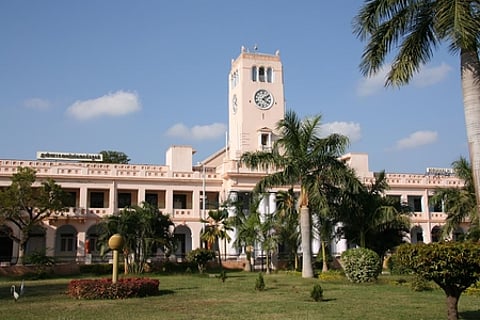
Annamalai University staff begin indefinite sit-in over pending dues

Annamalai University staff begin indefinite sit-in over pending dues The members also sought settlement of retirement benefits, including co...