Friday, February 14, 2025

Karnataka High Court Issues Procedure For Change Of Name In Birth Register Till Legislature Brings Appropriate Law


Karnataka High Court Issues Procedure For Change Of Name In Birth Register Till Legislature Brings Appropriate Law

Mustafa Plumber

13 Feb 2025 5:27 PM


The Karnataka High Court has suggested to Legislature to consider amending Registration of Births and Deaths Act, 1969, permitting change of name in the birth register after it has been entered.

A single judge, Justice N S Sanjay Gowda said “It is common practice in our country that a person decides to give himself a new name or that a parent decides to change the name though he has already been given a name. In fact, it is a practice in our country that multiple names are given, but one name is entered in the records and this, at times, creates confusion regarding the identity of the person.”

It added “The Legislature would have to take a view on this and ensure that the citizens are not put to any hardship whenever they desire to change their names and evolve a procedure where the records of that particular person are also changed simultaneously in all the public records or at least in the relevant records.”

.
Referring to a suggestion made by Law Commission of Karnataka, in its 24th Report furnished on 20.07.2013 regarding Change of Name, suggesting amendments to the Act and the Rule, the court said “It would therefore be appropriate for the Legislature to take necessary action pursuant to the recommendation of the Law Commission in its 24th report.”

Stating that since there is no law which prescribes the procedure for changing the name of a person, it would be impermissible for the parents of a child to seek for changing the name that is already registered in the register of births and deaths until a relevant law is provided for by the Legislature.

The court directed the authorities to follow the following procedure for change of name:

-Calling upon the parents to give a sworn affidavit to the effect that they have changed the name of the child on their own accord and the entries in the birth register would be required to be changed accordingly.

-On such a request being given, the authorities should verify the identity of the parents and proceed to incorporate the changed name in the Register of Births.

-The authorities, in order to ensure that there is no attempt to create a record for ulterior purposes, should make a remark in the register stating that the name of the child had been changed subsequently pursuant to a request made by the parents. The register would therefore have an entry regarding the name which was originally entered and also a name which was entered subsequently on their request

-Even in respect of an adult who seeks for a change of name, the same procedure can be adopted. Since the original name would also be contained in the register and also the new name, the possibility of this document being misused for an ulterior purpose can easily be prevented.

The court said “Thus, until the appropriate provisions are made under the Rules by the State in this regard, the concerned authorities are directed to follow the aforementioned procedures and permit the change of name in the Register of Births and Deaths.”

It added “Since the date of birth or the date of death and other details would remain unchanged, there can be no impediment or reason to prevent the change of name.”

The court held thus while allowing a petition filed by a minor represented through his guardian challenging the endorsement issued by the Registrar of Births, by which the Registrar, refused the request of the petitioner to change his name in the Birth Certificate.

The bench said “The respondent authority is hereby directed to change the name of the petitioner as Shrijith Bhat in the Register of Births as against the originally registered name Adhrith Bhat. A necessary endorsement shall be made in the Register of Births and also in the Birth Certificate that the original name of Adhrith Bhat was changed to Shrijith Bhat, as requested in the application dated 04.11.2023 and issue a fresh Birth Certificate accordingly.”

Appearance: Advocate Sinchana M for Petitioner.

Advocate K.B Prasad Hegde for Respondent.

Citation No: 2025 LiveLaw (Kar) 58

Case Title: Master Adhrith Bhat AND The Registrar of Births And Deaths

Case No: WRIT PETITION NO. 6370 OF 2024

NEWS TODAY 14.02.2025


Three students, youngest in Class XII, arrested for digital arrest scam

Three students, youngest in Class XII, arrested for digital arrest scam

 P.Naveen@timesofindia.com 14,02,2025


Bhopal : Gwalior cyber police arrested three students — one of them in high school — from a hostel in Noida for alleged links with a syndicate that trapped a BSF officer in digital arrest for a month and scammed him of over ₹71 lakh. The suspects were identified as Aftab Ahmed Khan, a B Tech student from Jharkhand, Akhil Singh Bais, a BBA student from Delhi, and a Class XII student from Kota, Rajasthan. 

The racketeers, posing as Mumbai crime branch officers, had threatened to arrest the BSF inspector’s wife and son and forced him into making 34 transactions. The victim — who is on the verge of retirement and now posted at the BSF Academy in Tekanpur, Gwalior — was told that his Aadhaar card had been used for money laundering. Desperate to save his family, he sold off his flat, mortgaged his land and borrowed from friends. Gwalior cyber cops said the youngsters operated from a hostel room and had been cyberscamming people for two years. 

The money scammed from the BSF inspector was transferred to bank accounts in Karnataka, Aurangabad, and Gurgaon. The trio allegedly helped channelise part of this amount. Police said the accused would persuade hostel and university students to open bank accounts, which were then handed over to a Chinese gang. Some 20 accounts have been traced so far. When fraudulently obtained money was deposited into these accounts, the accused would deduct a 6% commission and convert the remaining amount into USDT (a digital currency), which was then routed to the Chinese gang. A recent transaction of ₹2 lakh was made through one of these accounts. Police were trying to trace its origin and destination

[Senior Citizens Act] Son-In-Law Must Vacate Father-In-Law's House In Case Need Arises For Peaceful Income For Senior Citizen U/S 23 Of The Act: MP HC

[Senior Citizens Act] Son-In-Law Must Vacate Father-In-Law's House In Case Need Arises For Peaceful Income For Senior Citizen U/S 23 Of The Act: MP HC


4 Feb 2025 5:11 PM

The Madhya Pradesh High Court in a recent ruling ordered eviction of a son-in-law residing on premises belonging to his retired father-in-law who needed the said property as a source of additional income to maintain his wife and children.

Dismissing the appeal, the High Court upheld the decision of the writ court wherein it was opined that by implication if the house was given to the daughter, the son-in-law after the death of the daughter, will be included in the definition of children as defined in Section 2(a) of the Maintenance and Welfare of Parents and Senior Citizen Act, 2007 and therefore, the son-in-law has a duty to maintain the senior citizen as defined in Section 2(h) of the Act.

The division bench of Chief Justice Suresh Kumar Kait and Justice Vivek Jain observed, “…Mere facet of income cannot be looked into but a peaceful income giving satisfaction to the owner of the property who happens to be a senior citizen in another facet which is to be understood and imbibed by implication while interpreting the provisions of Section 23 of the Act, 2007.When the whole facts of the case are examined from said prospective, then there is a senior citizen, he is in need of the property and that need is bonafide and for peaceful purposes, therefore, petitioner having failed to establish any of his rights over the property, is not entitled to continue in the property dehors the orders of the Sub-Divisional Magistrate and the Collector.”

As per the factual matrix of the case, the appellant-petitioner is the son-in-law of respondent No.3. the appellant was married to the deceased daughter of Respondent No.3. The appellant is living in the house of Respondent No. 3 as a permissive occupant and contends that he cannot be evicted from the said premises. The present appeal challenges the impugned orders passed by the Single Judge, Sub-divisional Officer (Respondent No. 2) and the Collector (Respondent No. 1).

The said house was purchased by the respondent No.3 in 2007. It is contended by the appellant that since he was a labourer and the facility of the loan was not available to him at that time, therefore, he had purchased the house in the name of his father-in-law. However, there was no such agreement brought on record to show that the house was purchased in the name of respondent No.3 because the loan facility was not available to the appellant.

It is contended by the counsel for the appellant that the appellant being a son-in-law will not fall under the definition of 'Children' given in Section 2-A of the Maintenance and Welfare of Parents and Senior Citizen Act, 2007. Further, even 'relative' defined in Section 2(g) of the Act of 2007 will not include the appellant, therefore, the appellant was not covered under the provisions of the Act of 2007 and could not have been the subject matter of any order under the provisions of the Act of 2007.

It was further submitted that the appellant has adverse possession over the property and he had contributed a sum of Rs.1,00,000/ in the account of respondent No.3 towards the construction of the house.

On the contrary, the counsel for Respondent No. 3/father-in-law contends that the order is under Section 23 of the Act of 2007 which deals with transfer of property to be void in certain circumstances. It is not an order under any other provision. Further, the children will include their son-in-law because the definition is not comprehensive.

In fact, when the property was given to the daughter of respondent No.3 then, in a package, the appellant was inducted. The appellant is not taking care of the senior citizen and on the contrary, is causing a nuisance for them as per the application filed by respondent No.3 before the SDM, M.P. Nagar Circle Bhopal and on account of that directions for eviction were given.

In the impugned order, the Single Judge observed that the definition of 'Children' contained in Section 2(A) of the Act of 2007 is not comprehensive as it only talks about broader categories of persons namely sons, daughters, grand-son and grand-daughter who are not minor.

The single bench opined that by implication if the house was given to the daughter and the petitioner-appellant was son-in-law after the death of the daughter, would be included in the definition of children and he has a duty to maintain the senior citizen as defined in Section 2(h) of the Act of 2007. It was further observed that as far as 'relative' is concerned that too will also not be of any consequence because it is not a matter of childless senior citizen.

While hearing the appeal, the High Court observed that provisions contained in Section 23 of the Act of 2007 would not be applicable because there was no transfer of property. The court said that the transfer of property includes permissive transfer or gratuitous transfer in favour of a person and if the senior citizen is able to demonstrate his need, then that transfer can be declared null and void in terms of the provisions contained in Section 23 of the Act of 2007.

Therefore, the court opined that the learned Single Judge had rightly observed that Respondent No. 3 who is a retired BHEL employee with no regular pension and has the responsibility for his sick wife as well as other children, needs the property which was constructed by him, so that he can have a source of additional income.

Thus, the court upheld the order of the Single Judge and directed the appellant to vacate the premises within 30 days, failing which the SHO would remove the articles from the said house and handover to respondent No. 3.

Case Title: Dilip Marmat Versus Collector And Others, Writ Appeal No. 1705 of 2023

NEET 2024 | Vacant NRI PG Seats In Private Colleges To Be Included In Last Round Of Counselling For General Quota: State To Madhya Pradesh HC


NEET 2024 | Vacant NRI PG Seats In Private Colleges To Be Included In Last Round Of Counselling For General Quota: State To Madhya Pradesh HC


4 Feb 2025 5:30 PM


In a plea seeking inclusion of 48 vacant NRI seats of Private Medical Colleges and its conversion into General quota seats for meritorious candidates, the State government told the Madhya Pradesh High Court that if NRI seats are vacant, it will be filled from the General category based on merit in the last round of the counselling process of NEET-PG 2024.

A division bench of Justice Sanjeev Sachdeva and Justice Devnarayan Mishra was hearing a plea which claimed that 48 seats of NRI category candidates are lying vacant and those seats are not being offered to the candidates appearing in the First Round and in the Second Round and the Director Medical Education is waiting for new NRI Candidates whereas, factually it is impossible to get new NRI Candidates in the State because it has been exposed that "fictitious NRI category candidates have blocked the seats in Private Medical Colleges".

The plea claimed that as per the directions of the Supreme Court the 48 seats must be converted for general category candidates who can get it as per merit and the seats should not go vacant.

During the hearing on January 31, the State's counsel relied on Rule 14(A)(2) of the Madhya Pradesh Medical Education Admission Rules, 2018 and submits that in terms of Rule 14 (A)(2), in case the NRI seats are left vacant, "the same are to be included in the last round i.e. mop up round in the General Category and are to be filled on the basis of merit-cum choice".

For context, there are three rounds of counselling in NEET-PG. The mop up round is the last round of the counselling process.

The order thereafter noted,"She submits that the left over seats out of the 48 NRI seats that remain (ing) vacant shall be filled up at the time of mop up round from the General Category based on merit-cum-choice. The statement is taken on record".

In view of the statement, the petitioner's counsel sought to withdraw the plea which was permitted by the high court.

As per the factual matrix of the case, the petitioner–Dr. Khyati Shekhar–appeared in NEET-PG Exam 2024 as a General Category candidate securing a rank of 936 in the State.

As per her Rank and State Percentile of 87.25 and NEET Percentile of 87.27 she would have got the best subject in the Post-Graduation in any of the Private Medical Colleges of Madhya Pradesh. But after completion of First Round of Counselling she was not allotted any seat, because of 48 fake NRI Candidates whose seats were blocked and not being offered to the students as per their merit position either in the first round or in the second round or in the mop-up/last round of counselling.

It was submitted that even after Supreme Court's verdict in Index Medical College, Hospital & Research Centre v/s The State of Madhya Pradesh & Others (2021) and the verdict of Madhya Pradesh High Court in the matter of Dr. Yogyata Marothi (W.P. No. 28721 of 2023), the Director Medical Education is sleeping over the matter and the 48 seats reserved for NRI candidates are going to waste. The petitioner had sought a direction to the respondents to include the 48 seats allocated to the NRI quota in the General quota, in case they are not filled up by bonafide NRI candidates on the basis of merit.

Case Title: Dr. Khyati Shekhar Versus The State Of Madhya Pradesh And Others, Writ Petition No. 3718 Of 2025

Counsel for Petitioner: Senior Advocate Aditya Sanghi

Counsel for State: Adv. Janhavi Pandit

Governor Can't Punish Guilty Govt Official By Dismissal Under Rules, Can Only Withhold/Withdraw Pension For Misconduct: Madhya Pradesh HC


Governor Can't Punish Guilty Govt Official By Dismissal Under Rules, Can Only Withhold/Withdraw Pension For Misconduct: Madhya Pradesh HC


8 Feb 2025 6:00 PM


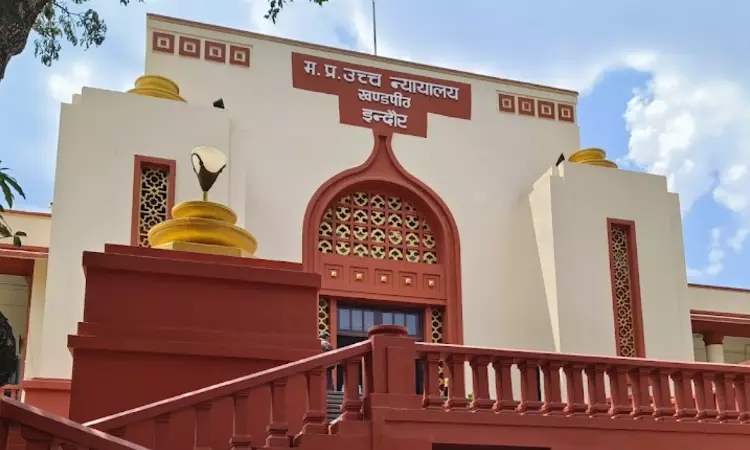
Image by: Shubha Patidar

While setting aside a dismissal order of a retired government official, the Indore Bench of Madhya Pradesh High Court concluded that under the state civil service pension rules the Governor can only withhold or withdraw the officer's pension for grave misconduct/negligence but cannot impose punishment of dismissal.

Referring to the provisions of the MP Civil Services (Pension) Rules, 1976A single judge bench of Justice Vivek Rusia observed, “In view of Rule 9(1) if any government employee has been found guilty in a judicial proceeding and any departmental proceeding of a grave misconduct or negligence, the only punishment which can be imposed by the Governor is withholding or withdrawing the pension or part thereof, permanently or for a specified period. Therefore, there is no provision of imposition of punishment of dismissal from service even by the Governor.”

It further observed that Rule 9(2)(a) gives right to the disciplinary authority to continue with the departmental proceedings, if instituted while the government servant was in service and after final retirement of the government servant, the enquiry shall be deemed to be a proceeding under this rule and shall continue and concluded by the authority, by which they were commenced, in the same manner as if the Government servant had continued in service. As per the proviso, where the departmental proceedings are instituted by an authority subordinate to the Governor, that authority shall submit a report regarding its findings to the Governor.

"Therefore, after conclusion of the enquiry, the authority ought to have sent this report to the Governor for passing appropriate order under Rule 9(1), instead of passing any order of punishment. Therefore, in view of the above, order of dismissal from service is unsustainable and is hereby set aside," the court directed.

The order was passed in a plea where the petitioner was aggrieved by his dismissal order passed by the DIG, Nimar Range, Khargone under Rule 9(2) of the M.P. Civil Services (Pension), Rules, 1976.

As per the factual matrix of the case, the petitioner was placed under suspension by Superintendent of Police, Khargone on account of his involvement in offence under Section 364-A of IPC (Kidnapping for ransom, etc). Thereafter, the charge sheet was served upon him and enquiry officer was appointed to conduct an enquiry.

The petitioner submitted a reply to the charge sheet denying the charges. During pendency of the enquiry, the petitioner attained the age of superannuation. In anticipation of retirement on 31.3.2014 his suspension order was revoked. After retirement the enquiry continued and the enquiry officer submitted enquiry report in which all the four charges were proved against the petitioner. Petitioner submitted a reply to the enquiry report. However, the petitioner was dismissed from service under Rule 9(2) of the M.P. Civil Services (Pension), Rules, 1976.

The counsel for the petitioner contended that after retirement even if the departmental proceedings continues, under Rule 9(2)(a) of the state Civil Services (Pension), Rules, the enquiry report is liable to be sent to the Governor with its finding and under Rule 9(1) the Governor is the competent authority to pass an order in respect of withholding or withdrawing the pension or part thereof. Therefore, after retirement neither petitioner can be terminated by the respondent-department, nor any pension can be withheld. After retirement only the Governor is the competent authority in respect of passing an order for withholding or withdrawing pension.

On the contrary, the counsel for the respondent submitted that the provision of Rule 9(2) of the M.P. Civil Services (Pension), Rules, 1976 would not apply to the petitioner as he has retired from service. However, the respondent did not state under which provision the order of dismissal could have been passed.

The petitioner also submitted that a criminal case was registered against him in which he was later acquitted. After acquittal the petitioner had submitted an application for payment of pension but the same had not been considered.

After hearing the parties, the court perused the rules and found that the dismissal order was unsustainable and allowed the plea.

“As per Rule 9(2) of the M.P. Civil Services (Pension), Rules, 1976 the authority who initiated the enquiry, is directed to send this enquiry report to the Governor for passing an appropriate order,” the Court said.

Case Title: Nausad Qureshi Versus The State Of Madhya Pradesh And Others, Writ Petition No. 9268 Of 2014

Counsel for Petitioner: Adv. Abhinav Dhanodkar

Counsel for State: Adv. Sudeep Bhargava

Baggage Rules Apply Only To Luggage Of International Travellers, Not To 'Reasonable Amount' Of Jewellery Worn In-Person: Madras HC

Baggage Rules Apply Only To Luggage Of International Travellers, Not To 'Reasonable Amount' Of Jewellery Worn In-Person: Madras HC


7 Feb 2025 7:30 PM


The Madras High Court has made it clear that Baggage Rule, 2016 framed under the Customs Act, 1962 apply only to the baggage carried by an international traveller.

Justice Krishnan Ramasamy observed that the Rules cannot be extended to articles like jewellery, “carried on the person” of a traveller.

The bench observed, “The Customs Act, 1962, enables the Central Government to make Rules to the extent of the articles carried in the baggage of a passenger and not for the articles, which were carried on the person and hence, the inclusion of the word “carried on the person” is beyond the scope of the provisions of Section 79 of the Customs Act.”

The Court was referring to Rule 3 of Baggage Rules which prescribed that passengers arriving from abroad will not have to pay duty on dutiable goods like gold upto the value of ₹50 thousand, if carried on the person or in the accompanied Baggage.

It pointed out that Section 79 (of the parent Act) talks about “anything in the baggage” alone.

In this backdrop the Court observed that when the Parliament had consciously excluded the jewels worn by passengers from the purview of Section 79 Customs Act, the Rule making authority cannot include it under the Baggage Rules.

“...the (Customs) Act enables the Central Government to make the Rules only with regard to the baggage…When the provision of the Rule (insofar as it includes articles carried on person) is beyond the scope of the provisions of the Act, only the provision of the Act will prevail over the Rules. Thus, the word “carried on the person up to Rs.50,000/-” is clearly beyond the scope of the Act and it cannot be given any effect since it is contrary to the provisions of the Statute.”

In the same breath, the Court clarified that if anyone wears any unreasonable amount of gold or jewelry, they will be brought under search. Similarly, if the jewelry is 'secreted in person', then proceedings can be initiated under Section 101 of the Customs Act.

It illustrated, “In India, as per our customs, it is normal to wear 10 nos. of bangles for a marriage function. In such case, it is for the Officers to apply their mind while detaining the gold. If 10 nos. of chains were worn by a person, then it would be suspectable and if anything is hide, then the provisions of Section 101 and 102 of the Customs Act, 1962, would apply since it clearly amounts to secreting the gold in their body under the pretext of worn in the body. ”

The Court added that until the Parliament takes a decision and amend the provisions of the Customs Act, the Officers will have to apply their minds with regard to detaining the passenger and the gold worn by them as the same would not fall within the purview of the Baggage Rules, 2016.

Baggage Rules allow clearance of duty free articles in bonafide baggage of a traveller. It also sets a limit on the quantity of dutiable articles which can be carried duty free. It also exempts 'personal effects' of a traveller.

Currently, the Rules permit any jewellery of 20 grams with a value cap of Rs. 50,000/- in case of a man and 40 grams with a value cap of Rs. 1,00,000/- in case of a woman to be cleared free of duty.

In the case at hand, a Srilankan national had approached the Court seeking release of her gold ornaments.

The Court criticised the Seizing Officer for seizing her gold necklace, observing that the quantity of jewellery worn by the petitioner was normal for a newly married person and that the officers, while conducting searches should respect the customs of every religion in the country.

It cited State of Tamil Nadu and Another vs. P.Krishnamurthy and others (2006) where the Supreme Court had held that a Rule Making Authority has to make the Rules within the scope of the parent Act and no Rules shall exceed beyond the scope of the parent Act since it would amount to ultra vires.

“Thus, in the present case, the Baggage Rule, 2016 will apply only to the baggage and the Rule made to the extent that the article “carried on the person” will not include baggage, which was in excess of powers conferred by the Rule making Authority and would amount to ultra vires. Therefore, the jewelery worn in person will not come under the purview of baggage,” it held.

Counsel for the Petitioner: Mr. A. Simiyon Raja

Counsel for the Respondents: Mr. M. Santhanaraman, Senior Standing counsel

Case Title: Thanushika v The Principal Commissioner of Customs (Chennai)

Citation: 2025 LiveLaw (Mad) 47

Case No: W.P.No.5005 of 2024


NEWS TODAY 28.01.2026