MP High Court Issues Notice On Plea Challenging BCI's Attendance Rules, Meanwhile Permits NLIU Student Short On Attendance To Sit In Class
21 Jan 2025 4:55 PM
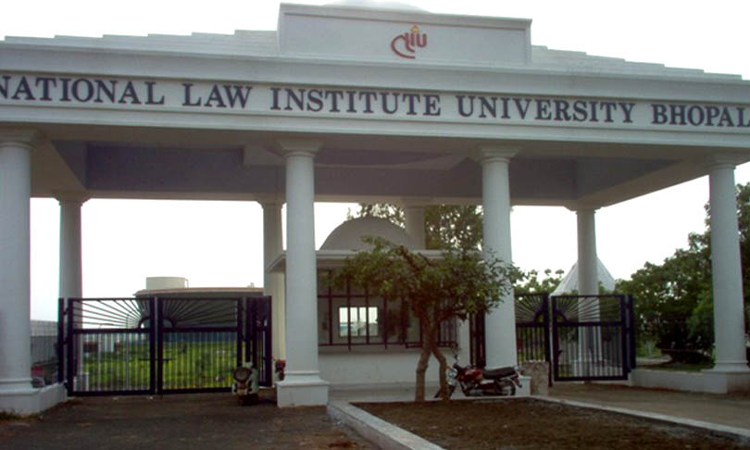
The Jabalpur bench of the Madhya Pradesh High Court recently granted interim relief to an law student to attend her fourth semester classes after she was debarred by NLIU Bhopal due to shortage of attendance.
The court however made it clear that the student's fate would depend on the outcome of the plea.
Issuing notice to the respondents, a division bench of Justice Sushrut Arvind Dharmadhikari and Justice Avanindra Kumar Singh in its January 17 order said, “Heard on the question of admission and interim relief. Issue notice to the respondents...In the meanwhile, the petitioner shall be permitted to attend the classes for IVth Semester of B.A., LL.B. Course. It is made clear that the petitioner shall not be entitled to claim any equity and the entire fate would depend on the outcome of this petition. The petitioner would at liberty to move an appropriate application for permission when the dates for repeat examinations are notified.”
The student's petition challenges the validity of attendance rules notified and enforced by the Bar Council of India–Rule 12 of the Legal Education Rules notified by BCI, and Rule 7 of the Ordinances of the National Law Institute University, Bhopal 2023.
The petitioner's counsel said that the student suffered from a medical condition of spine, due to which her attendance had fallen short. The University had relaxed the attendance up to 60 percent but the petitioner's attendance was 54.8 percent, however norm was 65% and 70% as per Bar Council Rules. The petitioner's counsel however said that the relaxation was not adequate.
The petitioner's counsel, in this case said that they had also challenged the Bar Council Rules, and relied on the recent judicial opinion which says that debarring a student based on lack of attendance in this era is completely out of place and illegal. He said that this was discussed in Delhi High Court's order regarding a law student's suicide. The counsel said that the Delhi High court had stated that “In the opinion of this court, teachers and students need to be consulted in order to consider what should be the standards of attendance. Wider consultation would also be required to be undertaken to have a relook at the need to have mandatory attendance”.
In the present case, the petitioner's counsel argued that any other penalty such as extra classes, sending to library, submit extra assignments shall be a plausible remedy rather than leading the students to waste their one year and debarring them. He said that the petitioner has been asked to stay back for one year, adding that session for the semester had started on January 1 and the examination is in February and the student had been debarred from taking the repeat examination for students who are short of attendance.He said that the petitioner is not being considered since she does not come under the norm set under the rules.
The counsel said that the petitioner's medical certificate had been submitted but since it was below 60% she was not being allowed to sit for the exam by NLIU.
The counsel appearing for the respondent university argued that action completely in line with BCI norms. The university stated that it had decided to consider relaxation of attendance on the ground of medical condition of the students but only those having minimum attendance of 60%. The Respondent contended that there needs to be a minimum threshold for considering relaxation of attendance.
The petitioner's counsel said that there cant be a fixed criteria or a number it has to be based on subjective satisfaction which the university could not have done.
After hearing the matter for some time, the court said that it shall permit the student to attend classes for the time being as an interim measure. The court also said that it shall hear the Bar Council of India as well.
Case title: Anupama Alice Minj Vs National Law Institute University, Bhopal And Others
Counsel for Petitioner: Advocates Anshuman Singh and Sahil Sonkusale
Counsel for NLIU: Advocate Sankalp Kochar
Case No: WP No. 970 of 2025


No comments:
Post a Comment