Tuesday, December 10, 2024

NEWS TODAY 9.12.2024


Govt replies to plea against NRI quota in med colleges

Govt replies to plea against NRI quota in med colleges 

HC SEEKS RESPONSE TIMES NEWS NETWORK 10.12.2024 

Bhopal/Jabalpur : The state govt on Monday presented its reply in response to a petition filed in the MP high court challenging that all the seats under NRI quota in private medical colleges are restricted to only 8 branches of medical science, which remain high in demand. The bench comprising Justice Sanjeev Sachdeva and Justice Vinay Saraf, who are hearing the pe- tition, asked for distribution of copies of the reply to all the parties in the case while fixing the case for hearing on December 18. Dr Ojas Yadav of Bhopal in his petition said that NEET prepared a list of eligible NRI candidates for admission. The NRI quota in private medical colleges of the state is 15 percent. There are normally 22 branches of medical science in a medical college but the NRI quota is applicable to only 8 branches, which attract the maximum number of students. 

Appearing for the petitioner, advocate Alok Bagrecha said that more NRI seats in branches which have a high demand among students affect the prospects of meritorious students as the seats in those branches gets drastically reduced. There are 545 seats in the 8 branches in question, 152 of them reserved for NRI. In a medical college at Bhopal, there are 8 post graduate seats in surgery, 4 of them reserved for NRIs. No seat has been allotted to gene- ral and SC candidates. He contended that NRI quota seats should be evenly distributed among all the branches. The reservation policy being followed by the state government is illegal. In several top branches, 40 to 50% have been reserved for the NRI students. The court had asked the respondents in the case to file replies on the petition. 


After receiving a reply from the state govt, the court asked for circulation of its copies among all the litigants involved in the case while deferring hearing of the case to December 18.

Ayurvedic/AYUSH Doctors Can't Seek Parity With Medical Doctors : Supreme Court Reiterates

Ayurvedic/AYUSH Doctors Can't Seek Parity With Medical Doctors : Supreme Court Reiterates


10 Dec 2024 12:47 AM


While dismissing a special leave petition, the Supreme Court recently reiterated that Ayurvedic/AYUSH doctors cannot seek parity with medical doctors. The order was passed noting the qualitative distinction between the academic qualifications and standard of imparting of the respective degree courses.

"we are satisfied on facts that the Ayurvedic or AYUSH doctors serving in the State of Kerala, having regard to the qualitative distinction in the academic qualifications and the standard of imparting respective degree courses, cannot seek parity with medical doctors", said a bench of Justices Surya Kant and Ujjal Bhuyan.

In making the aforesaid observations, the bench referred to the Court's earlier decision in State of Gujarat And Ors. v. Dr. P.A. Bhatt And Ors., where it was held that allopathy doctors and doctors of indigenous medicine cannot be said to be performing equal work so as to be entitled to equal pay.

Reference was also made to the decision in Central Council for Research in Ayurvedic Sciences and Another v. Bikartan Das and Others, where it was observed that an employee of CCRAS, ( Central Council for Research in Ayurvedic Sciences)
Ministry of AYUSH was not automatically entitled to demand parity in superannuation age with AYUSH doctors, just because he treated OPD and IPD patients.

Case Title: DR. SOLAMON A v. THE STATE OF KERALA, SLP(C) No. 3946/2023

Strict Liability On Railways To Compensate Kin Of Deceased Who Fell From Train After Mistakenly Travelling Beyond Destination: Karnataka HC

Strict Liability On Railways To Compensate Kin Of Deceased Who Fell From Train After Mistakenly Travelling Beyond Destination: Karnataka HC


10 Dec 2024 12:37 AM


The Karnataka High Court has upheld an order of the Railway Tribunal granting compensation to the claimants of a deceased passenger who had fallen from the train after mistakenly travelling beyond his destination station.

Justice H P Sandesh dismissed an appeal filed by South Western Railways, challenging the order dated December 28, 2010, granting compensation of Rs 4 lakh along with interest to A Mohan.

He said, "The deceased might have fallen while trying to get down and in that process he could have received injuries, which the fact is in line with the statement of witnesses and also the post mortem report. The fact that the deceased was travelling in the train is not in dispute, but only mistakenly he traveled beyond destiny and also the Apex Court in the Prabhakaran's case also held that principles of strict liability applies, the defendant has to pay damages for injury caused to the plaintiff, even though the defendant may not have been at any fault"

He added “Section 124(a) of the Railway's Act, casts a strict liability on the railway even if the deceased died due to his own fault and the railway is liable to pay compensation. Even travel beyond his destiny, the same cannot be ground to discard the claim of the claimants.”

On February 14, 2009 the deceased had purchased one journey ticket from Whitefield to Kuppam and boarded the train Mysore-Tirupati passenger.

Since, the train was heavily crowded and that when the train reached Kuppam railway station due to the incoming and outgoing passengers the deceased could not get down at Kuppram station but tried to reach the doorway and in the meantime due to sudden jerk and jolt of the train travelling between Kuppam and Mallanur railway station, he accidentally slipped and fallen down from the train, sustained serious injuries and died on the spot.

The railways raised a sole contention that the deceased is not a bonafide passenger and the deceased was holding a ticket to travel from Whitefield to Kuppam and his body was lying beyond Kuppam railway station and that itself shows that the deceased is not a bonafide passenger. Hence, the claimants are not entitled for any compensation.

The bench referred to Apex court judgment in the case of Union of India V/s Prabhakaran Vijayakumar and other (2008) wherein it was held that since the provisions for compensation in the railways act is a beneficial piece of legislation, it should receive a liberal and wider interpretation and not a narrow and technical one. The passenger who has traveled beyond his destination in such a situation would be covered within the definition of the passenger with a valid ticket.

The court observed, “With the advance of industrialization, the Laissez Faire Theory was gradually replaced by the theory of the Welfare State, and in legal parlance there was a corresponding shift from positivism to sociological jurisprudence and the Court has to take note of liberal approach and the same was taken note of by the Railway Tribunal.”

It said that in Prabhakaran Vijayakumar's case it was also held that even if a passenger travel's beyond his destiny, the same cannot be ground to discard the claim of the claimants. In view of the same the court found no error in the Tribunal's order in allowing the claim and granting compensation to the deceased's kin.

Accordingly it dismissed the appeal.

Appearance: Advocate H Shanthi Bhushan for Appellant.

Citation No: 2024 LiveLaw (Kar) 503

Case Title: UnIon of India AND A Mohan & ANR

Case No: MISCELLANEOUS FIRST APPEAL NO.2556/2011

Benefit Should Be Given To Candidate And Not Employer, If Advertisement Stipulates Vague Qualification Criteria: Madhya Pradesh High Court

Benefit Should Be Given To Candidate And Not Employer, If Advertisement Stipulates Vague Qualification Criteria: Madhya Pradesh High Court


1 Dec 2024 12:30 PM


The Madhya Pradesh High Court has held that if an advertisement gives vague and ambiguous meaning with a possibility of varying interpretations about the qualification criteria of a post, the benefit should always be given to the candidate and not the employer.

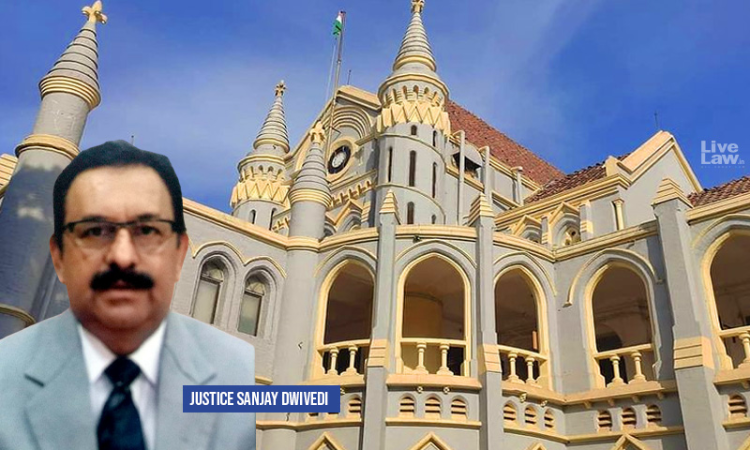
The single-judge bench of Justice Sanjay Dwivedi observed, “Any advertisement creating ambiguity in regard to the qualification and taking shelter of the same, denial of liberty to the candidate, in my opinion does not seem to be proper. It is expected from the authority to make the clause clear and if prescribed qualification in the advertisement gives vague and ambiguous meaning emanating varying interpretations about the qualification criteria, the benefit should always be given to the candidate but not to the employer.”

In the present case, the petitioner had challenged the action of the respondents as they were not allowing the petitioner to participate in the interview which was scheduled pursuant an advertisement.

The counsel for the petitioner submitted that as per the requirement of advertisement, a retired Assistant Engineer having 15 years of experience on the post of Assistant Engineer, out of which 10 years of field experience is the necessary requirement and the petitioner fulfils the said criteria but was not called for interview. The petitioner contended that respondents had wrongly interpreted the clause and denied the petitioner the chance to appear for the interview.

As per the submission made by counsel for respondents, an application was submitted by the petitioner giving details therein that he had worked as an Assistant Engineer for 11 years 9 months and 27 days which fulfils the requirement. However, as per the respondents' counsel, the said period was not the total period worked on the post of Assistant Engineer but it includes the period when the petitioner has performed the duties of Assistant Engineer not in a substantive capacity but holding the additional charge of that post. He further submitted that the petitioner at the time of retirement was performing the duties as Executive Engineer and therefore, as per the rider imposed in the condition, the petitioner was disqualified as not entitled to apply under the said clause because at the time of retirement, he was performing his duties as Executive Engineer.

In order to determine whether the petitioner was wrongly denied or he was to be called for interview, the Court interpreted the said clauses of the advertisment. From bare reading of Clause 1, the court found that the requirement is that the candidate should be retired Assistant Engineer with the Civil Degree. Further, Clause 2 indicated that the 15 years' experience of working as Assistant Engineer which does not mean that the candidate must have substantively held the post of Assistant Engineer.

The court observed, “This is not disputed as the petitioner worked as an Assistant Engineer for a period of 15 years, although, in the later period of his service, he worked as an Incharge Executive Engineer but that cannot be a ground to deny the claim of the petitioner because it was a higher qualification for the petitioner to hold the post of In-charge Executive Engineer because he was substantively promoted to the post of Assistant Engineer…The basic object of the clause can be interpreted that the requirement was of experience of 15 years as an Assistant Engineer and merely because petitioner being an Assistant Engineer performed his duties for some period as In-charge Executive Engineer, it cannot be a disqualification for the petitioner.”

The court then looked into the exclusion clause which indicates that “any candidate who has retired from the higher post than that of Assistant Engineer (कायुरत रर्हत र्हयु)”. However, the petitioner was never promoted to the post of Executive Engineer and this exclusion clause would not be applicable to him because he retired as an Assistant Engineer although he was In-charge Executive Engineer at the time of retirement. “There is a drastic difference in the first part of the qualification and the part of exclusion clause.”, the Court said.

Thus, the court inferred that the petitioner having an experience of Assistant Engineer for more than 15 years and retired from the post of Assistant Engineer but not from the post of Executive Engineer, was wrongly declared ineligible to participate in the interview. “His qualification of working on higher post of Executive Engineer cannot be treated to be a disqualification for him.”, the Court said.

The court further observed that the said advertisement lacked in “clarity, precision and is couched in a language which keeps the candidates guessing as to its true impact cannot be countenanced in law.”

Therefore, the court allowed the present petition directing the respondents to accept the application of the petitioner and arrange a fresh interview for him in which he may be called and thereafter final decision be taken for selecting him to the post.

Case Title: Birendra Singh Yadav Versus The State Of Madhya Pradesh And Others, Writ Petition No. 31629 OF 2024

Certificate Issued By Private University Based On Off-Campus Course Run By Its Franchisee Not Legally Valid: Madhya Pradesh High Court

Certificate Issued By Private University Based On Off-Campus Course Run By Its Franchisee Not Legally Valid: Madhya Pradesh High Court


5 Dec 2024 5:50 PM


The Madhya Pradesh High Court while dismissing a petition relating to recruitment for post of accountant held that any certificate issued by a private university on the basis of an off-campus course run by its franchisee cannot be said to be legally valid.

A single-judge bench of Justice Gurpal Singh Ahluwalia observed, “…since the Maharshi Mahesh Yogi Vedic Vishwavidyalaya, Madhya Pradesh was not entitled to run off-campus course through franchisee, therefore, any certificate issued by Maharshi Mahesh Yogi Vedic Vishwavidyalaya, Madhya Pradesh on the basis of off-campus course run by its franchisee cannot have any legal sanctity. Under these circumstances, this Court is of considered opinion that the Rajya Shiksha Kendra did not commit any mistake by declaring petitioners No.1 to 3 as disqualified for the post of Accountant.”

As per the factual matrix of the case, the petitioners had applied for post of Accountant through recruitment examination conducted by Professional Examination Board. However, the petitioners were declared disqualified through an order passed by the Commissioner, Rajya Shiksha Kendra, Bhopal. Thereafter, the present petition under Article 226 of the Constitution was preferred.

The minimum qualification of the said exam was: (i) Graduation Degree in Commerce with minimum 50% of marks; (ii) Diploma in Computer awarded by any University/Open University recognized by UGC or D.E.O.A.C.A. level of diploma or certificate regarding Modern Office Management issued by Govt. Polytechnic College.

The counsel for petitioners submitted that they had obtained Post Graduate Diploma in Computer Application (PGDCA) Course from Maharshi Mahesh Yogi Vedic Vishwavidyalaya, Madhya Pradesh and thus they are qualified for the post of Accountant. They were declared selected and were posted in District Morena in Block Sabalgarh, Porsa and Ambah. It was argued that petitioner No.1 was declared disqualified for having obtained PGDCA diploma from private college, by doing off campus course whereas petitioners No.2 and 3 were declared disqualified for having DCA Diploma from a private college by doing off campus course.

It was further submitted that since Maharshi Mahesh Yogi Vedic Vishwavidyalaya, Madhya Pradesh, is a recognized university having its territorial jurisdiction over entire State of M.P., therefore, rejection of PGDCA diploma course obtained from a franchisee of Maharshi Mahesh Yogi Vedic Vishwavidyalaya, Madhya Pradesh is bad in law.

On the contrary, the counsel for the respondents referring to a circular dated 09.08.2014 issued by University Grants Commission (UGC), submitted that no University whether Central, State, private or deemed, can offer its programmes through franchisee arrangement with private coaching institutions even for the purpose of conducting courses through distant mode. It was further submitted that the petitioners have obtained PGDCA/DCA courses by pursuing their studies in MY-0109: II TECH Institute, Gwalior, which is an off campus course run by franchisee of Maharshi Mahesh Yogi Vedic Vishwavidyalaya, Madhya Pradesh, therefore, it is not a recognized one.

The issue before the court was “whether private universities can run off campus courses through franchisees or not?”. To address the issue, the court referred to the UGC circular dated 09.08.2014 filed by respondents.

The court observed, “It is clear that adequate advertisement was given by UGC to all the persons who wanted to prosecute their PGDCA/DCA courses by informing them well in advance that any off-campus course done from a franchisee is not a recognized one.”

Thus, the court concluded that Maharshi Mahesh Yogi Vedic Vishwavidyalaya, Madhya Pradesh was not entitled to run off-campus course through franchisee, therefore, any certificate issued by the aforesaid college on the basis of off-campus course run by its franchisee cannot be said to be valid.

Accordingly, court affirmed the order passed by the Commissioner, Rajya Shiksha Kendra, Bhopal, thereby vacating the interim order through which the petitioners were continuing in service. Petition was hence, dismissed.

Case Title: Vinay Yadav And Others Versus The State Of Madhya Pradesh And Others, Writ Petition No. 5824 of 2017

Monday, December 9, 2024

UGC/AICTE Retirement Age Regulations Not Binding On State University-Affiliated Institutions Without State Adoption : Supreme Court


UGC/AICTE Retirement Age Regulations Not Binding On State University-Affiliated Institutions Without State Adoption : Supreme Court


7 Dec 2024 3:14 PM

The Supreme Court on Friday (Dec. 6) held that amended UGC or AICTE regulations raising the retirement age to 65 years do not apply to institutions affiliated to State Universities where the State Government opts not to adopt those regulations. Such institutions must follow the retirement age followed in the State.

The bench comprising Justice Vikram Nath and Justice Prasanna B. Varale heard the civil appeal filed by one P.J. Dharmaraj who was initially appointed as Lecturer, and Reader in Jawaharlal Nehru Technological University (“JNTU”) and subsequently retired from the position of Director of Church of South India Institute of Technology (“CSIIT”) affiliated to JNTU, Telangana.

Two days after his retirement at the age of 60 years, the AICTE and UGC issued amended regulations, wherein the age of retirement was revised up to sixty-five years of age. Therefore the appellant claimed that the same benefit should be extended to him.

On the contrary, the Respondents argued that the appellant cannot claim the benefit of the amended age of retirement because the subsequent amendment to the UGC regulations has not been adopted by the State of Telangana and the revised age of sixty-five years for superannuation does not prevail as the norm in the State and in the JNTU with which CSIIT is affiliated.

Upon hearing the parties at length, Justice Nath in the judgment observed that when the age of retirement of teachers was fixed at 60 years then the appellant cannot be given a special treatment to consider his age of retirement at 65 years.

“The regulations governing the age of superannuation throughout the State, the JNT University and its affiliated colleges including CSIIT is sixty years of age and therefore, when the teachers of JNT University are only to continue up to the age of sixty years, the Appellant cannot be given special consideration. CSIIT is an affiliated Institute of JNT University. Its teachers cannot have their age of retirement more than that of the teachers of the affiliating University. It would create a serious anomaly, discrimination and inequality. If the State Government itself has not adopted the amended regulations, the same cannot be applicable to the CSIIT. Even CSIIT has not determined the age of retirement of teachers to be 65 years.”, the court observed.

Further, the Court found that the appellant worked only in an administrative position and was not able to prove that he discharged the teaching services before becoming Director, CSIIT. Therefore, the UGC or AICTE regulation would not apply to the appellant, as those regulations only applies to those who qualify as teachers and are discharging classroom teaching duties.

“Any other way, the Appellant is not a teacher and was only involved in administrative work with CSIIT. The Appellant has not led any evidence until now to prove that he qualifies as a teacher after becoming Director. AICTE and UGC regulations are applicable only to those who qualify as teachers and are discharging classroom teaching duties.”, the court said.

Accordingly, the appeal was dismissed.

Case Title: P.J. DHARMARAJ VERSUS CHURCH OF SOUTH INDIA & ORS.

Citation : 2024 LiveLaw (SC) 958


கார்த்திகையில் அணைந்த தீபம்!

கார்த்திகையில் அணைந்த தீபம்!  பிறருக்கு சிறு நஷ்டம்கூட ஏற்படக் கூடாது என்று மின் விளக்கை அணைக்கச் சொன்ன பெரியவரின் புதல்வர் சரவணன் என்கிற வி...