Friday, October 25, 2024

‘Indian doctors and healthcare professionals are a class apart’


‘Indian doctors and healthcare  professionals are a class apart’


Tamil Nadu Governor R.N. Ravi handing over a degree to a graduand at the convocation held on Thursday.B. Velankanni Raj

The Hindu Bureau

CHENNAI 25.10.2024 

Tamil Nadu Governor R.N. Ravi on Thursday distributed medical degrees to graduands at the 37th convocation of The Tamil Nadu Dr. M.G.R. Medical University in Chennai.

A total of 35,793 candidates, both in person and in absentia, were awarded post-doctoral, doctoral, postgraduate, and undergraduate degrees and diplomas in the medical, dental, AYUSH, nursing, pharmacy, physiotherapy, occupational therapy, and allied health science courses.


Speaking at the function, Vivek Lal, Director, Postgraduate Institute of Medical Education and Research (PGIMER), Chandigarh, stressed the importance of commitment in medical practice.

“This degree is the result of a big asset that all of you have. That is the commitment. It comes before equipment. Medicine is all about committed healthcare professionals. Equipment and technology do play a part. But if you want to exploit technology, you have to be committed.”

He said Indian doctors and healthcare professionals are the best in the world. “In the United States, the second largest [health] care-givers to U.S. citizens are Indians... Our healthcare professionals and doctors are a class apart.” Because of doctors’ commitment, the country was able to bounce back from COVID-19, though India has a rudimentary infrastructure, compared with the Western countries, he added.

“In our ecosystem, our patients think of us [doctors] as Gods. Not so in the West. They think that if a doctor cures a patient, it is his duty. The relationship between a doctor and a patient is through insurance and everything ends there. In India, if a doctor cures a patient, he becomes a family member of that patient,” he said. K. Narayanasamy, Vice-Chancellor of The Tamil Nadu Dr. M.G.R. Medical University, former Vice-Chancellors, faculty members, and parents were among others present. Minister for Health and Family Welfare Ma. Subramanian, whose name was on the invitation, was not present.

Thursday, October 24, 2024

Guv welcomed with ‘Dravida nal thirunadu’ posters

Guv welcomed with ‘Dravida nal thirunadu’ posters 

TIMES NEWS NETWORK 24.10.2024


Dindigul : Tamil Nadu governor R N Ravi awarded degrees to graduates at the 31st convocation ceremony of Mother Teresa Women’s University on Wednesday and interacted with students at Sankara Vidyalaya in Kodaikanal. However, his visit to the hill station was marked by protests over a recent controversy involving omission of ‘Dravida Nadu’ from the ‘Tamil Thai Vaazhthu’ at an event he attended. 

At the convocation, the governor awarded degrees to 6,587 graduates, including 373 in attendance. Among them, 70 received doctoral degrees, and 16 were awarded gold and silver medals. Vice-chancellor Kala Sethupathi highlighted the institution’s achievements for the academic year 2023-24. Santishree Dhulipudi Pandit, vice-chancellor of Jawaharlal Nehru University, delivered the convocation address, emphasizing the importance of societal contribution over economic success. 

“Every challenge is an opportunity in disguise, and education equips you with the skills to be adapt able and resilient,” she told the graduates, stressing the role of women as catalysts for change. During his visit to Kodaikanal, Ravi also engaged with students at Sankara Vidyalaya School, encouraging them to uphold virtues like honesty, integrity, and cleanliness, and to pursue a healthy lifestyle. He urged them to read more books for knowledge, beyond just social media. Meanwhile, members of the Dravidar Viduthalai Kazhagam held a black flag protest at Munjikkal in Kodaikanal, criticizing the governor for allegedly disrespecting Tamil culture. The protest was linked to the recent controversy over the omission of ‘Dravida Nadu’ from the ‘Tamil Thai Vazhthu.’ Posters featuring a line from the song were also displayed.

Madras HC simplifies norms for divorce by mutual consent

Madras HC simplifies norms for divorce by mutual consent

 Sureshkumar.k@timesofindia.com 24.10.2024


Chennai : Unclogging pendency in family courts that insist on personal appearance of parties, especially at the time of filing divorce cases, Madras high court ruled that family courts should not insist on personal presence of parties both during filing and hearings. The court also framed guidelines to be followed by family courts for speedy disposal of matrimonial petitions filed under mutual consent. 

Justice M Nirmal Kumar framed the guidelines since it came to light that a majority of mutual consent petitions are kept in abeyance or stalled due to non-appearance of parties in person for various reasons, including travel restrictions. To obviate such difficulties faced by parties who have decided to part ways and start a fresh life, it has become imperative to frame guidelines, the court said. 

The court then directed that in respect of filing cases, hearing parties, and recording evidence in cases filed under mutual consent, family courts shall not insist on the physical presence of the parties at the time of presenting petitions and further hearings. “Petitions can be filed either by parties directly or by the power of attorney of parties, provided the power of attorney is registered or properly adjudicated,” the judge said. On behalf of the parties, powers of attorney can appear and prosecute. The only embargo is that the recognised agent should not be a legal practitioner, he ad ded. “The parties can be present through virtual mode from their respective places, and the place of location and identity of the person should be confirmed with relevant documents,” the court said. The court added that virtual proceedings provide an opportunity to modernise the system by making it more affordable and citizenfriendly, enabling the aggrieved to access justice from any part of the country in the world. “Thus, the family court should ensure that such a system of conducting the proceedings through video conferencing is put to usage without insisting on the presence of the petitioner even from  the time of first presentation till the conclusion of proceedings. The family court henceforth should not raise technical objections and insist on the physical appearance of parties at any stage,” the bench said.

Work from office better than work from home for mental health: Study


Work from office better than work from home for mental health: Study

 Amit.Bhattacharya@timesofindia.com 24.10.2024 

Forging good relationships at the workplace and a sense of pride in work are more important for mental wellbeing than the oft-touted ‘work-life balance’ factors such as workload and flexibility over time, a new mega global study reveals. In a surprising finding of the study that looked at nine aspects of work culture, Indians who worked from offices had better mental health indicators than those in workfrom-home or hybrid arrangements. 

This contrasted with trends from the Americas and Europe, where hybrid workers were found to have the best mental health indices. The study, Work Culture & Mental Wellbeing, was conducted by the US-based mind research organisation, Sapiens Labs. › Team size, P 8 Increase in mental wellbeing with team size steeper in India The study used data obtained this year from 54,831 employed, internet-enabled respondents across 65 countries. The report comes in the backdrop of a debate in India over high workload, stress and “toxic” workplaces, triggered by the recent death of a 26-year-old chartered accountant in Pune. The report did identify workload as an important cause of distress among workers. But these ‘worklife balance’ factors were found to be half as impactful on mental health as some other parameters. “Relationships with your colleagues and feeling a sense of pride and purpose in your work came in at the top of the list in terms of impact to mental wellbeing, regardless of what type of job you  do,” the report said.

Poor relationships and a low sense of pride and purpose at work were found to be linked with severe feelings of sadness or hopelessness, being unwanted and r educed energy levels and motivation, among others. In India, where the study had a sample size of 5,090, the link between poor relationships with colleagues and mental distress was stronger than the global average. While across the world, people working in teams showed better mental health than those working alone, the increase in mental wellbeing with team size was steeper in India than in western countries. “The percentage who indicate unmanageable workloads in India (13%) is actually better than the global average (16%) and US (18%) while those who indicate good relationships with their colleagues is comparable to the global average of around 50%,” said neuroscientist Tara Thiagarajan, founder and chief scientist of Sapiens Labs. Globally, the study found those in customer services and physical labour fared worse than those employed in human care or knowledge-based jobs. Full report on www.toi.in

One Year's Service Completion Sufficient For Pension Benefits, Orders Arrears With Interest; MP HC

One Year's Service Completion Sufficient For Pension Benefits, Orders Arrears With Interest; MP HC


18 Oct 2024 8:52 PM


Madhya Pradesh High Court: A bench comprising Chief Justice Suresh Kumar Kait and Justice Vivek Jain, addressed a series of writ petitions concerning retired employees who sought the grant of annual increments before superannuation. The Court ruled in favor of the petitioners, directing the State to provide annual increments due to employees retiring either on 30th June or 31st December of their superannuation year, along with arrears and interest.

Background

The petitioners were retired employees or legal heirs of such employees who had completed one year of service before retirement but were denied the annual increment, which typically becomes due on either 1st July or 1st January. The State had refused the increment, citing technicalities surrounding the precise retirement date. The petitioners, however, argued that the completion of one year's service entitles them to an increment under established law, and the refusal deprived them of corresponding pensionary benefits.

Arguments

The petitioners relied heavily on the Supreme Court's ruling in HR KPTCL v. C.P. Mundinamani (2023 SCC OnLine SC 401), which held that the entitlement to receive an increment crystallizes when a government servant completes the requisite period of service with good conduct, and it becomes payable the next day. The petitioners also cited a circular issued by the Madhya Pradesh Finance Department dated 15.03.2024, which directed departments to grant annual increments to employees who retired on 30th June or 31st December, provided the increment became due on the following day.

The State, through its counsel, submitted that the issue was under review, and the cases were being processed. The State admitted that the petitioners had completed their one year of service before superannuation but sought to argue that the legal issue was still under scrutiny.

Court's Reasoning

Firstly, the court accepted the petitioners' argument, referring to the Supreme Court's ruling in Mundinamani, which made it clear that annual increments, earned through a full year of service, should not be withheld simply due to the employee's retirement on the eve of the increment's due date. The Court acknowledged that pension and increment rights are intertwined, and denying the increment adversely impacts post-retirement benefits.

Secondly, the Court discussed the applicability of the Rushibhai Jagdishchandra Pathak v. Bhavnagar Municipal Corporation (2022 SCC OnLine SC 641) ruling, in which the Supreme Court restricted arrears for delayed petitions to three years. However, in cases where employees timely filed petitions, the Mundinamani ruling mandated that they should receive full arrears dating from the due date of the increment. The court also highlighted the Supreme Court's order dated 06.09.2024 in Union of India & Anr. v. M. Siddaraj, which clarified the effective date for increments and pension enhancements. For employees who filed writ petitions, the judgment would operate as res judicata, making it mandatory to pay arrears based on the one-year increment. Finally, the court rejected any argument concerning delays in implementation, stating that the benefits should be processed promptly. Thus, the Court ruled that the State must grant the annual increments due to the petitioners as of 1st July or 1st January, depending on their retirement dates. Arrears were to be paid from 1st May 2023 with interest at 7% per annum. The State was directed to process the payments within six weeks, ensuring compliance with the Supreme Court's directives in M. Siddaraj.Decided on: 15-10-2024 Citation: 2024:MPHC-JBP:51542

Counsel for the Petitioners: Shri Taman K. Khadka, Shri Vijay Kumar Narwariya

Counsel for the Respondents: Smt. Janhavi Pandit, Additional Advocate General


Recovery Of Excess Payment From Retired Employee Impermissible Without Proof Of Misrepresentation: MP HC


Recovery Of Excess Payment From Retired Employee Impermissible Without Proof Of Misrepresentation: MP HC


21 Oct 2024 5:45 PM


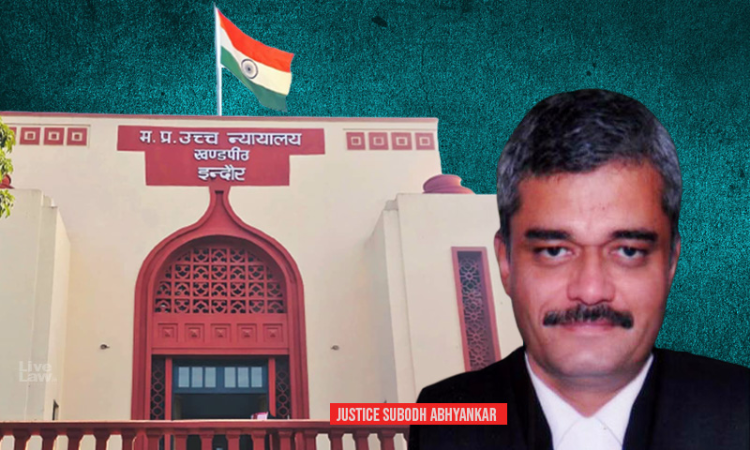
Madhya Pradesh High Court: Justice Subodh Abhyankar quashed a recovery order issued against a retired Auxiliary Nurse Midwife, holding that excess payment cannot be recovered from retired government employees in the absence of misrepresentation or fraud. Following Supreme Court precedents, the court ordered refund of the recovered amount with 6% interest, emphasizing that recoveries from retired employees are impermissible when the error originated from the department rather than the employee.

Background

Smt. Rooplekha Sirsath, a retired Auxiliary Nurse Midwife (ANM), challenged a recovery order for ₹5,81,867 issued by the Public Health and Family Welfare Department. The order demanded repayment due to an alleged wrongful fixation of her pay. The petitioner argued that this recovery was unjust, as the pay fixation was not a result of any misrepresentation or fault on her part. The recovery order was also challenged in light of the Supreme Court ruling in State of Punjab v. Rafiq Masih (White Washer), 2015 (4) SCC 334, which limits the circumstances under which recovery can be made from retired employees.

The petitioner, being a Class-III employee, further contended that similar recovery orders had been quashed by the Madhya Pradesh High Court's Full Bench, which ruled on similar matters, including State of Madhya Pradesh v. Jagdish Prasad Dubey (Writ Appeal No. 815 of 2017).

Arguments

The counsel for the petitioner, Shri L.C. Patne, argued that the recovery of excess amounts violated precedents set by the Supreme Court and was therefore unlawful. He cited various decisions that prohibited recovery from retired employees when the excess payment was not due to any misrepresentation by the employee. He further relied on the Full Bench decision of the Madhya Pradesh High Court, where such recoveries had been quashed, contending that similar principles applied in this case.

Shri Pranay Joshi, representing the State, supported the recovery order, arguing that the fixation of pay had been improper and therefore necessitated recovery. The respondents also pointed to rules in the Madhya Pradesh Civil Services (Pension) Rules, 1976, specifically Rules 65 and 66, which allow recovery of wrongful payments under certain conditions.

Court's Reasoning

Firstly, the court reviewed the Full Bench ruling of the Madhya Pradesh High Court in Jagdish Prasad Dubey, which had quashed recovery orders in similar circumstances. The court also noted that in Shyam Babu Verma v. Union of India (1994) 2 SCC 521 and Sahib Ram Verma v. State of Haryana (1995) Supp. (1) SCC 18, the Supreme Court ruled against recoveries from employees when payments were not the result of their misconduct. Secondly, the court referred to Syed Abdul Kadir v. State of Bihar (2009) 3 SCC 475, where it was held that recovery of excess payment from a retired government servant cannot be made in the absence of misrepresentation. In the present case, since there was no misrepresentation or fraud by the petitioner, the recovery could not be enforced. Thus, the court quashed the recovery order dated 09-02-2016 and directed the respondents to refund the recovered amount to the petitioner with 6% interest from the date of recovery until payment.

Decided on: 18-10-2024

Citation: 2024:MPHC-IND:29984

Counsel for the Petitioner: Shri L.C. Patne

Counsel for the Respondent: Shri Pranay Joshi

Higher Qualification Cannot Substitute Mandatory Basic Qualification: Madhya Pradesh High Court


Higher Qualification Cannot Substitute Mandatory Basic Qualification: Madhya Pradesh High Court


23 Oct 2024 3:30 PM


Madhya Pradesh High Court: Justice Anil Verma dismissed a writ petition challenging the rejection of a teaching position application, holding that a Master's degree in English cannot substitute for the mandatory requirement of a Bachelor's degree in English under the Madhya Pradesh School Education Services (Teaching Cadre) Recruitment Rules, 2018. The Court upheld that candidates must possess the specific undergraduate qualification in the subject they intend to teach, regardless of higher qualifications in the same subject.


Background

Lakshmi Kant Sharma, the petitioner, applied for the position of Madhyamik Shikshak (Class-II Teacher) in the subject of English, as advertised by the Madhya Pradesh government. His qualifications included a Bachelor's degree in Political Science, Hindi Literature, and Sanskrit, and an M.A. in English. When his application was rejected on the grounds that he did not meet the required educational criteria, Sharma filed a writ petition challenging this decision. He sought to be declared eligible for the position and requested the quashing of the rejection order passed by the respondent authorities. The petitioner's counsel, Shri Rakshit Gupta, argued that despite his undergraduate degree lacking English as a subject, his Master's degree in English made him eligible for the teaching position. He also contended that other candidates without the necessary qualifications had been appointed to similar positions, further asserting that the refusal to consider him was unjust.

Arguments

Shri Rakshit Gupta, counsel for the petitioner, relied on precedents set by the Central Administrative Tribunal (CAT) in the cases of Intequam Ali v. Government of NCT Delhi and Pooja Devi v. Government of NCT Delhi, arguing that qualifications beyond a Bachelor's degree, such as an M.A., should be considered sufficient in certain cases. The petitioner emphasized his educational achievements in English and contested the exclusion on technical grounds.

On the other hand, the State's counsel underscored that the recruitment rules specifically required a Bachelor's degree in English for the position of Madhyamik Shikshak. Although the petitioner held a Master's degree, his undergraduate degree did not include English as a subject, which disqualified him from the role. Additionally, the respondents rejected the claim that unqualified candidates had been appointed, asserting that those individuals met the necessary criteria.

Court's Reasoning

The Madhya Pradesh School Education Services (Teaching Cadre) Recruitment Rules, 2018, sets the specific criteria for the position of Madhyamik Shikshak (Class-II Teacher) in English. The primary requirement under the rules was a Bachelor's degree in the relevant subject (English) along with a B.Ed. degree. The court emphasized that this requirement was clear and non-negotiable for candidates applying to teach English.

The petitioner, Lakshmi Kant Sharma, had a Bachelor's degree in Political Science, Hindi, and Sanskrit, none of which qualified as a “relevant subject” under the rules. His M.A. in English, while higher in academic standing, did not rectify the absence of a foundational undergraduate degree in English. Recruitment for educational posts requires a solid base in the subject to be taught, which must be demonstrated by continuous, formal study at the undergraduate level. A candidate with no formal undergraduate training in English could not be expected to have the same competence as one who had pursued English as a core subject for three years during their Bachelor's education.

The petitioner argued that he should still be eligible due to his M.A. degree, but the court firmly rejected this stance, holding that postgraduate qualifications could not substitute for the basic educational standards set by the recruitment rules. Justice Verma further reasoned that adhering strictly to the prescribed qualifications ensures fairness and consistency in the selection process, preventing subjective exceptions or relaxed standards that could compromise the integrity of the recruitment.

Additionally, the petitioner's argument that other candidates without proper qualifications had been appointed was found to be unsubstantiated. The court reviewed the records and found that those candidates possessed the necessary qualifications, unlike the petitioner. Thus, the court concluded that deviating from the clear criteria of the recruitment rules would not only undermine the merit-based selection process but also potentially set a dangerous precedent for future recruitments. The court dismissed the petition, stating that Sharma's qualifications were insufficient to make him eligible for the post, and no relief could be granted.

Date: October 18, 2024

Citation: W.P. No. 30467 of 2024 (Lakshmi Kant Sharma v. The State of Madhya Pradesh)

Counsel for the Petitioner: Shri Rakshit Gupta

Counsel for the Respondent: Shri G.K. Agrawal

NEWS TODAY 11.06.2026