Saturday, May 3, 2025

Indian Railways will implement new rules from May 1, everyone will be effected

Indian Railways will implement new rules from May 1, everyone will be effected


April 30, 2025 - 12:06 PM
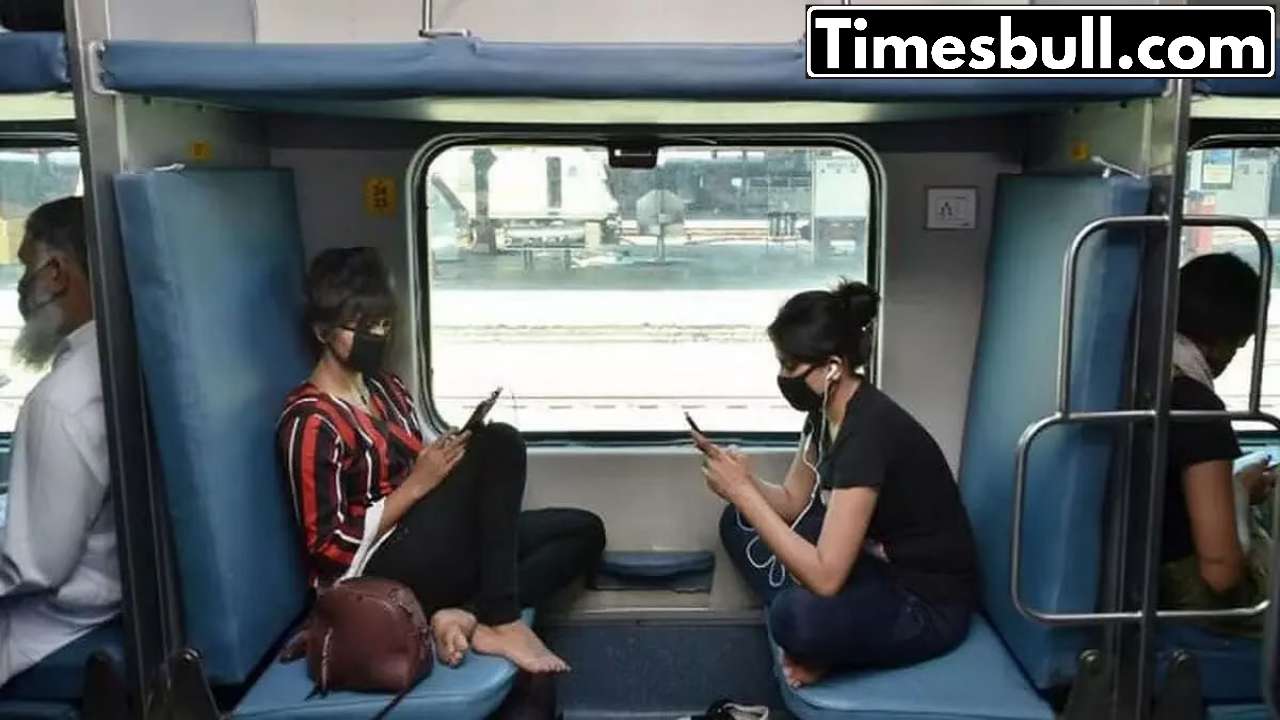


Indian Railway New Rules: Big news for railway passengers. Now, from May 1, there are so many rules going to change in the railway. On the first day of each month, the rules change. This time there is going to be a big change in the rules of the railway, due to which the passengers of the railway will be affected. Passengers with waiting list tickets will not be allowed to travel in sleeper or AC coaches. They will be allowed to travel only in general class. Indian Railways is implementing strict rules to improve the travel experience for those with confirmed tickets from May 1.

If the ticket booked online through IRCTC remains on the waiting list, it gets automatically cancelled. However, many passengers who buy waiting list tickets from the counter still travel in sleeper and AC coaches. From May 1, passengers with waiting list tickets will be banned from traveling in sleeper and AC coaches.

If a passenger with a waiting ticket is found sitting on a seat in these coaches, the TTE will have the right to impose a fine on him or shift him to the general compartment. Captain Shashi Kiran, Chief Public Relations Officer of North Western Railway, said that this rule has been implemented to ensure the convenience of passengers with confirmed tickets so that they do not face inconvenience during travel due to those with waiting tickets.

Often passengers with waiting tickets enter sleeper and AC coaches and try to forcibly occupy the seats of those with confirmed tickets, causing trouble for everyone. Moreover, when the number of passengers with waiting tickets increases in these coaches, the routes get blocked, making movement difficult and travel inconvenient for all the passengers. So, if you often travel with waiting tickets, then you will now need to be extra cautious and plan your journey more carefully.

Friday, May 2, 2025

Fund-starved UoM slashes guest faculty count, passes Rs 150-crore deficit budget


Fund-starved UoM slashes guest faculty count, passes Rs 150-crore deficit budget

This is the third time in a row that the university is staring at a deficit budget.


The number of guest lecturers has been reduced from 115 to 75 |


Updated on: 
01 May 2025, 8:22 am
2 min read

CHENNAI: Despite opposition from the syndicate and senate members, the University of Madras (UoM) has gone ahead with deductions in its expenses under several heads, including reduction in number of guest faculties and non-teaching staff, in its budget estimate for 2025-26.

The university has passed a deficit budget of Rs 149.86 crore for the financial year. This is the third time in a row that the university is staring at a deficit budget. The revised budget for 2025-26 was passed on Wednesday after senate members sent their views through email to the registrar.

“Without any discussion, the budget was passed after taking the views of senate members through emails. This is not a fair process. Many senators had vehemently opposed the budget cuts, but we were informed that the majority was in favour of it and so the budget was passed,” said a senate member.

Usually, the university’s annual budget is passed in the senate meeting held at the end of March. However, this year in the senate, only the budget for April was passed instead of the annual budget. The cash-strapped university was asked by the state government to revise its budget estimates by making necessary deductions in expenses to deal with the mounting deficit. While the deficit in the budget estimate for 2023-24 of its non-plan account stood at Rs 105.54 crore, in 2024-25 it rose to Rs 146.16 crore and this year it has again gone up to Rs 149.86 crore. 

“The non-plan account (expenditure) in 2024-25 stood at Rs 270.40 crore, however, after making all the budget cuts, they have managed to bring it down to Rs 246.47 crore,” said a senate member. The non-plan account deals with the receipts and expenditure connected to the normal functioning of the university.

The budget allocation for the university department’s stationery and equipment maintenance was reduced by 20%, while maintenance of buildings was cut by 40%, and the allocation towards student facilities, sports, and physical education was reduced by 30%. The number of guest lecturers has been reduced from 115 to 75 and part-time (hourly basis) guest faculty from 46 to 30.

According to university officials, the deficit is the outcome of years of accumulation. The syndicate and senate members had written to the administration against the budget cut, as it would affect the functioning of the university and is inimical to the interests of students. The members had appealed to the state government to provide grants to deal with the budget cuts.

“All our appeals have fallen on deaf ears,” said a syndicate member.

NMC cracks down: 20 medical colleges face show cause notices as annual report deadline extended


NMC cracks down: 20 medical colleges face show cause notices as annual report deadline extended

Final 12-day window granted for compliance as commission targets non-compliant institutions


The commission has repeatedly warned medical colleges about the consequences of non-compliance.(Image: EdexLive Desk)


Published on: 
01 May 2025, 8:26 pm

The National Medical Commission (NMC) has taken strong disciplinary action against 20 medical colleges that failed to submit their Annual Declaration Reports (ADRs), issuing show cause notices and demanding immediate compliance, according to Medical Dialogues.

Despite multiple previous notifications, these institutions have not met their regulatory obligations, prompting the commission to extend the submission deadline from May 2 to May 12, 2025. Defaulting colleges must now submit the required data along with a Rs 50,000 penalty per course (inclusive of GST).

In addition to these serious violations, the NMC identified 66 other medical colleges that submitted incomplete Annual Disclosure Reports and has directed them to resubmit their documentation on the commission's portal.

"It has been observed that despite three (3) Public Notices through the NMC website, twenty (20) colleges/institutes, as per attached list, have failed to upload their data for which a Show Cause Notice has already been served on them. This has been viewed very seriously by the Competent Authority in the NMC," stated the Postgraduate Medical Education Board (PGMEB) in its April 29 notice.

Dr Raghav Langer, NMC Secretary, subsequently communicated with all medical college principals and deans regarding the extension, emphasising the requirement for defaulting institutions to comply with the new deadline.

The commission has repeatedly warned medical colleges about the consequences of non-compliance, having previously stated that no MBBS seats would be permitted for institutions failing to submit their Annual Declarations within specified deadlines. 

Despite multiple deadline extensions since November 2024, numerous colleges have continued to ignore regulatory requirements, leading to the current enforcement actions.

Thursday, May 1, 2025

How AI helped a Bengaluru man bargain in Kannada with an auto driver

How AI helped a Bengaluru man bargain in Kannada with an auto driver

etimes.in | Apr 29, 2025, 11.00 PM IST


In a city like Bengaluru, where bargaining with auto drivers is part of everyday life, one local resident came up with a clever way to make the process easier– by using artificial intelligence. What started out as a simple tech experiment has now gone viral, not because it was high-tech or complex, but because it was so relatable and practical. At a time when most people talk about AI in terms of big things like automation and future tech, this short video brought it right down to street level– literally!

Using AI to do the talking

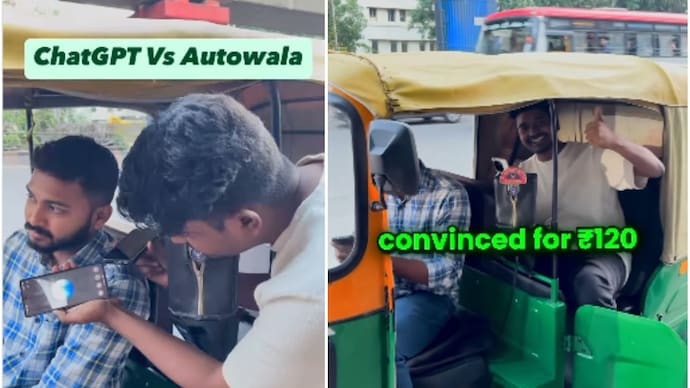
In the video, Sajan Mahto, who identifies himself as a student, showcases how ChatGPT’s voice assistant feature can be used in a typical situation many face– negotiating an auto fare in a language they may not speak well.

He types into ChatGPT: “Hi ChatGPT, can you have to help me negotiate with the auto driver in Bengaluru. The auto driver is saying that the fare is Rs 200, and I am a student. Please negotiate it for Rs 100.”

ChatGPT responds instantly in Kannada: “Anna, this is the route that I travel every day, and I am a student. Please come for Rs 100.”

From Rs 200 to Rs 120

The AI’s response leads to a brief conversation between the two. Eventually, the auto driver agrees to reduce the fare: “I had said Rs 200, and it came down to Rs 150. Since you requested, I reduced another Rs 30 and settled at Rs 120. It's not possible for me to go lower.” Mahto accepts the final offer, and the deal is done, with ChatGPT helping to bridge the gap.

A clarification: It was a staged demonstration

To avoid any confusion or misinterpretation, Mahto clearly mentioned in his caption that the interaction was not real, and the purpose of the video was to demonstrate a creative use of AI. He stated: “This is an attempt to educate on how one can use CHATGPT in day-to-day life. To harm any sentiments regarding any emotions is not intended. The sole purpose is education only. This is an act performed, not a real autowala.”

Social media applauds the idea

The video quickly gained traction online, with viewers praising the smart yet simple application of technology. The comments section was flooded with excitement and admiration. One user enthusiastically wrote, “Tagda AI technique mere sher,” while another commented, “I will use this with shopkeepers and local vendors,” reflecting how relatable and practical the solution felt. Some appreciated the thoughtful use of AI, saying, “Real use of AI, I appreciate your behaviour,” while others expressed amusement and relief, with one remarking, “Problem solve hogya.”

Bengaluru man's video on how to use ChatGPT to negotiate auto fare in Kannada is viral

Bengaluru man's video on how to use ChatGPT to negotiate auto fare in Kannada is viral

A tutorial video of a man from Bengaluru using OpenAI's ChatGPT to negotiate an auto-rickshaw fare in Kannada went viral.


A Bengaluru man's tutorial video on how to use ChatGPT to negotiate auto fare went viral. (Photos: Sajan Mahto/Instagram)


New Delhi,

UPDATED: Apr 29, 2025 12:15 IST

In ShortA Bengaluru man shared a video on how to use ChatGPT to negotiate auto fare
The video shared by Sajan Mahto on Instagram went viral

ChatGPT responded in Kannada to help negotiate fare

A tutorial video of a man from Bengaluru using OpenAI's ChatGPT to break the language barrier and negotiate an auto-rickshaw fare in Kannada went viral on social media.

The video was shared by Sajan Mahto, who recorded his interaction with the AI tool. In the clip, Mahto asked ChatGPT, "Hi ChatGPT, can you have to help me negotiate with the auto driver in Bengaluru. The auto driver is saying that the fare is Rs 200, and I am a student. Please negotiate it for Rs 100."

Using ChatGPT's voice assistant feature, the AI quickly responded in fluent Kannada. It said, "Anna, this is the route that I travel every day, and I am a student. Please come for Rs 100."

In his video, the move paid off. After a brief conversation, the fake auto driver, who had initially demanded Rs 200, agreed to settle at Rs 120. "I had said Rs 200, and it came down to Rs 150. Since you requested, I reduced another Rs 30 and settled at Rs 120. It's not possible for me to go lower," he explained. Mahto accepted the offer and got into the auto.

In his caption, Mahto clearly stated, "This is an attempt to educate how one can use CHATGPT in day-to-day life. To harm any sentiments regarding any emotions is not intended. The sole purpose is education only. This is an act performed, not a real autowala."

NEWS TO DAY 30.04.2025


UGC allows biannual admission in higher educational institutions, teachers fear disruption


UGC allows biannual admission in higher educational institutions, teachers fear disruption 

UGC official says that National Education Policy provides flexibility for students to pursue higher studies, the international system, particularly in the US, is biannual admission

 Basant Kumar Mohanty Published 30.04.25, 05:25 AM

The University Grants Commission has allowed higher educational institutions to admit students twice a year, a move teachers fear would disrupt academic activities.

This month, the higher education regulator notified the UGC (Minimum Standards of Instructions for Grant of Undergraduate and Postgraduate Degree) Regulations, which provide for biannual admission. “HEIs (higher educational institutions) prepared to handle biannual admissions may admit students twice a year, in July/August and January/February,” said the regulations.

A UGC official said that the National Education Policy provides flexibility for students to pursue higher studies. The international system, particularly in the US, is biannual admission.

The Indian National Teachers’ Congress (Intec) and Academics for Action and Development have opposed the move. Intec chairman Pankaj Garg, a faculty member in Rajdhani College under Delhi University, said: “No serious study or consultation with universities and colleges has preceded this drastic proposal. It may seem an appealing idea on paper that biannual admissions will bring flexibility, but in reality they will seriously destabilise the academic framework of higher education institutions.”

The regulations said a student can pursue two UG programmes simultaneously and two PG courses at the same time, with flexibility in terms of change of discipline, institution and mode of learning.

SC orders all-India audit of pvt & deemed universities Focus On Structural Opacity & Examining Role Of Regulatory Bodies

SC orders all-India audit of pvt & deemed universities Focus On Structural Opacity & Examining Role Of Regulatory Bodies   Manash.Go...